


This text – of which you will find only an extract below – appeared in issue 22 of alvento (August 2022).
Text: Alessandro Autieri
Photos: Paolo Penni Martelli
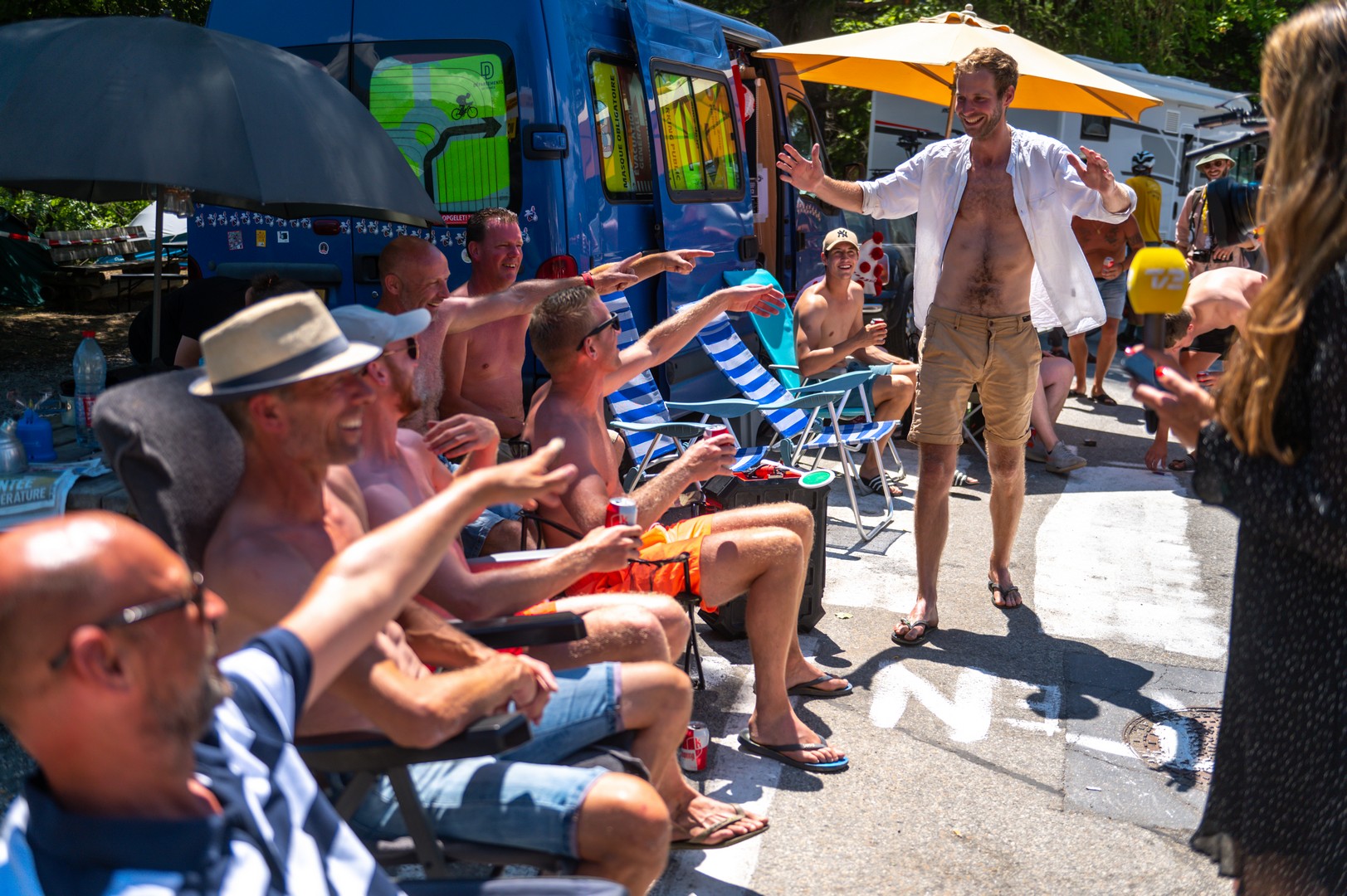
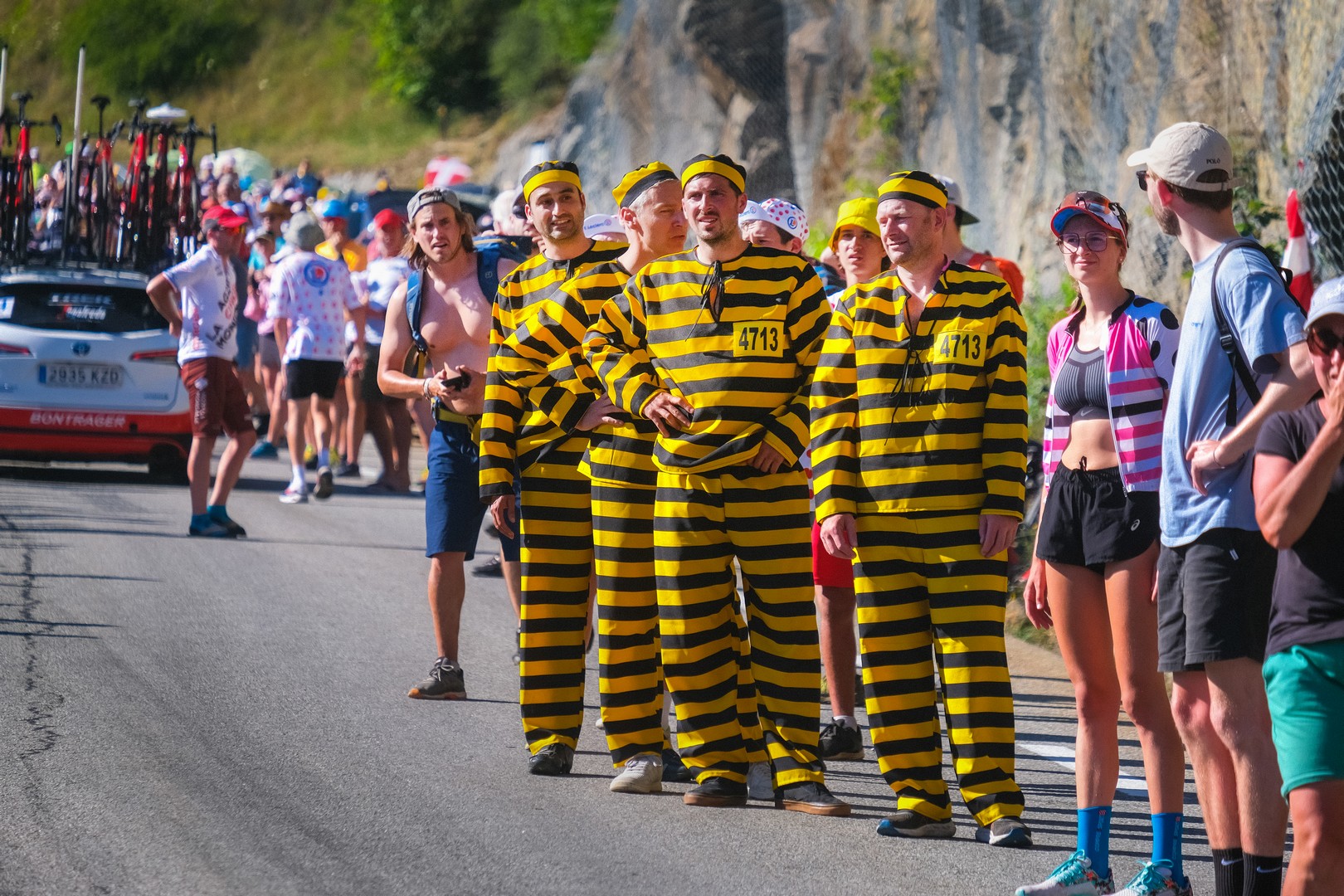
We spent three days camped on Alpe d’Huez to ride, eat, drink and dance, meeting people from all over the world. In short, to experience first-hand one of the most extraordinary spectacles of support and celebration in sport.
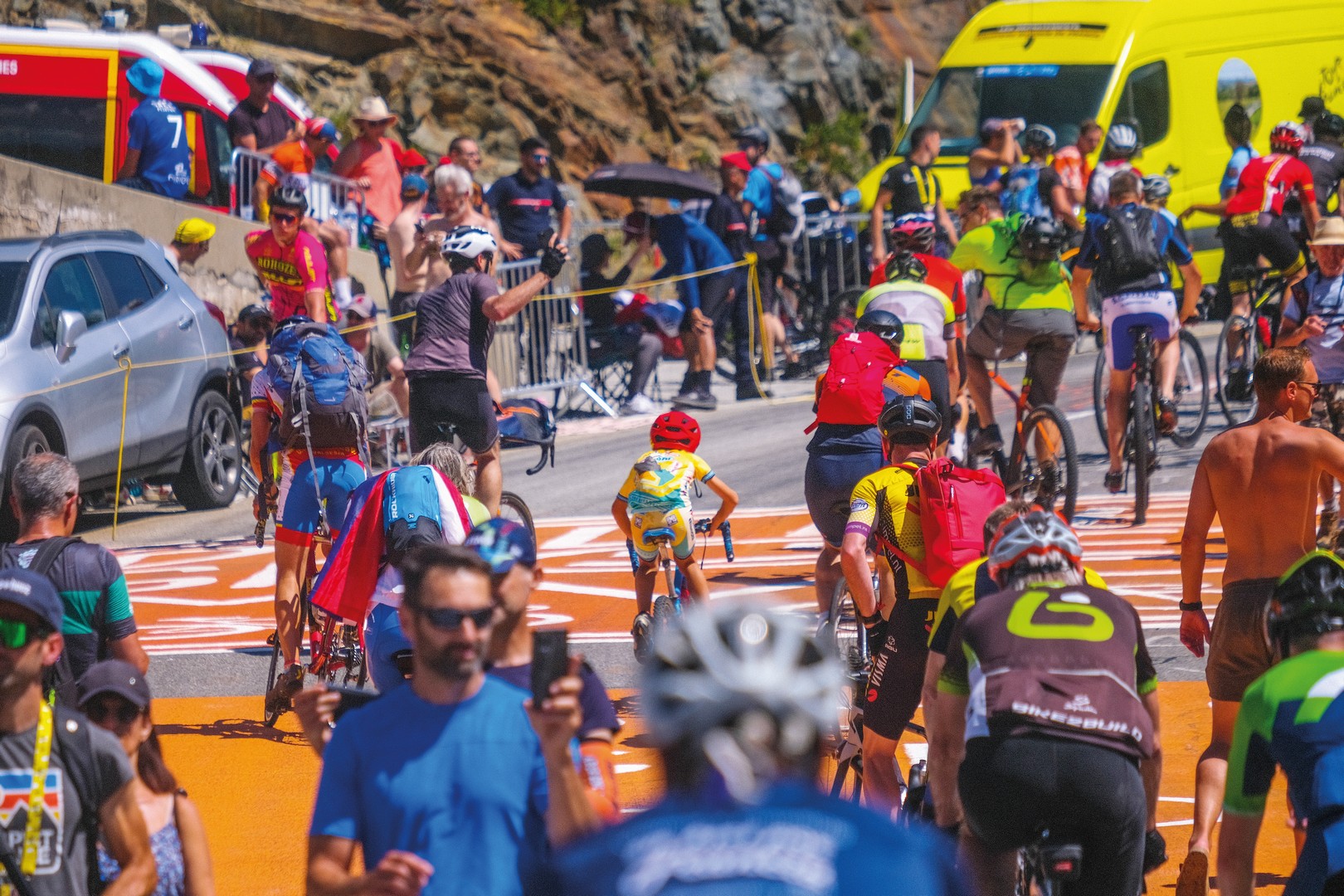
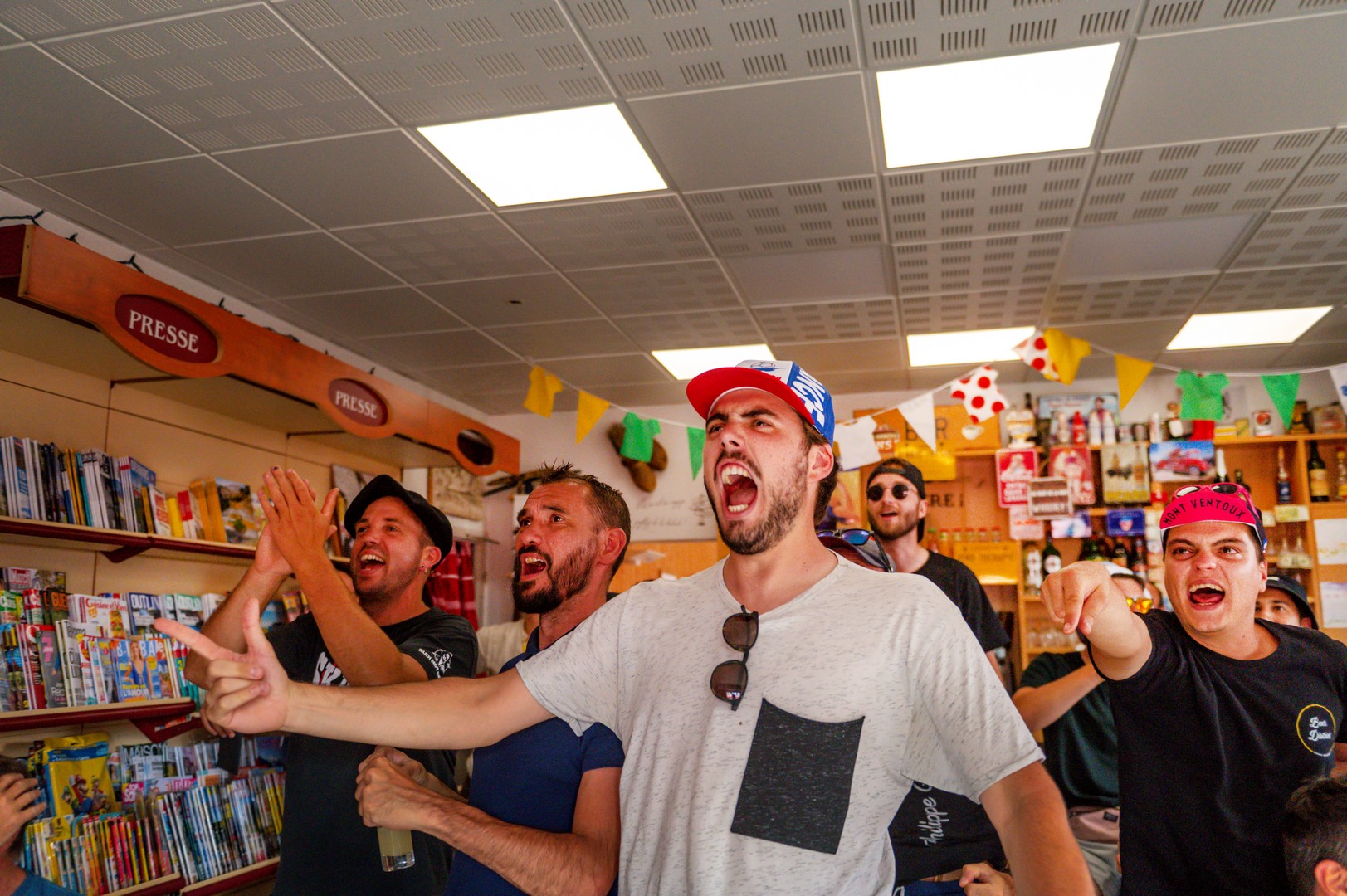
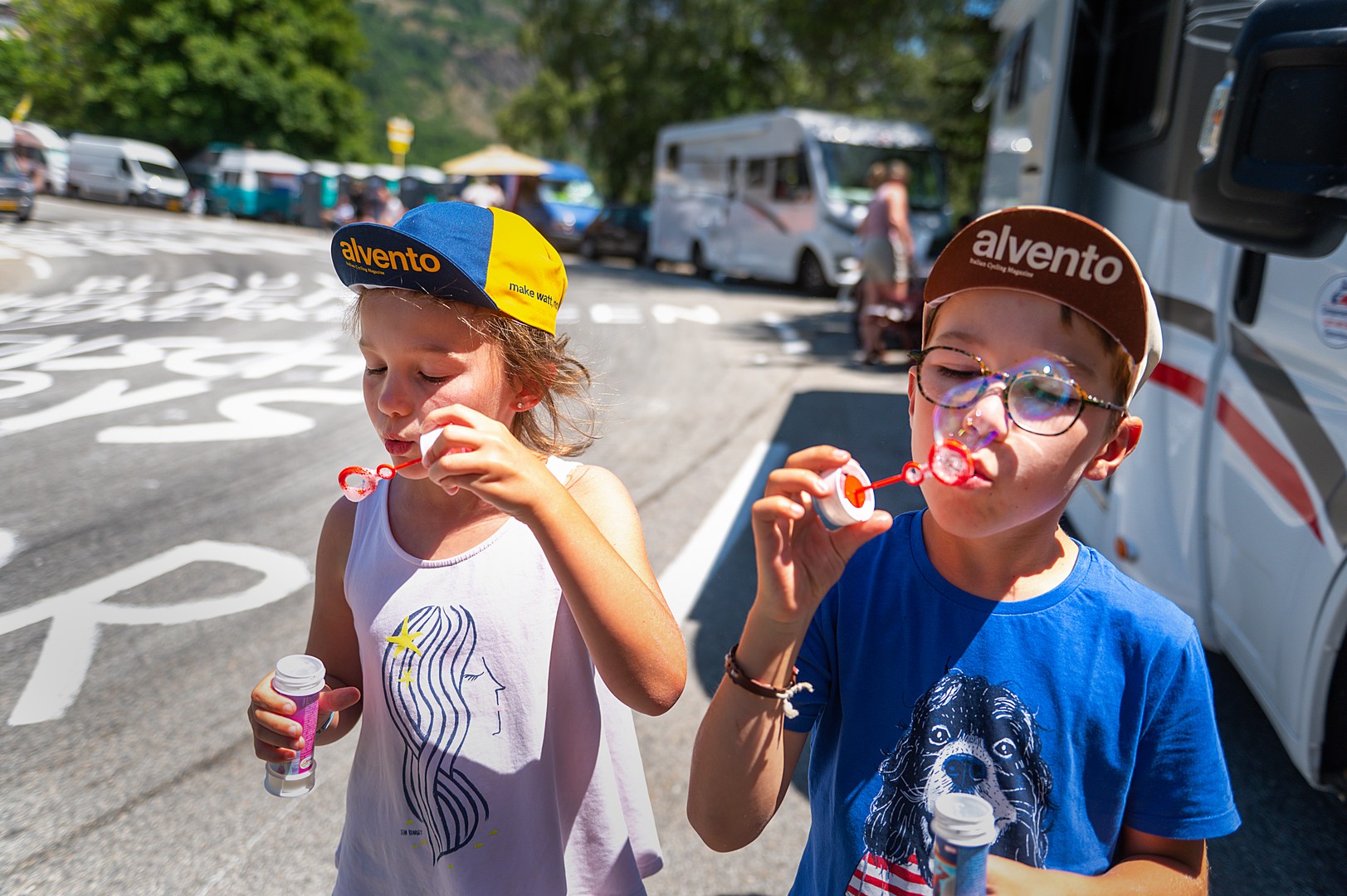
And yet up there, at the summit of Alpe d’Huez, inside Notre-Dame des Neiges, they played the Kleuker organ. It does not matter for whom the music was struck up, nor even who would go on to win. Take Tom Pidcock, for example, who would climb the ascent in around 41 minutes–almost a human time compared with the past, set by riders who scarcely seem human at all, with the face of an elf escaped on a bicycle from an English moor, a physique that looks like nothing beside certain colleagues of his, and yet with extraordinary gifts when the road rises, and also when it falls: his breakaway feat on Alpe d’Huez would begin with a headlong plunge down the Galibier.
It does not matter if, along the bends, Froome would remind us who he had been by going up the road where he had once been insulted, this time receiving the cheers of the whole crowd; or if Ciccone, losing touch near the end, would not pull on the polka-dot jersey. It does not even matter if Pogačar would try, without succeeding, to distance Vingegaard, after the first day of crisis in his entire career, on the Granon. It does not matter how the Tour will end. Who will win or who will lose, because on 14 July, the day of the French national holiday, there is Alpe d’Huez. On 14 July, in Bourg d’Oisans down in the valley, the bells will ring out a festive peal; up there the organ will resound; in between there will be delirium.
And yet it is so: you have to ride the whole thing with your head down and ignore anyone who tells you, For an amateur it is not really that difficult, as Enzo, from Trentino, says. He rode it starting from the summit, passing over the Col de Sarenne to descend as far as Bourg d’Oisans and then climb it again. He is alone with his van, fitted with every comfort–a kitchen, a sink, a bed–and with him he has a Merida that once belonged to Michele Scarponi. “I should be meeting some friends on race day.” In fact he says Sunday, but the stage will be raced on Thursday. These are days of celebration and it has felt like Sunday for hours now, in the midst of that cycling cosmos that takes shape through the ceaseless passage of thousands upon thousands of bicycles, and then campers, cars, people on foot. Day and night. The estimates will say that along the whole climb there will be more than a million people, who knows.
You have to ride the whole thing with your head down, ignoring the buildings that can be glimpsed at the top from almost every hairpin, on that plateau where there is everything: restaurants, bars, supermarkets, a swimming pool, a cinema, a conference centre, even pharmacies, the fire station and the gendarmerie. Up there you must not look, otherwise you will see Indians appearing from behind the bends, while at the summit, beneath the Pic Blanc glacier, you will find hideous tower blocks, hotels with more than thirty thousand beds, cranes preparing to build more and more. Up there there will be thousands of camper vans–most of them from Slovenia, patriotic supporters of Pogačar and Roglič, because the celebration may matter, but champions draw an entire people behind them, gathered here in huge numbers–and not even one space left to park a car or stop and bivouac. There will be people forced to climb even higher than anyone might have imagined, pitching camp on certain stretches of the ski slopes; others will ring the little lake just after the finish line with their tents, there letting their dogs swim while ducks splash about in search of a peace they will find only from the day after the race has passed through.
And yet you have to pedal, head down and driving on, and get through those hairpins, the virages, which flatten out, bring relief and seem to launch you into straights as cruel as nails driven mercilessly into your thighs. Open bends–crowded with people and bicycles propped against the walls for days already–from which gusts of wind arrive to dry the sweat, deceive you and mark the rhythm: from number 21, dedicated to Coppi, first winner here in 1952, to number 1, for Guerini, winner in 1999 after crashing full into a photographer standing in the middle of the carriageway. Passing by number 7 for Bugno, or numbers 3 and 2 for Pantani, author of an unsurpassable climbing time.
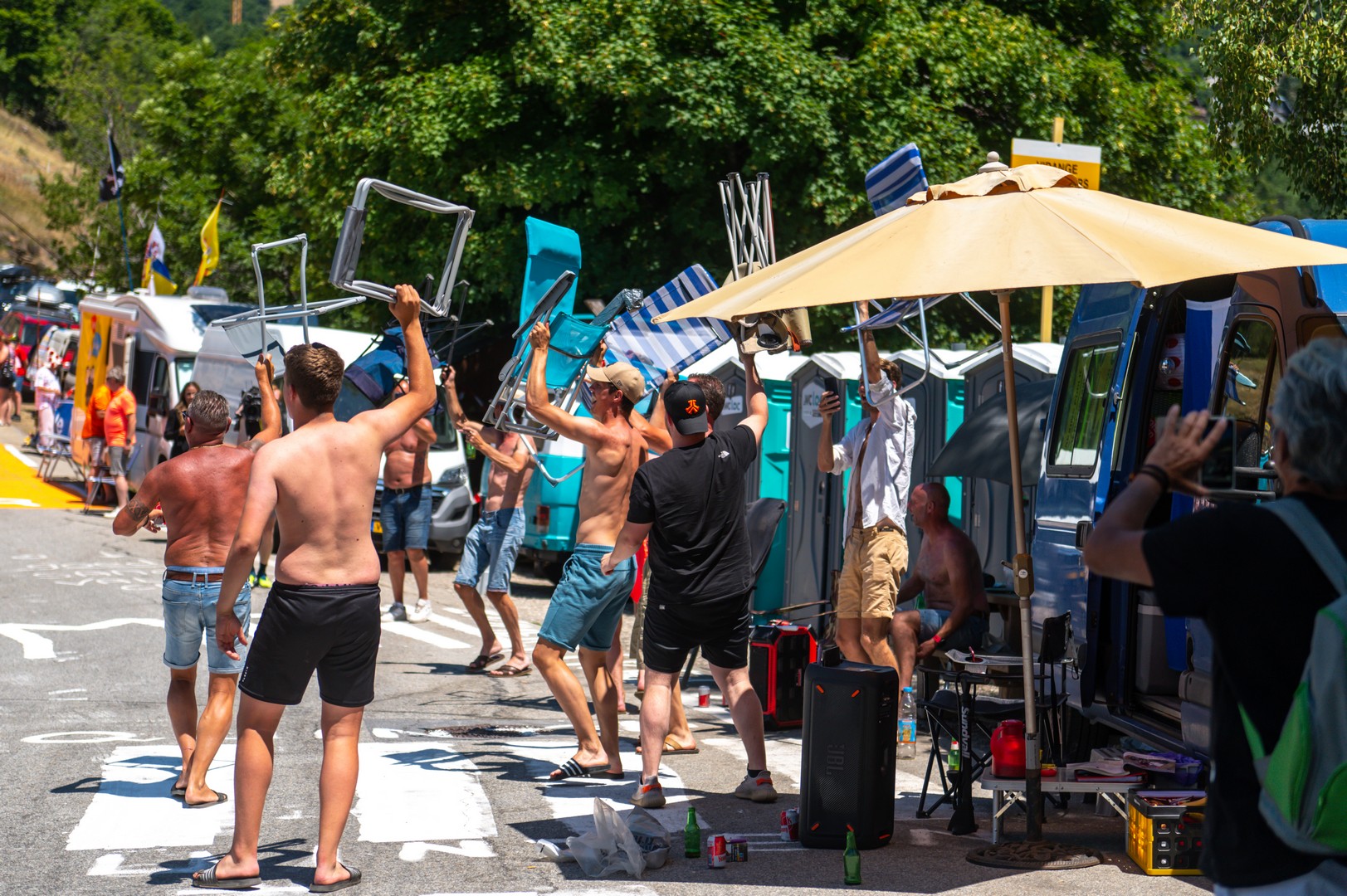
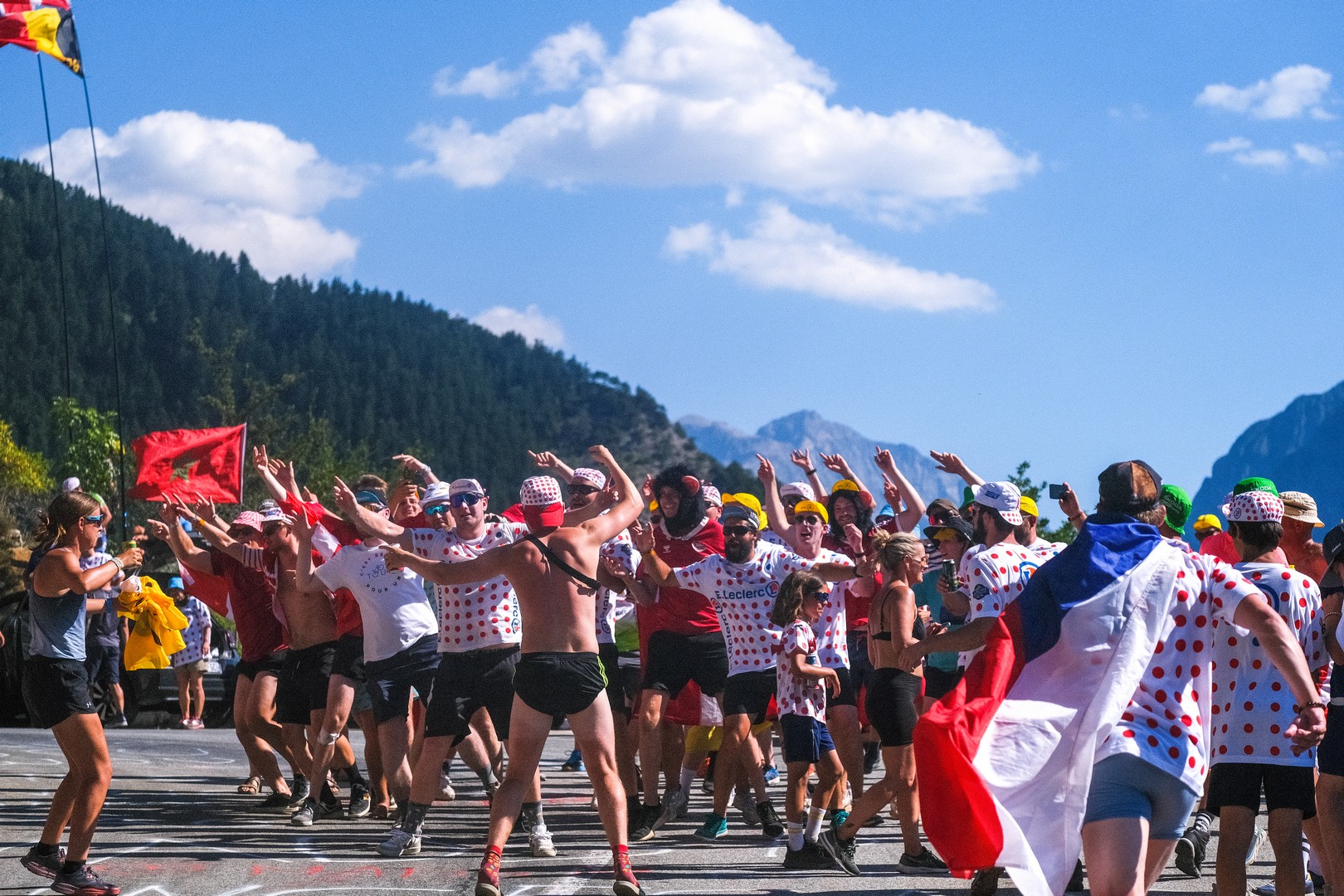
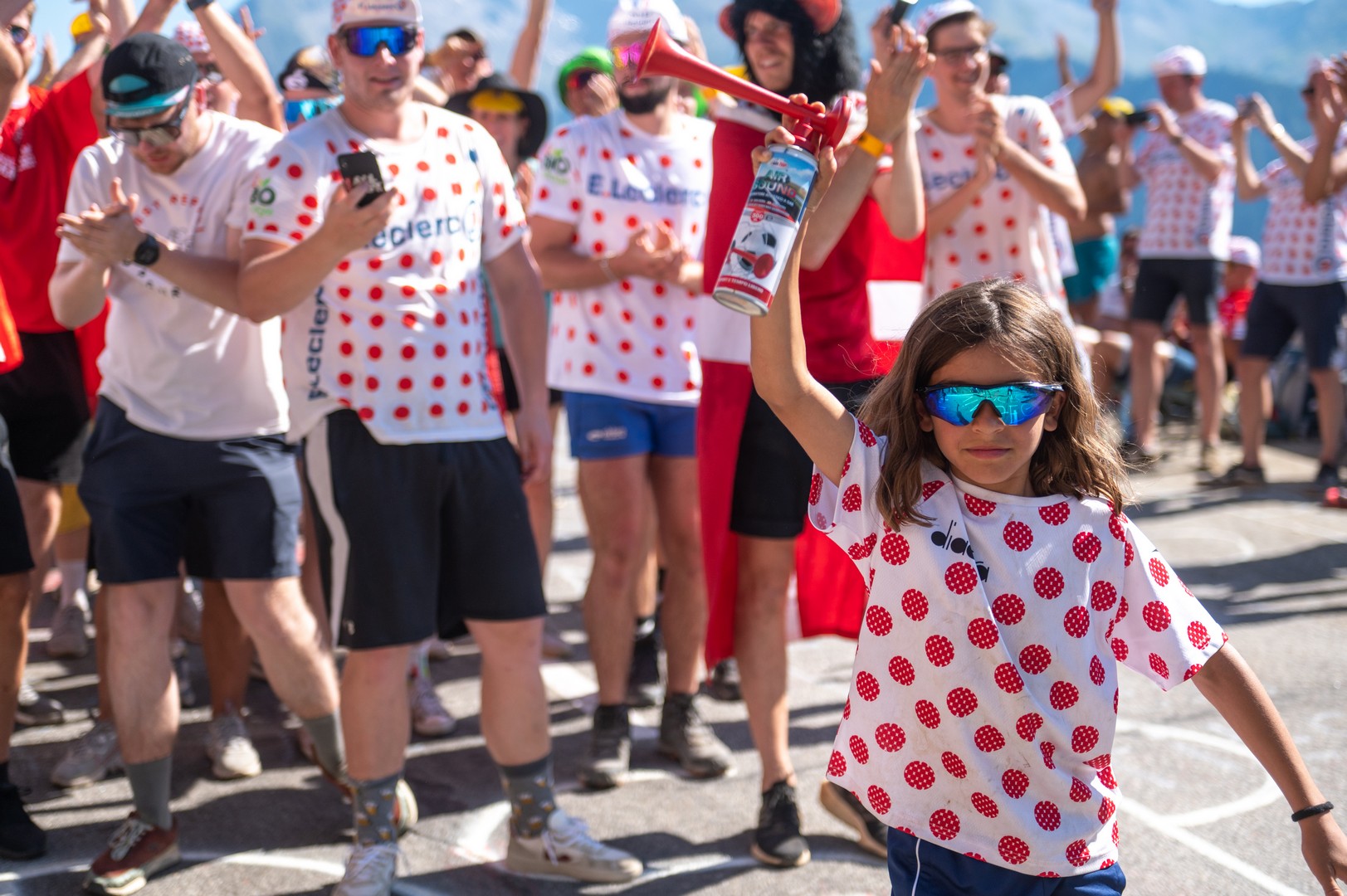
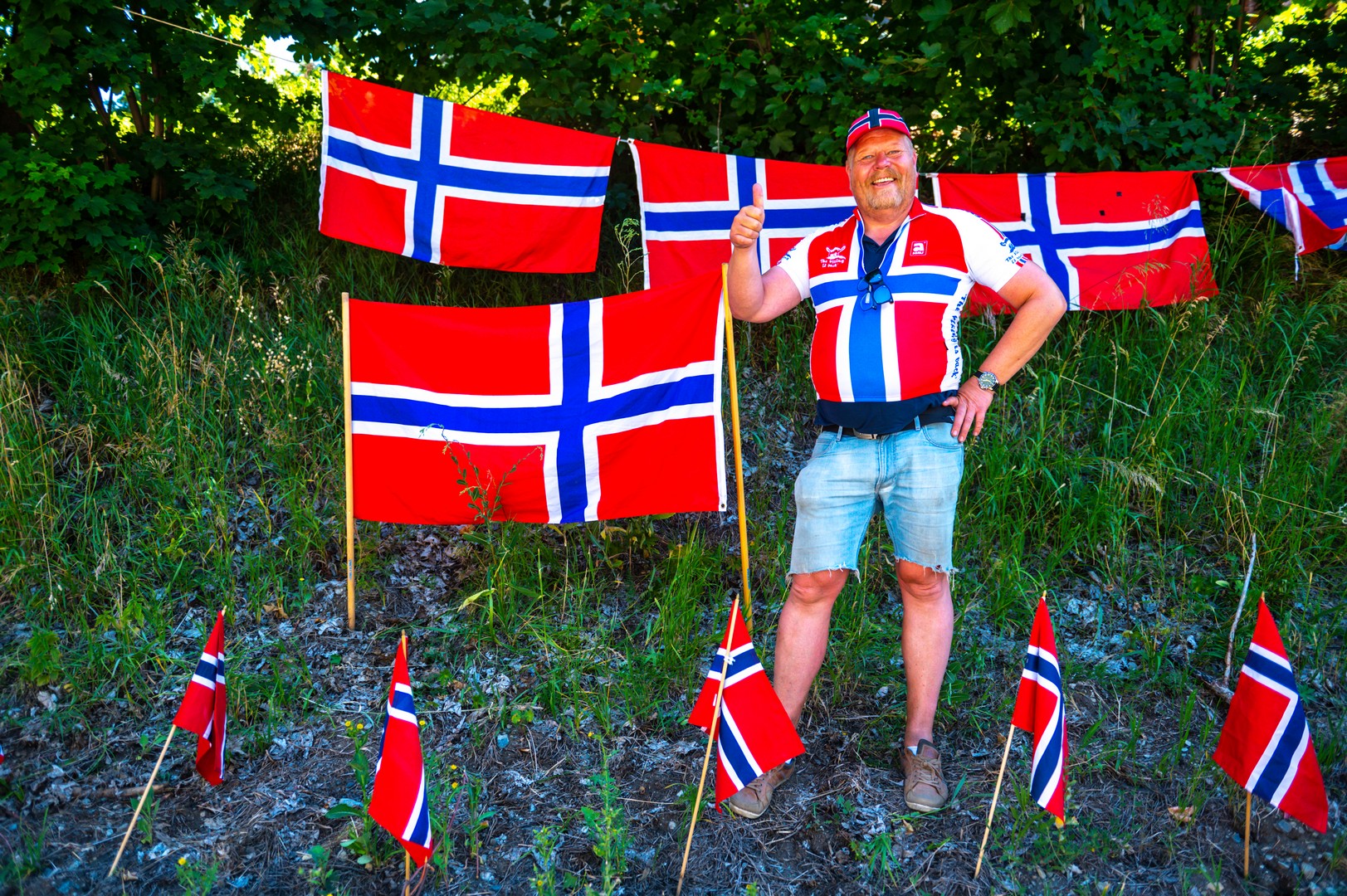
13.8 kilometres at an average gradient of 8.1 per cent: those are the measures of Alpe d’Huez. Twenty-one virages, exactly so: even when you need to send a letter addressed to the Église Saint-Ferréol, you will write virage 7 on it. Nothing more is needed. They say they were numbered even before being dedicated to stage winners, to show tourists–people have been skiing here since the 1930s–how far remained to the resort area, or to give snowplough drivers an indication of their approach to the summit. They also call it the mountain of the Dutch because of the eight orange victories, and the whole area in front of the Église Saint-Ferréol dresses itself in orange: the Dutch Corner, of course. And when you reach it by bicycle there is a little relief, because it is a madhouse. A few bends higher, instead, there is the boozy lair of the Norwegians: music blaring, the dominant colour red and blue. At the head of it all is the Viking, a cult figure of the Tour’s climbs, dressed like a skier from another age and wearing a horned helmet. “If you want to come, every evening we throw a party with music and beer until late.” As he tells us this, at his feet there is a pair of skis. A few bends lower, meanwhile, the area taken over by Geraint Thomas’s supporters, with a huge flag hanging on the wall showing the rider’s face as a young man and, beside it, a giant print on fabric of Thomas in the yellow jersey. A couple from Wales arrived with a long, endless camper van and will be forced to drive all the way to the top because there is no longer any room on that bend. They brought a Persian cat called Ripley and keep him in a cage larger than many of the tents seen along the climb, “but,” explains the woman who takes him everywhere with her, “it is only for safety in the morning. During the day we will actually let him roam a bit more freely, and then he will come for a walk with us on a lead. More than a cat, to us he is a faithful friend.” They have been here for almost a week by now, have travelled thousands of kilometres and cannot wait to support the winner of the 2018 Tour, still fully in the fight for the podium.
To read the full version: https://alvento.cc/prodotto/alvento-22/