


Seeing Wout van Aert win.
Before pitching a piece like this to the editorial team, in this tone, I thought long and hard about it. Not for nothing, but because I too belong to that legion of chronic losers who – perhaps because of my generation, but also because of the way I was raised, educated, and shaped by what I’ve read and watched – still believe, if not too blindly or devoutly, in magic. So before even thinking of writing an article with the words “winning” and “Van Aert” in the title, I gave it a lot of thought, knocked on wood, and in any case I’d like to apologize in advance to the many loyal followers of the Belgian rider. The fact is, seeing Wout van Aert win is a privilege for us, for those racing alongside him, and for his teammates too – not to mention how crucial he has been, for example, these days at the Vuelta, to Brennan’s successes (at the time of writing, the 21-year-old Englishman has taken 5 stages, 4 of them with the Belgian’s help). And there’s no need to bring up the Dutch team’s past successes either – we’ve talked about them already, and it would take a whole book to do them justice, who knows. Each of his victories seems to come from a deeper, darker, more human place than the one cycling usually allows. There are riders who win because they have to – because of their role, their salary, their genetics. Van Aert, instead, wins like a beautiful season after a long winter: a relief as much as a triumph.
Two stages at the Vuelta, in the span of just a few days. Two finishes that do not change the history of cycling – not really – but that do change ours a little, and his too. For those of us who supported him through the dark moments and know what it means to see him like this again – fierce, surgical, at peace with the road – it means watching him return to doing what he does best: winning. Only then can we say that Van Aert has gone back to being Van Aert, and that is enough.
The privilege lies entirely here: in being able to witness an athlete who has never stopped being great, who this season has found both rhythm and victories, who that day at Roubaix… well, that day at Roubaix… Who has been through it all, and we know it: crashes and surgeries, illnesses and wasted springs, redemptions and abysses. And we were there, watching him struggle, searching his every gesture for a sign, a flash, a clue that might say: he’s coming back. And then, after yet another setback that only a few months ago ruled him out of the Tour, here he is: he’s back.
The two victories at the Vuelta are not just two victories. They are a declaration of existence. They are the moment when a rider finds the thread again and pulls it tight, with a fury that turns into gratitude. Gratitude toward cycling, yes, toward the road, and toward those who waited for him. Gratitude toward himself, above all.
That is why seeing him win is always a privilege, because we know what lies behind it. We know what it has cost him. We know that every meter of those two stages was a meter stolen from bad luck, fear, and doubt. We know that he is not winning to prove something to others, but to prove something to himself: that he is still there, that he is not finished, that cycling has taken nothing from him that he cannot win back. Roubaix, and then these stages at the Vuelta – but more broadly, a 2026 in which he has reached an extraordinary level, perhaps one of the very best of his career.
In two weeks, the World Championships are in Canada. We do not know what will happen, and that is perfectly fine. He does not need to win. He does not need to put on a show. He does not need to become a rainbow-jersey van Aert. He only needs to be this van Aert – the one who has found the road again, found himself again, the one who has started winning again for himself and for others too, because that is how he likes it, and don’t give him a hard time if – or rather, when – he tears himself to pieces to help a teammate win.

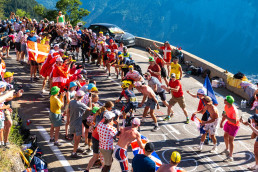
Alpe d'Huez, 14 luglio: the day of anarchy
This text – of which you will find only an extract below – appeared in issue 22 of alvento (August 2022).
Text: Alessandro Autieri
Photos: Paolo Penni Martelli
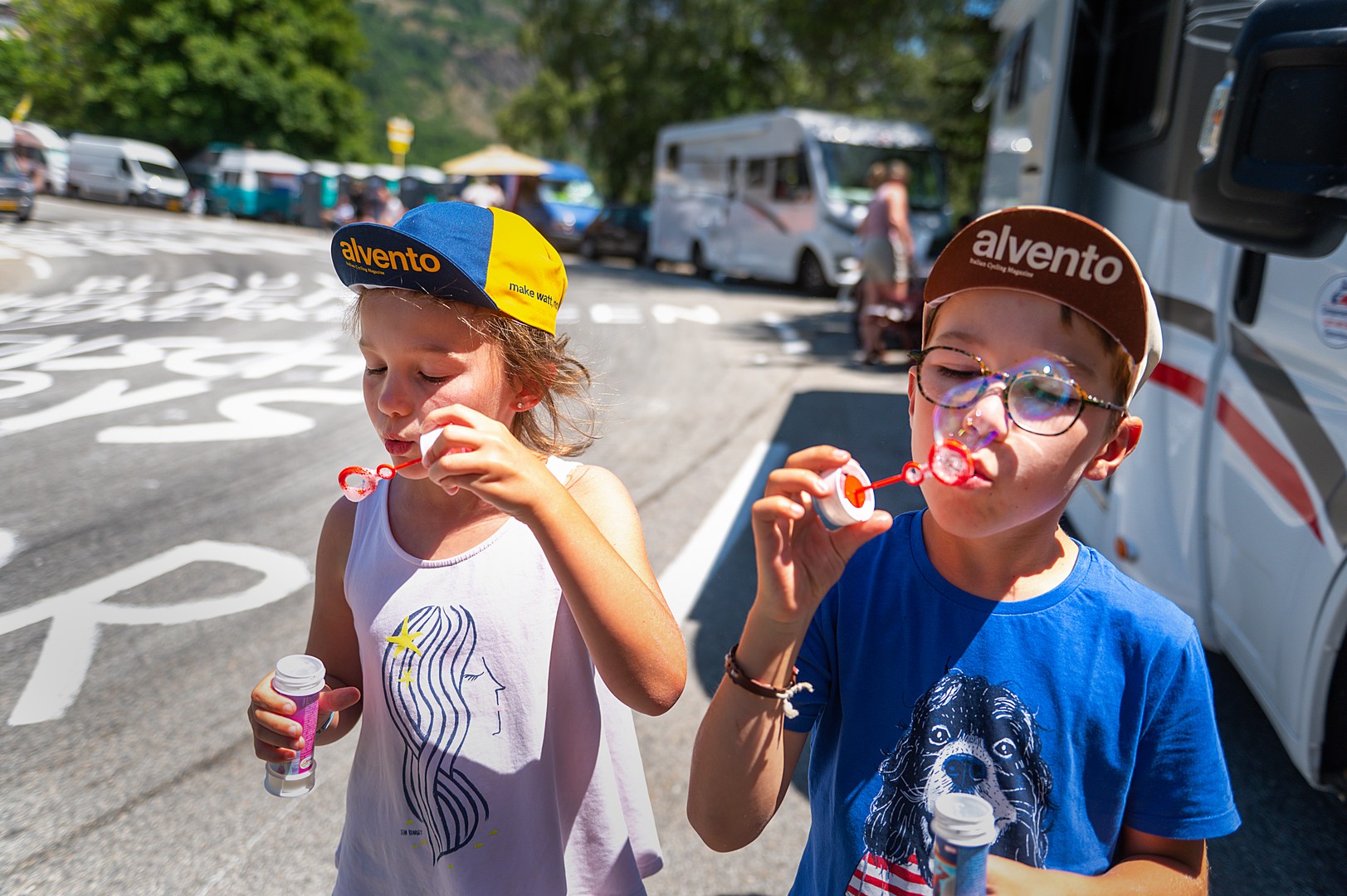
We spent three days camped on Alpe d’Huez to ride, eat, drink and dance, meeting people from all over the world. In short, to experience first-hand one of the most extraordinary spectacles of support and celebration in sport.
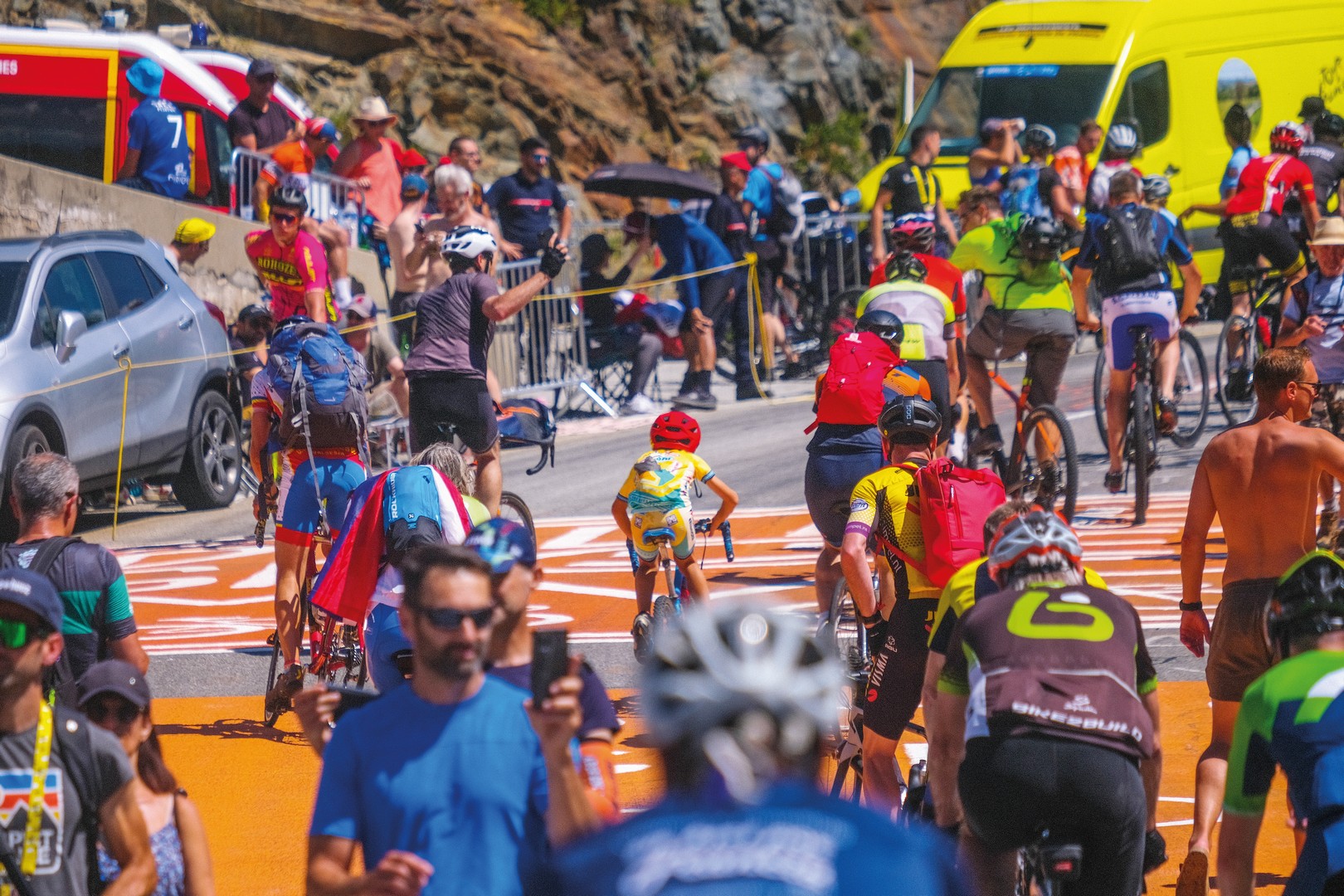
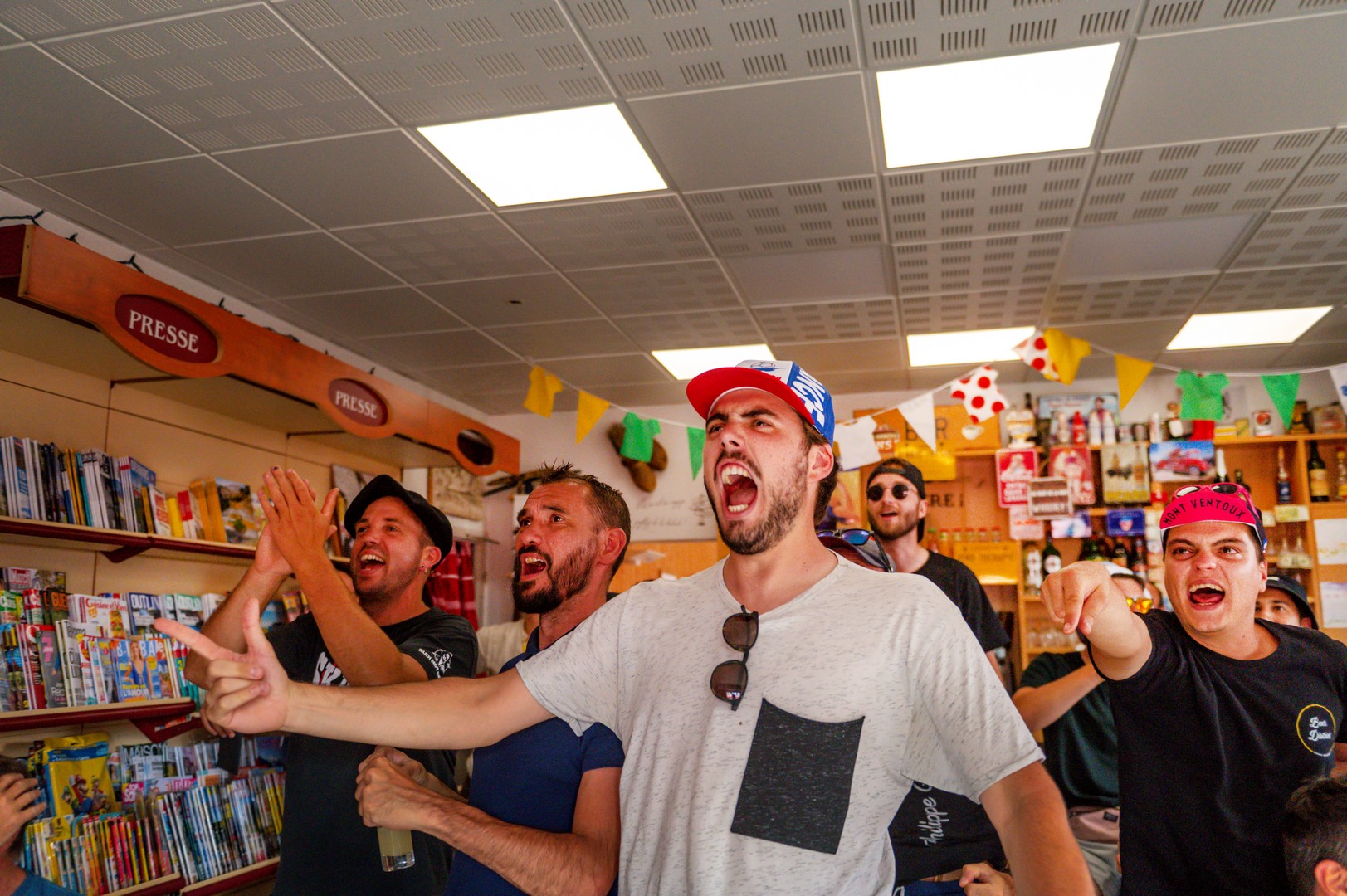
And yet up there, at the summit of Alpe d’Huez, inside Notre-Dame des Neiges, they played the Kleuker organ. It does not matter for whom the music was struck up, nor even who would go on to win. Take Tom Pidcock, for example, who would climb the ascent in around 41 minutes–almost a human time compared with the past, set by riders who scarcely seem human at all, with the face of an elf escaped on a bicycle from an English moor, a physique that looks like nothing beside certain colleagues of his, and yet with extraordinary gifts when the road rises, and also when it falls: his breakaway feat on Alpe d’Huez would begin with a headlong plunge down the Galibier.
It does not matter if, along the bends, Froome would remind us who he had been by going up the road where he had once been insulted, this time receiving the cheers of the whole crowd; or if Ciccone, losing touch near the end, would not pull on the polka-dot jersey. It does not even matter if Pogačar would try, without succeeding, to distance Vingegaard, after the first day of crisis in his entire career, on the Granon. It does not matter how the Tour will end. Who will win or who will lose, because on 14 July, the day of the French national holiday, there is Alpe d’Huez. On 14 July, in Bourg d’Oisans down in the valley, the bells will ring out a festive peal; up there the organ will resound; in between there will be delirium.
And yet it is so: you have to ride the whole thing with your head down and ignore anyone who tells you, For an amateur it is not really that difficult, as Enzo, from Trentino, says. He rode it starting from the summit, passing over the Col de Sarenne to descend as far as Bourg d’Oisans and then climb it again. He is alone with his van, fitted with every comfort–a kitchen, a sink, a bed–and with him he has a Merida that once belonged to Michele Scarponi. “I should be meeting some friends on race day.” In fact he says Sunday, but the stage will be raced on Thursday. These are days of celebration and it has felt like Sunday for hours now, in the midst of that cycling cosmos that takes shape through the ceaseless passage of thousands upon thousands of bicycles, and then campers, cars, people on foot. Day and night. The estimates will say that along the whole climb there will be more than a million people, who knows.
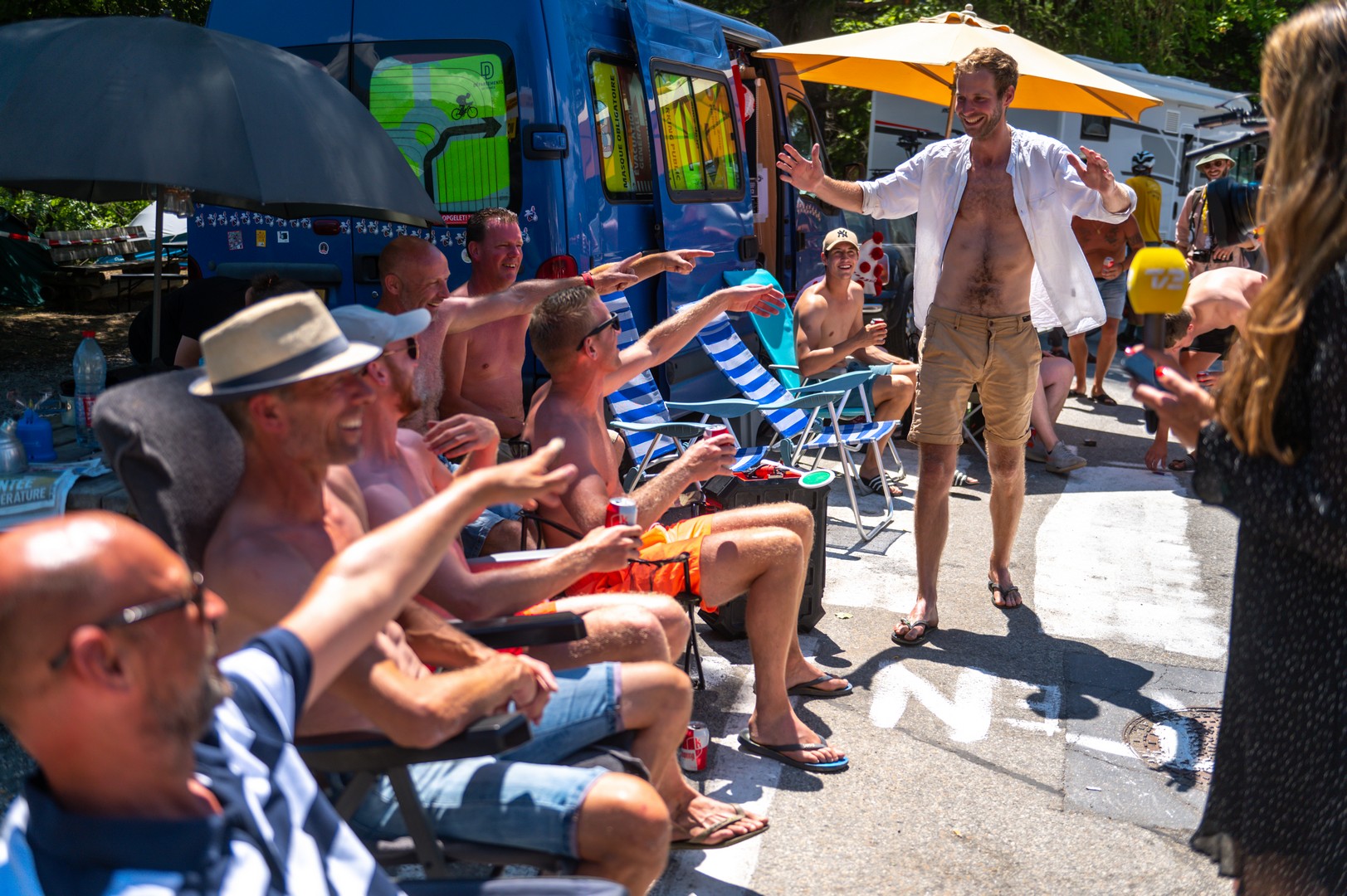
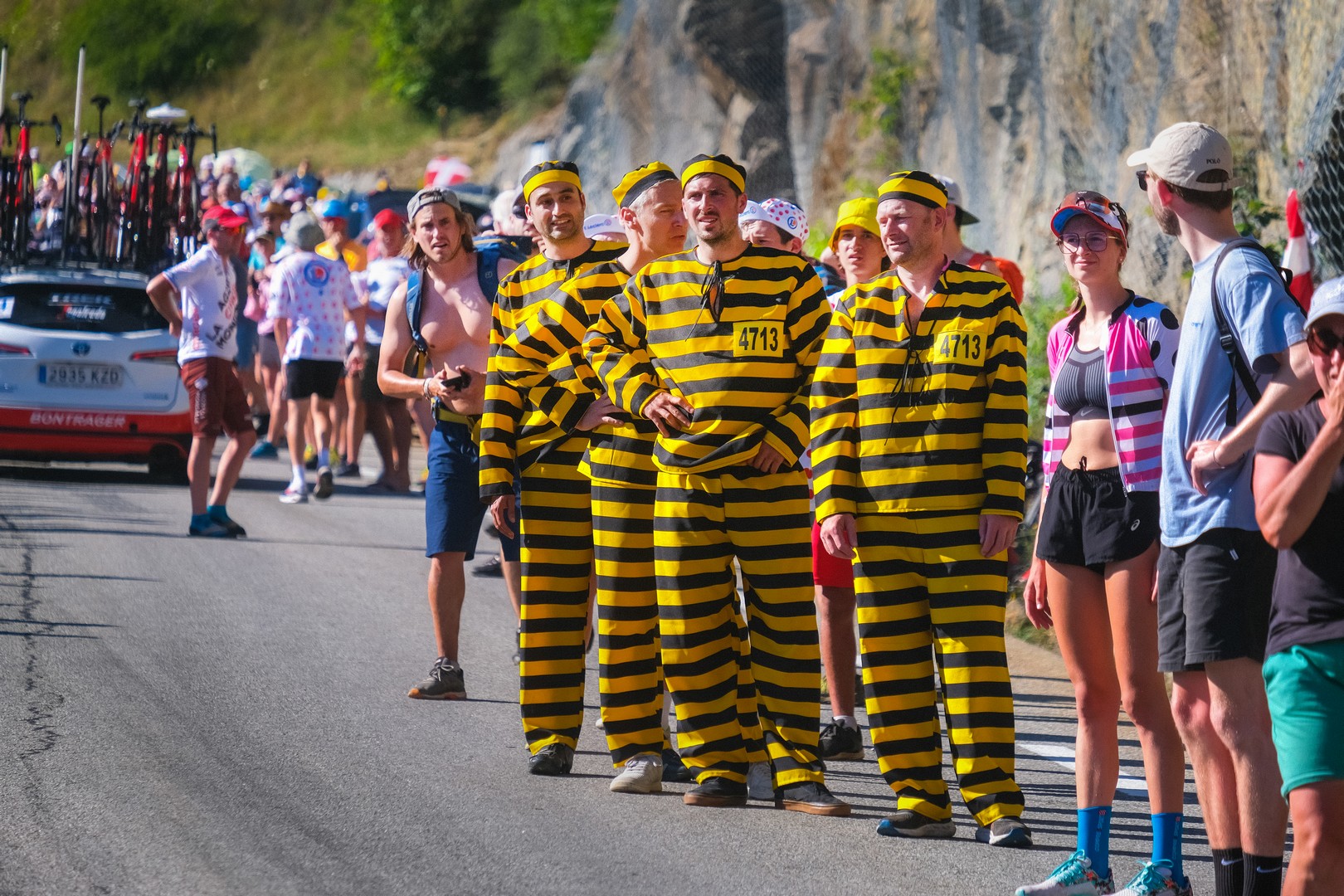
You have to ride the whole thing with your head down, ignoring the buildings that can be glimpsed at the top from almost every hairpin, on that plateau where there is everything: restaurants, bars, supermarkets, a swimming pool, a cinema, a conference centre, even pharmacies, the fire station and the gendarmerie. Up there you must not look, otherwise you will see Indians appearing from behind the bends, while at the summit, beneath the Pic Blanc glacier, you will find hideous tower blocks, hotels with more than thirty thousand beds, cranes preparing to build more and more. Up there there will be thousands of camper vans–most of them from Slovenia, patriotic supporters of Pogačar and Roglič, because the celebration may matter, but champions draw an entire people behind them, gathered here in huge numbers–and not even one space left to park a car or stop and bivouac. There will be people forced to climb even higher than anyone might have imagined, pitching camp on certain stretches of the ski slopes; others will ring the little lake just after the finish line with their tents, there letting their dogs swim while ducks splash about in search of a peace they will find only from the day after the race has passed through.
And yet you have to pedal, head down and driving on, and get through those hairpins, the virages, which flatten out, bring relief and seem to launch you into straights as cruel as nails driven mercilessly into your thighs. Open bends–crowded with people and bicycles propped against the walls for days already–from which gusts of wind arrive to dry the sweat, deceive you and mark the rhythm: from number 21, dedicated to Coppi, first winner here in 1952, to number 1, for Guerini, winner in 1999 after crashing full into a photographer standing in the middle of the carriageway. Passing by number 7 for Bugno, or numbers 3 and 2 for Pantani, author of an unsurpassable climbing time.
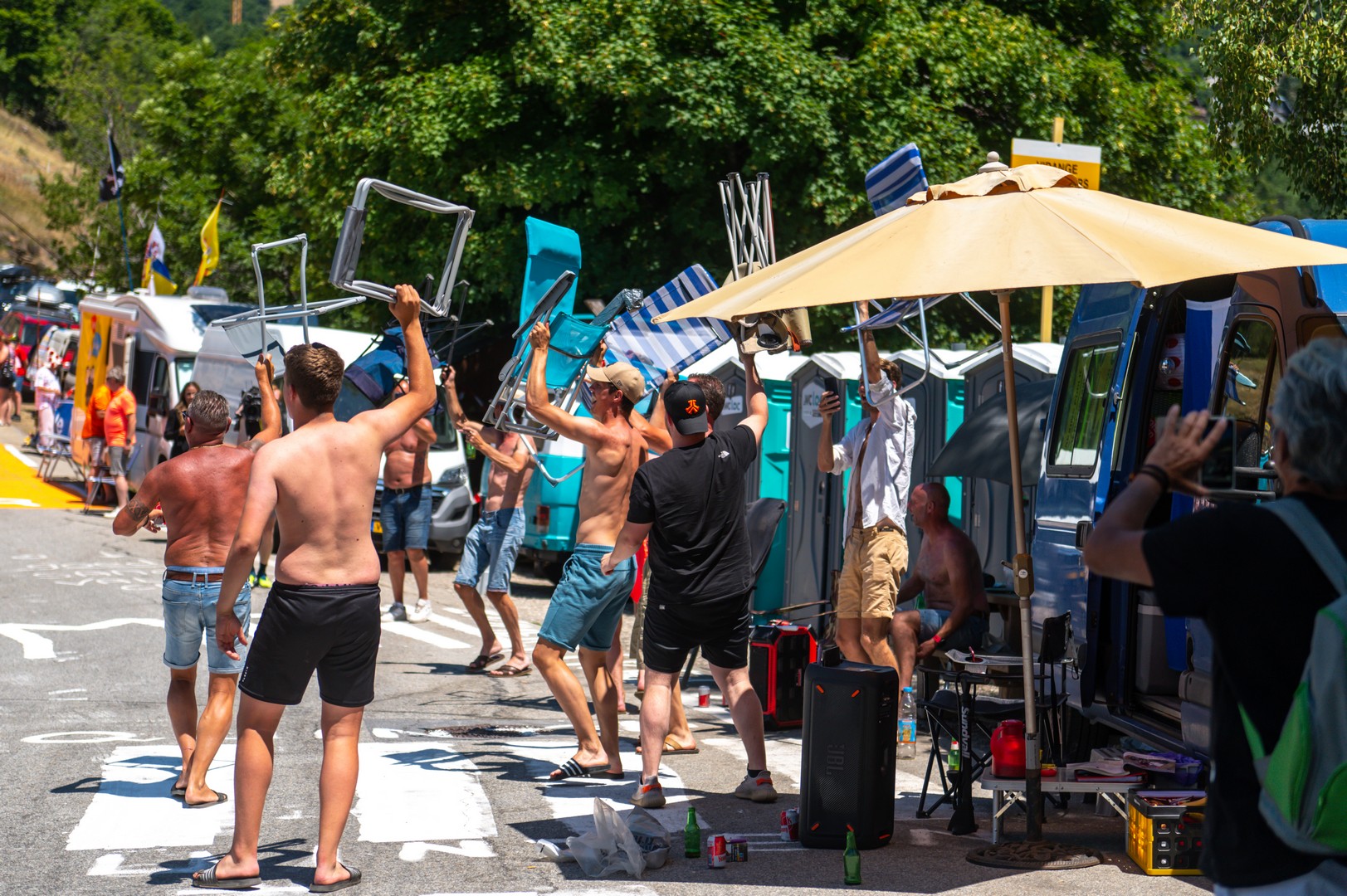
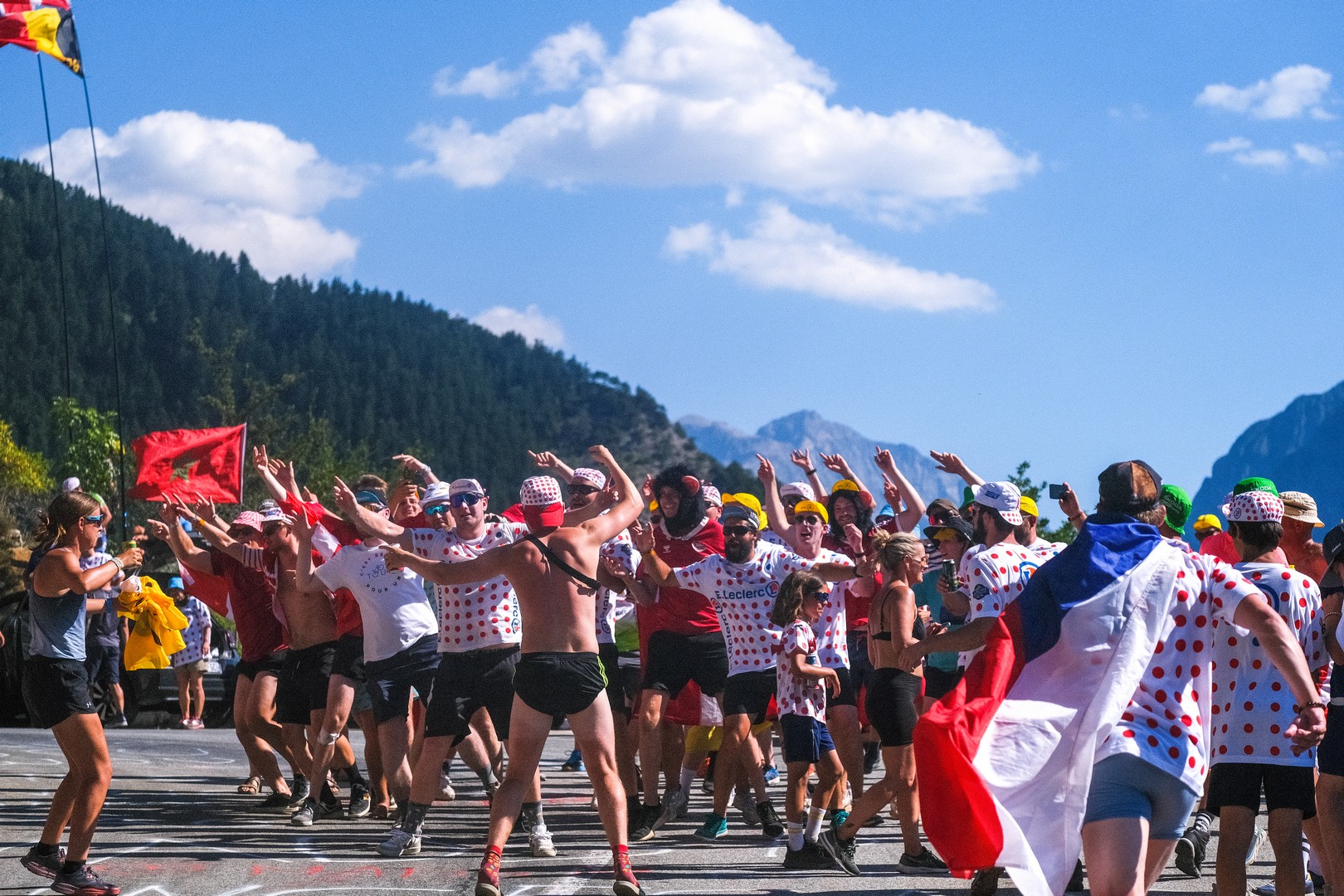
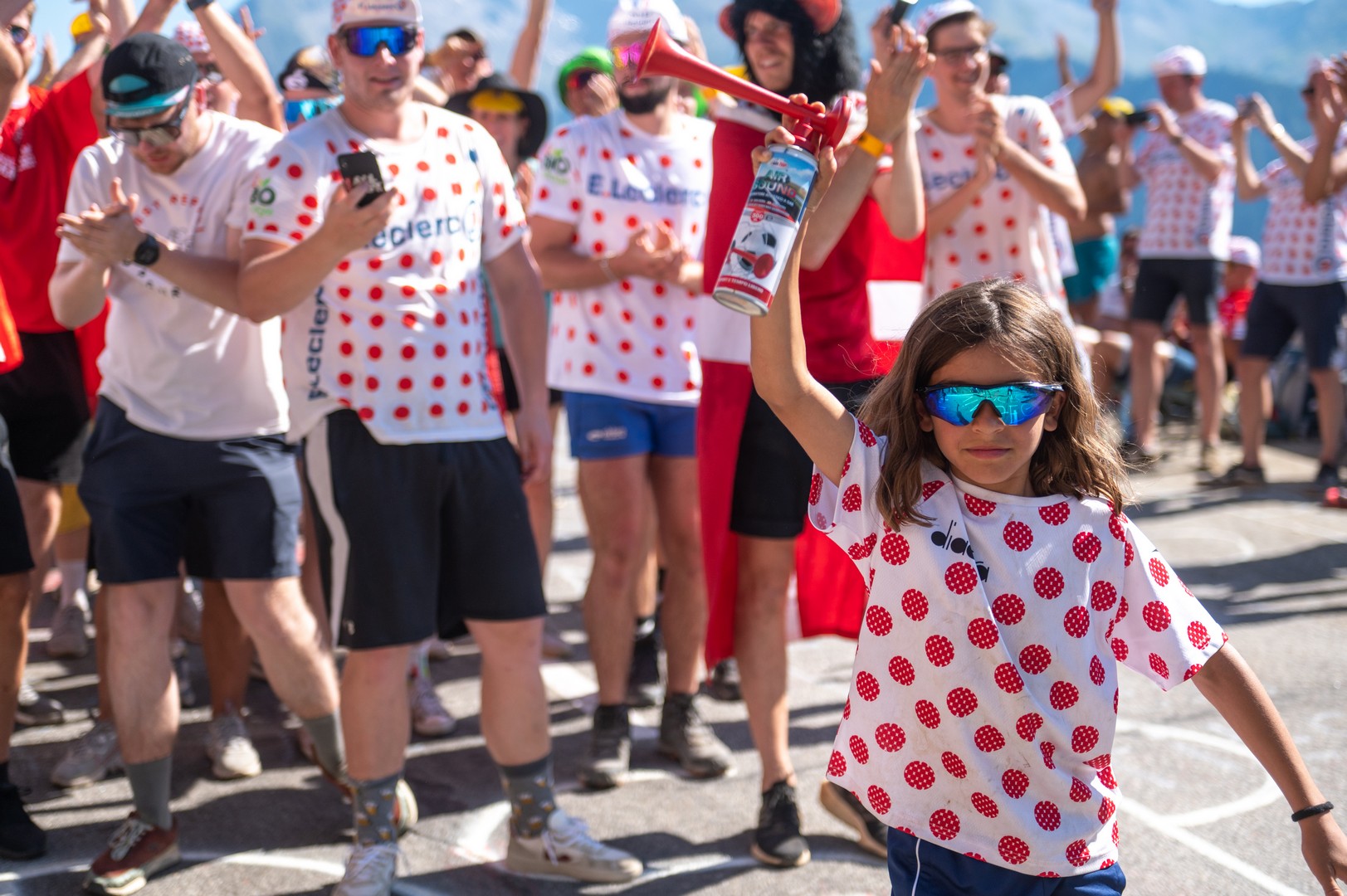
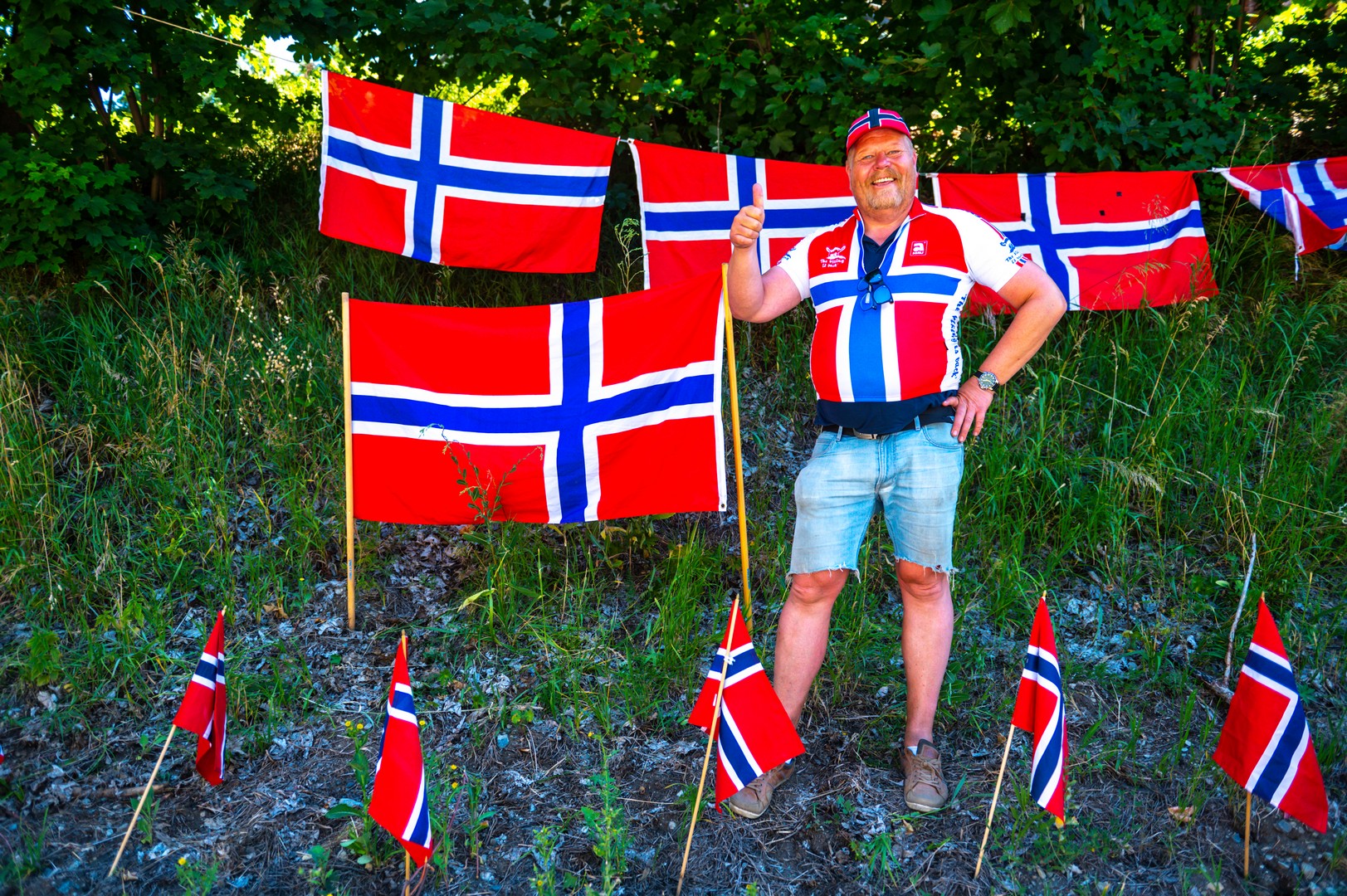
13.8 kilometres at an average gradient of 8.1 per cent: those are the measures of Alpe d’Huez. Twenty-one virages, exactly so: even when you need to send a letter addressed to the Église Saint-Ferréol, you will write virage 7 on it. Nothing more is needed. They say they were numbered even before being dedicated to stage winners, to show tourists–people have been skiing here since the 1930s–how far remained to the resort area, or to give snowplough drivers an indication of their approach to the summit. They also call it the mountain of the Dutch because of the eight orange victories, and the whole area in front of the Église Saint-Ferréol dresses itself in orange: the Dutch Corner, of course. And when you reach it by bicycle there is a little relief, because it is a madhouse. A few bends higher, instead, there is the boozy lair of the Norwegians: music blaring, the dominant colour red and blue. At the head of it all is the Viking, a cult figure of the Tour’s climbs, dressed like a skier from another age and wearing a horned helmet. “If you want to come, every evening we throw a party with music and beer until late.” As he tells us this, at his feet there is a pair of skis. A few bends lower, meanwhile, the area taken over by Geraint Thomas’s supporters, with a huge flag hanging on the wall showing the rider’s face as a young man and, beside it, a giant print on fabric of Thomas in the yellow jersey. A couple from Wales arrived with a long, endless camper van and will be forced to drive all the way to the top because there is no longer any room on that bend. They brought a Persian cat called Ripley and keep him in a cage larger than many of the tents seen along the climb, “but,” explains the woman who takes him everywhere with her, “it is only for safety in the morning. During the day we will actually let him roam a bit more freely, and then he will come for a walk with us on a lead. More than a cat, to us he is a faithful friend.” They have been here for almost a week by now, have travelled thousands of kilometres and cannot wait to support the winner of the 2018 Tour, still fully in the fight for the podium.
To read the full version: https://alvento.cc/prodotto/alvento-22/
The Tour at the Guillotine: Stage 6 report cards
POGACAR 10 What do you want to say to him? It is true that hegemony is built by captivating rather than boring, but if he is simply going so much better than the others, what is he supposed to do? Ease off? He locks up the Tour after 6 days, (to quote the wise man: the shortest Tour in history), on the first real climb he drops everyone, preserving the advantage on the descent and extending it over the long false flat finish. Just over two weeks to a fifth Tour, like the giants of the honours list. With 12 stage wins he would draw level with Cavendish, the absolute record holder for stage victories. Perhaps (!) he will not manage it this year, there are 14 stages left, mathematics does not condemn him, but he still has another three or four editions to have a go.
SEIXAS 9 What do you want to say to him? Part two. He is 19 and yesterday, basically, only Pogačar and Vingegaard were stronger than him. Not just any two riders either, quite the opposite: the two who are defining this era of the Tour, and whom he will beat sooner or later, of that we are certain. He seems to suffer quite a lot, especially at the start, on his first major climb at the Tour, but in reality he paces himself and comes through it superbly. One day all this will be his.
LOTTA PER IL PODIO 8 From Del Toro in third (rated 9, a performance of the highest level from him), to Skjelmose in ninth, there is a minute and a half, and in between a whole series of fine riders, different from one another, at times almost opposite, in talent, faces, background, and characteristics. Alongside the already mentioned Del Toro, Seixas and Ayuso, there are also Evenepoel, Lipowitz (I would love to see him dealing with the giant mountain stages of the 1990s, with seven or eight hours on the bike, absurd elevation gain, five or six cols to climb – I think he would go even stronger), Martinez and Skjelmose. There will be plenty to watch on the next climbs.
EVENEPOEL 7 Many had already written him off. Perhaps he will not be what we thought he could become, but the Pogagaard is on another level compared to everyone else. His fight for the podium is certainly one of the main reasons for interest from here to Paris, provided he does not crack on the next climb, together with his post-stage remarks, so far removed from the general flattening and the everybody-get-along rhetoric, and which continue to give stories, headlines, and joy to lovers of chaos and the unexpected.
LENNY MARTINEZ VS VALENTIN PARET-PEINTRE 7 At the end of yesterday’s stage Tadej Pogačar is wearing the polka-dot jersey, which Lenny Martinez will wear in today’s race, but the battle between these two French featherweights could light up the next mountain stages. Lenny, however, will be closely watched, because yesterday he was flying on the climb and for the moment he is in the fight for the podium. Valentin, on the other hand, is out of the general classification and will have much more freedom. We shall see, but in the meantime we are getting carried away, like in the days of Barguil, Bardet, and Pinot.
BERNAL 6 Commendable, almost moving, Eganito is right in the thick of the fight for tenth place, with what has now become his greatest quality: consistency. Clearly the best of his team on a day when Arensman blows up completely (and, as in 2025, will likely try to win from the break), the Colombian national champion remains reliable like in the old days when he was fighting for stage races, but with a lot of riders – at least nine for the moment – climbing better than him.
SKJELMOSE 6 Hugely underrated, almost in the shadows, and yet the ultra-skinny Dane is there again this year, holding firm and fighting for a top-ten finish in a Grand Tour. He knows how to win, he knows how to attack, he knows how to suffer through it: what more does he have to do to be appreciated?
O’CONNOR 6 Credit for the courage of that completely futile attack before the Aspin. A dress rehearsal for a more important breakaway from next week onwards.
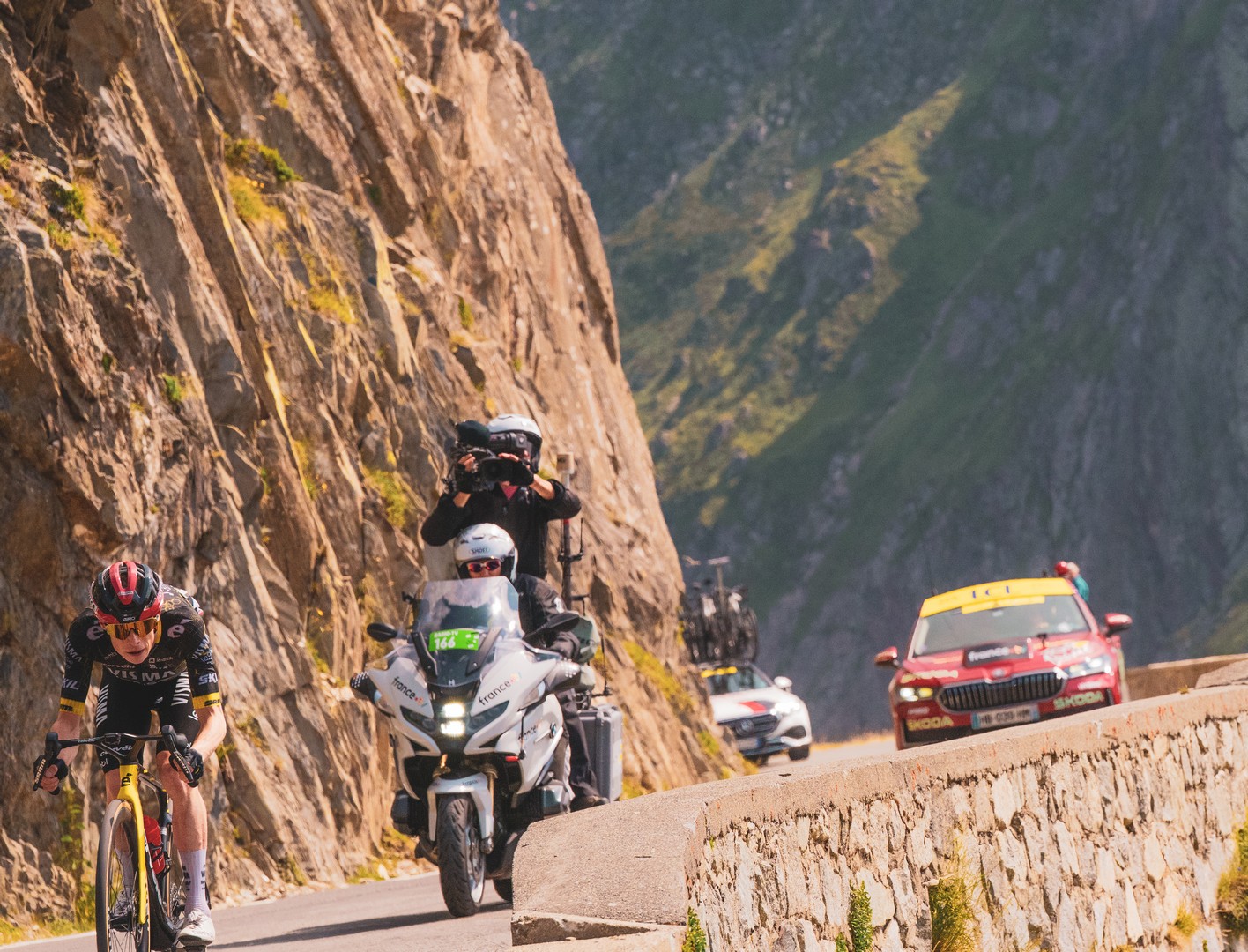
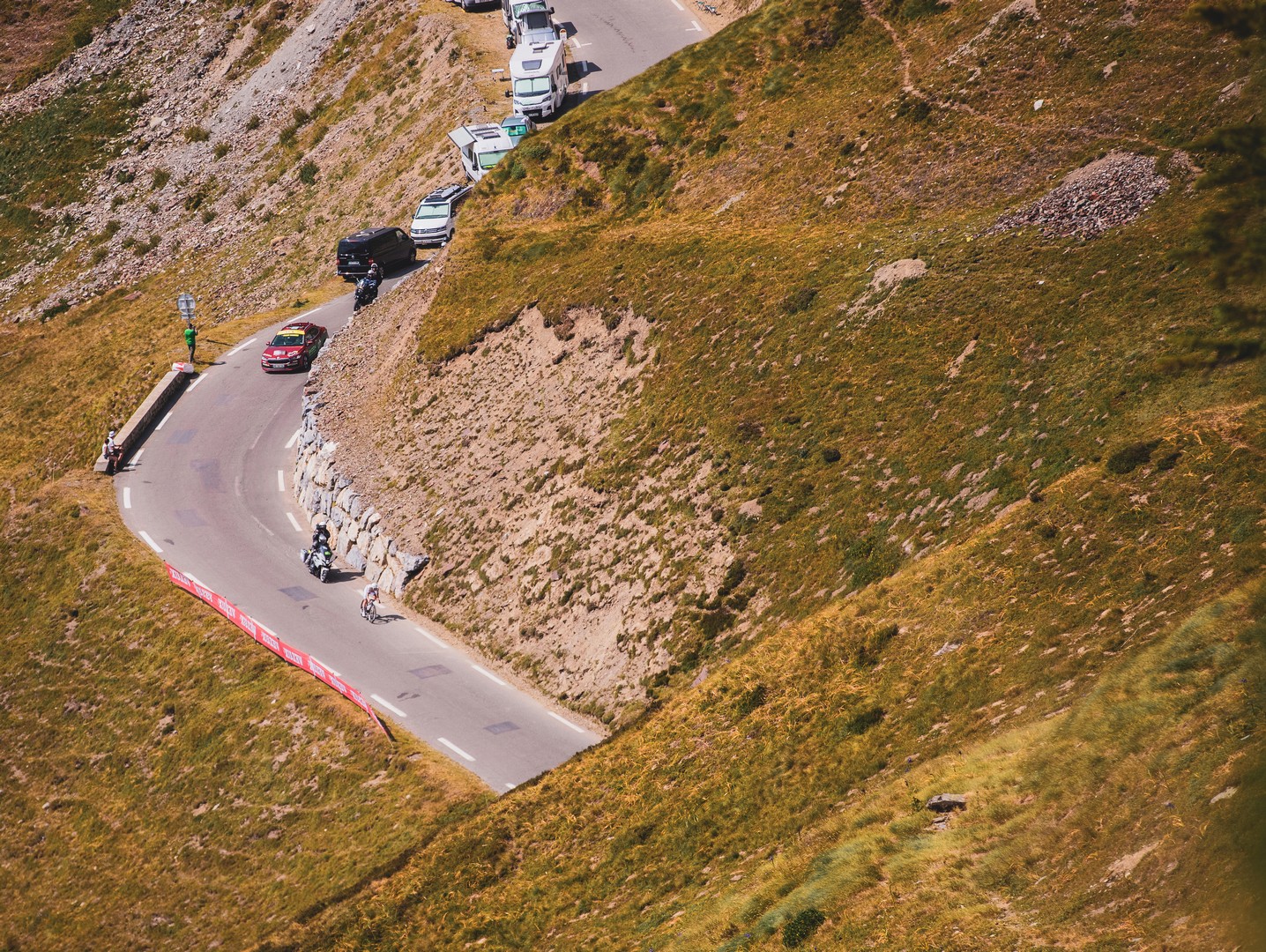
AYUSO 5 Okay, he finished alongside Evenepoel, Seixas, Del Toro and the rest – riders rewarded with almost top marks – so why the disparity? Because for what he has shown in the past, for what he says and what he wants, we imagined him at a higher level. Postponed until the next climb, where we expect him to drop at least some of those he finished with.
JOHANNESSEN 4 Tobias Halland is the disappointment of the day (together with Carapaz, rated 3, who finished not far behind). The Norwegian takes a heavy beating and probably says goodbye to any top-five ambitions. The Tour is long and, by nature, he will likely try again from distance – provided they let him go. All this while his brother Anders was contributing to the crash of yellow jersey Traeen, who reached the finish dazed and battered and will not start today.
VINGEGAARD 3 The numbers will say he has never gone this fast, but in relation to his rivals, yesterday’s stage was one of the Dane’s worst performances at the Tour. The race for yellow already looks over, and now he also has to look back over his shoulder with concern. Too ugly to feel real – both him and, more broadly, his team, who sent Campenaerts up the road with no clear purpose whatsoever, though they are at least partly rescued by Kuss (7), who finishes not far behind his leader, and Piganzoli (6), who is dropped early but does not completely implode. Jorgenson (1), on the other hand, is simply alarming in free fall.
WHO SENT TIBERI TO THE TOUR 2 One question remains for me, and it was already being discussed this winter: if a rider needs to rebuild himself, why would you send him to the slaughter in the hardest race in the world?
POSITION ON THE BIKE RULE 1 Did Huub Artz really get a warning while he was in the break for a position the jury considered irregular? Please…
TEAM RADIO 0 Or 10. Wonderful as they are useless, but at least they fill the moment. The Decathlon one was illuminating: never lose sight of Pogi and Vingo if you stay with those two, you can’t go wrong and everything will be fine. The Bahrain one was more amusing: to test both the radio and Lenny Martinez’s reactions, they made up a Pogačar attack at kilometre zero. He would attack shortly after.
The Tour at the guillotine: Stage 5 report cards
VEISTROFFER 10 We had all been waiting for this day – and no, I am not talking about the sprint, but about Veistroffer in the break, on the attack from kilometre zero. What goes through a man’s mind to head off alone on a doomed venture in the heat, with the peloton behind him and his fate already sealed? What must have gone through the head of someone who has only been a cyclist for four years, who holds a degree in climate engineering, worked as a naval engineer for the French navy, and suddenly found himself leading a stage of the Tour? (full answer here) He has now racked up 2,096 kilometres out in front this season with yesterday’s break included, and at the end of the day he also got the announcement of a contract extension with his team through to 2028. “To be honest, I never really believed in it, but there is always that little voice in your head that says: what if all the stars aligned? But you have to be mad to believe it.” Come on, Baptiste – we are mad too, and we believe, and we are cheering for you to win a stage at the Tour.
KOOIJ 9 At his first sprint finish at the Tour, he wins. Stage victories at the Giro and the Tour, 53 career wins in total at just 25 years of age. At one point, first because of physical problems – which caused him to miss the whole spring – and then because of team uncertainty over who would or would not go to the Tour, he risked watching the French race from home, just as happened in the past two seasons with his former team – one of the reasons why he left. Instead, here he is, dazzling beyond belief: the Cheetah, who in one stroke takes on the likeness of Merlier in his pedal stroke, tactical instinct, stylistic elegance and sheer power.
XDS ASTANA 8 Everything was perfect apart from the spearhead: Kanter is certainly no Kooij, but by riding as a unit in the finale they achieved the best result they could possibly have hoped for. They had barely been seen in the previous days, battered by crashes, and at the first real sprint they came away with a stage podium – for the German sprinter, one of the best results of his career, beyond even the rosiest expectations.
UNO-X 7 On the first day in their history defending the yellow jersey, they spent the entire stage controlling the race. They still had the strength in the finale to try to take charge again and launch their sprinter, Wærenskjold, though they left him exposed a little too early. Even so, it remains a historic day for them: nine years ago they were fighting it out in the mud on the Continental circuit and could never have imagined a day like this.
ARTZ 7 The Dutch rider stepped into a new dimension by taking a somewhat unexpected fourth place, a result that means a great deal both for him – a high-quality all-rounder, but certainly not one of the fastest wheels in a Tour sprint – and for the team, which, besides Veistroffer’s breakaway, also has to reckon with the gap left by De Lie after his withdrawal two days ago. He seized the opportunity brilliantly, and others will surely come.
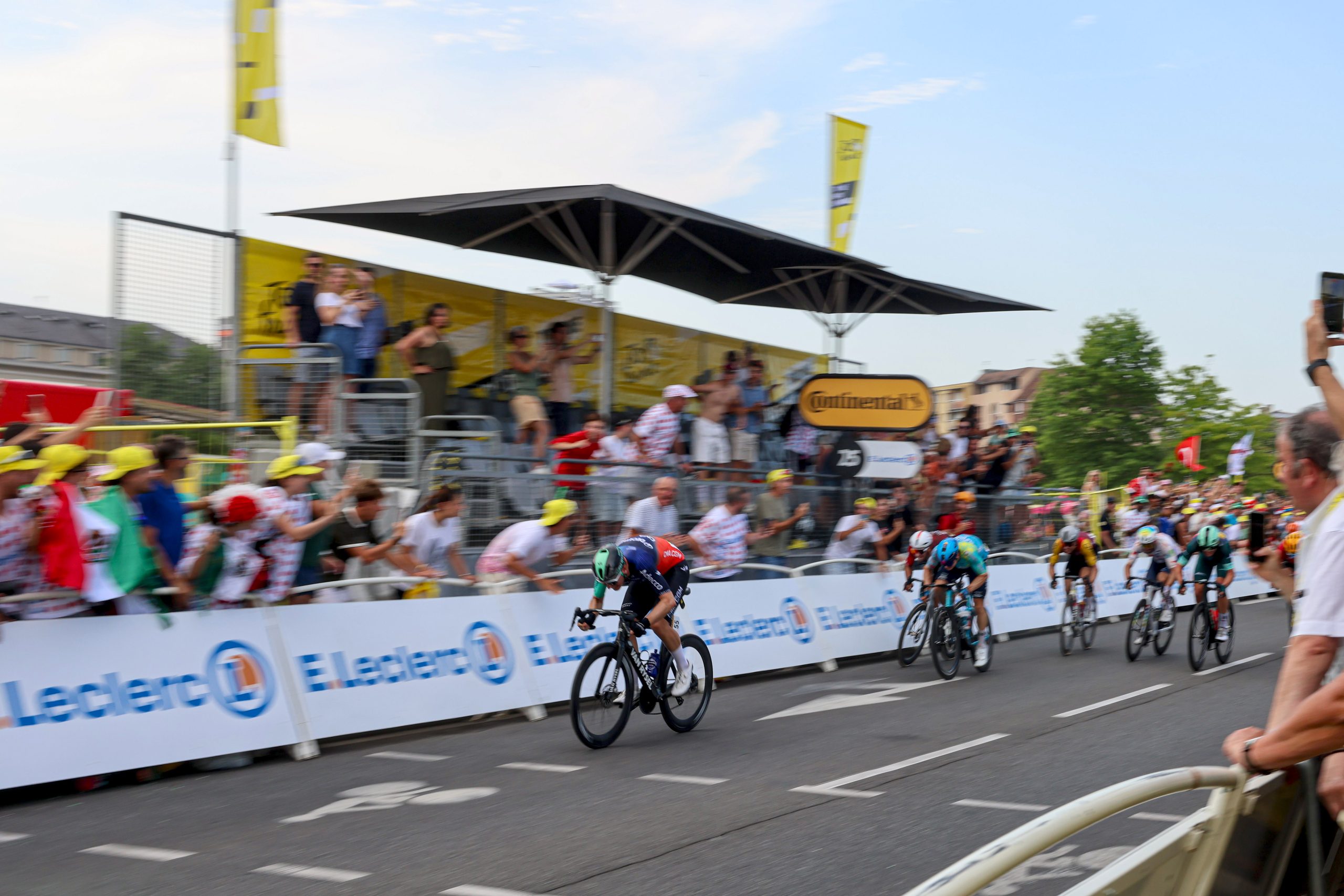
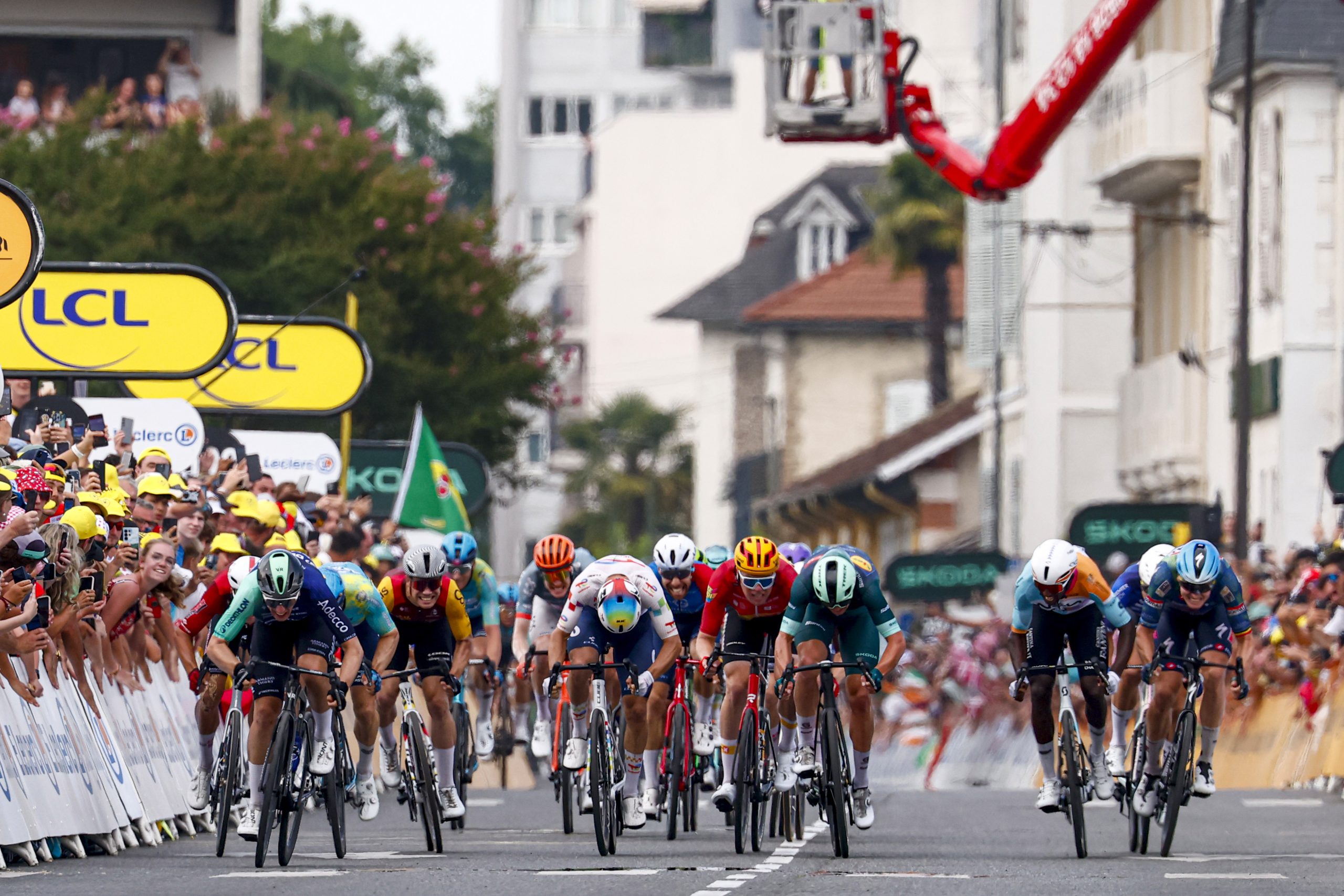
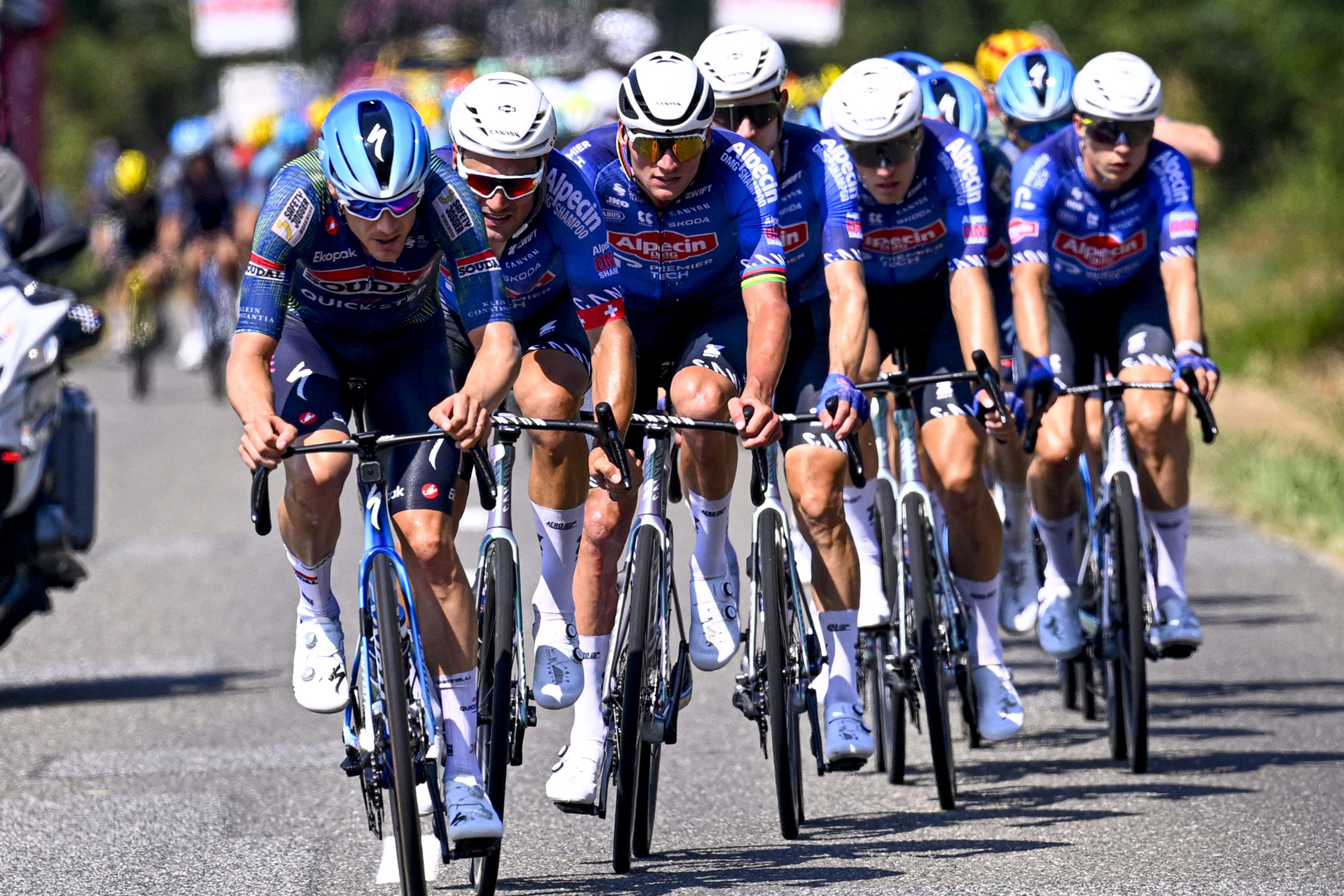
MERLIER 5 One of the day’s great losers. He was left isolated far too early in the chaos of the final sprint because of a crash that helped derail his lead-out train, and on top of that he failed to come out in time for the sprint – too far back, and caught out as well by Kooij’s burst, which in every respect seemed to have stolen both his craft and his likeness. Perhaps drained by four intense days, he will have a couple of stages, after today’s mountains, to make amends before a well-earned rest.
FRETIN 4 As Kanter and Artz showed today, there was room for a surprise, but the Cofidis sprinter could do no better than a disappointing eighth place, even though he finished virtually level with the riders contesting the positions from third place onwards.
PHILIPSEN 3 Along with Merlier – and Girmay, 4 – he is the other great disappointment of the day. The team worked hard, but he, one of the strongest sprinters of recent years – and also among the most successful Tour riders of the past five years, with 10 stage wins – could do no better than fifth place. He launched from too far back and found himself slightly boxed in; after latching onto Merlier’s wheel, he realised far too late that the right choice was on the other side of the road – Kooij’s. It has been a very difficult and subdued start for both Alpecin leaders.
The Tour at the guillotine: Stage 4 report cards
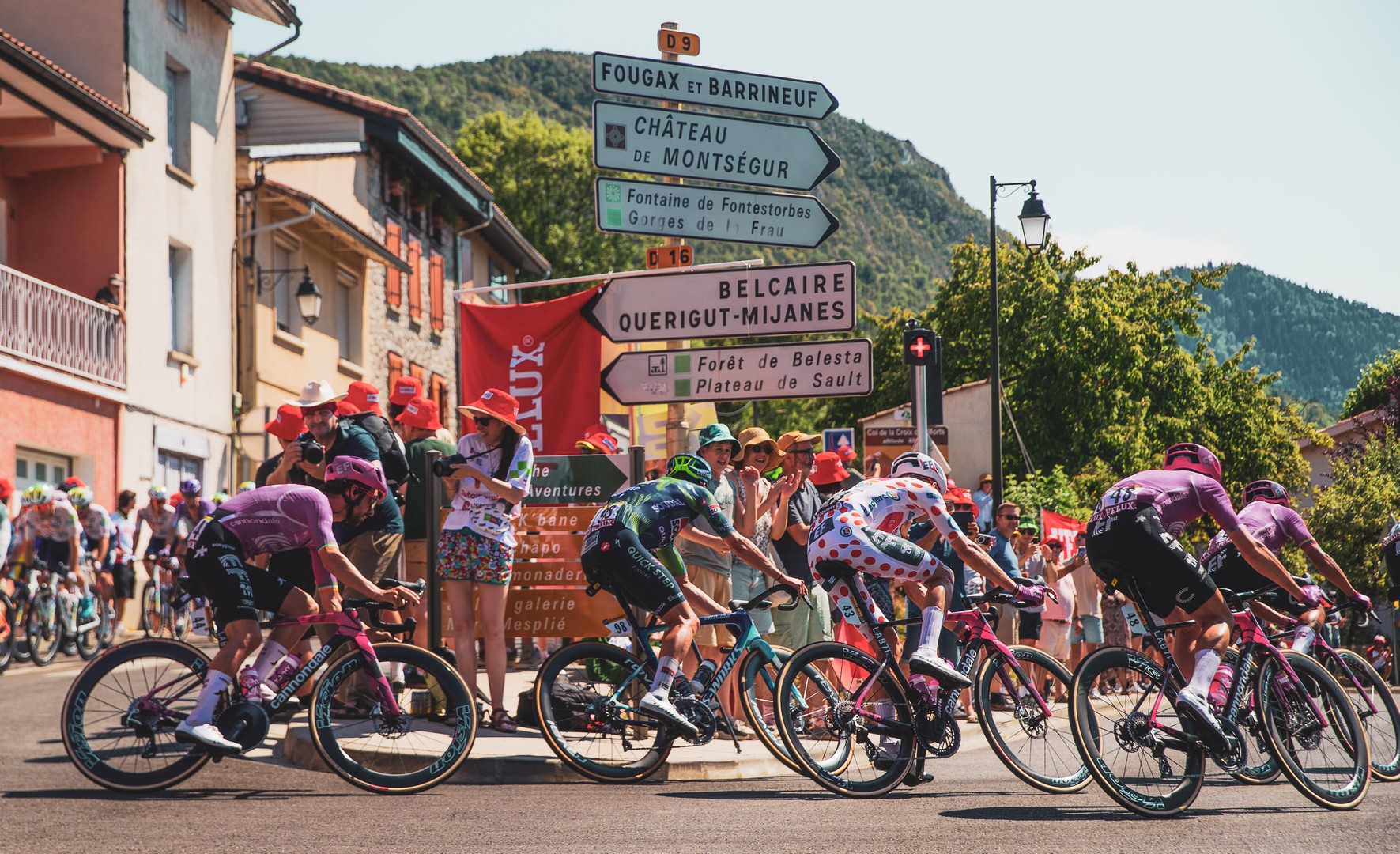
UNO-X MOBILITY 10 The Norwegian-rooted outfit has built one of the most virtuous trajectories of the last decade in professional cycling. Born as a Continental team, it climbed the ranks and earned its place in the WorldTour after growing exponentially year by year, winning Tour stages, Classics in Belgium and much more besides. Yesterday it reached one of its highest points yet with Træen in the yellow jersey – and it is not over, because this Tour still holds major ambitions, from Johannessen’s place in the general classification (sixth last year) to at least one stage win.
TRÆEN 9 In the space of a few months, he has become a genuine specialist in the “bidon breakaway.” Last year at the Vuelta, a day on the attack earned him the leader’s jersey, which he wore for several days before finishing ninth overall. His advantage over the big names at the Tour is enormous for now, and who knows whether he might even repeat a top-ten finish. It will be difficult, because the level here is sky-high, but he climbs well and it will take quite a while before he disappears from the radar.
PEDERSEN 8 To him and to Lidl–Trek; to Vacek (10, whose work was exceptional and whose white jersey he may well keep until Thursday), and to Simmons, crucial in the stitching-together effort before taking second on the stage. On a searing July afternoon at the Tour, they salvage, at least in part, a 2026 that has so far brought more lows than highs, by taking the stage – Pedersen’s third Tour win – collecting valuable points for the green jersey, which the Dane will wear tomorrow, and surging to the top of the team classification with a sizeable advantage over second place.
FRIGO 7 The Veneto rider from NSN Cycling Team is a guarantee by now. If he is on the start list and the race is demanding, you already know you will find him up the road. Yesterday, objectively, it would have been difficult to do better than fourth place, which now sits alongside his two second places and a third at the Vuelta, as well as a third at the Giro. What he is missing now are a win and a fifth place. Let’s go with envelope A.
QUINN 7 He came within touching distance of a career-defining dream: wearing the Tour’s yellow jersey. He, a rider who has never won as a professional and who has spent a lifetime working for others. His form is good, like that of the whole EF EasyPost team, who once again give a lesson in how to go in the break, and from here to the end of the Tour they should have several more chances to shine. At the finish he looked so disappointed and dejected that, had I been there, I would have given him a big hug.
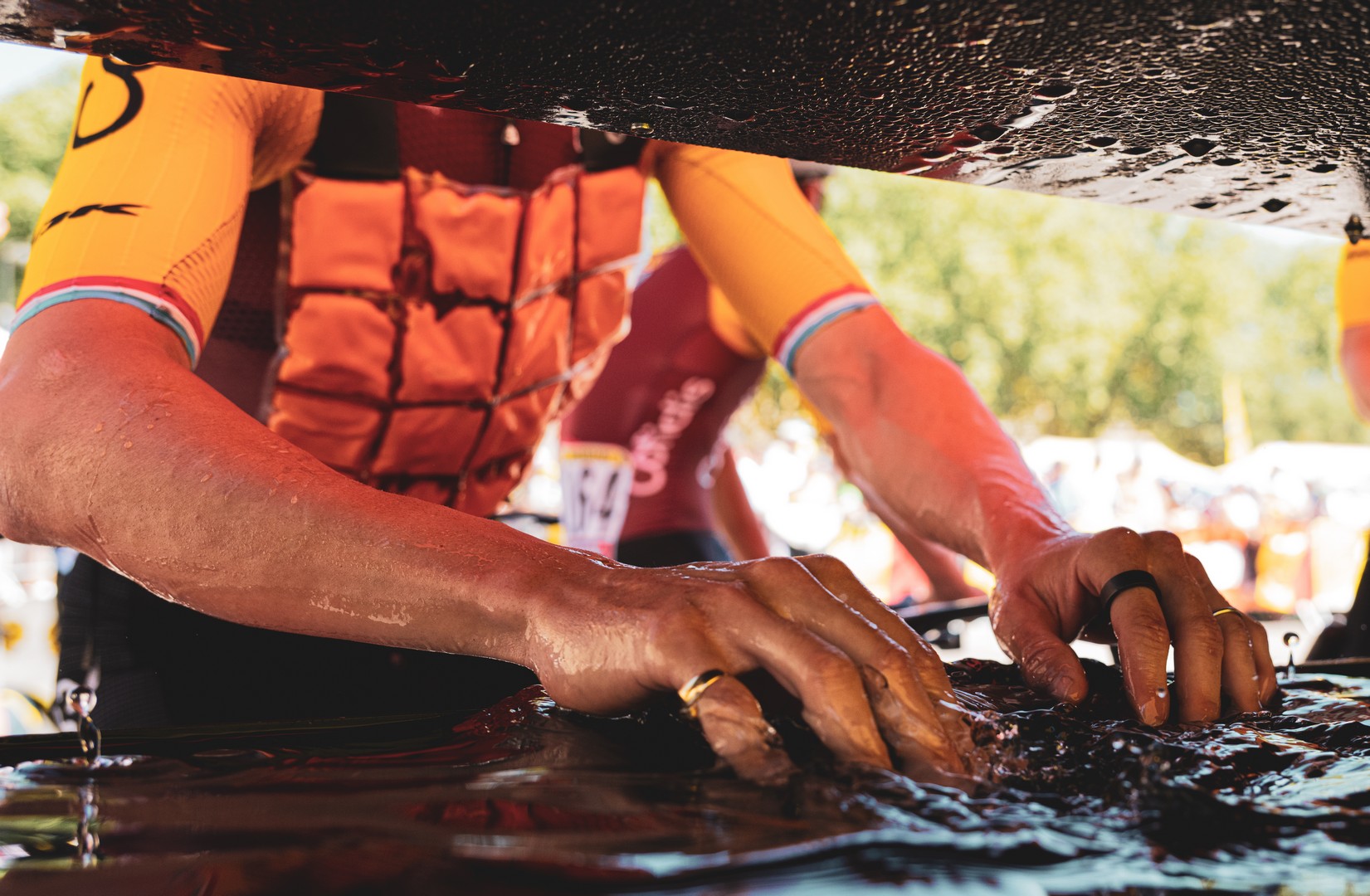
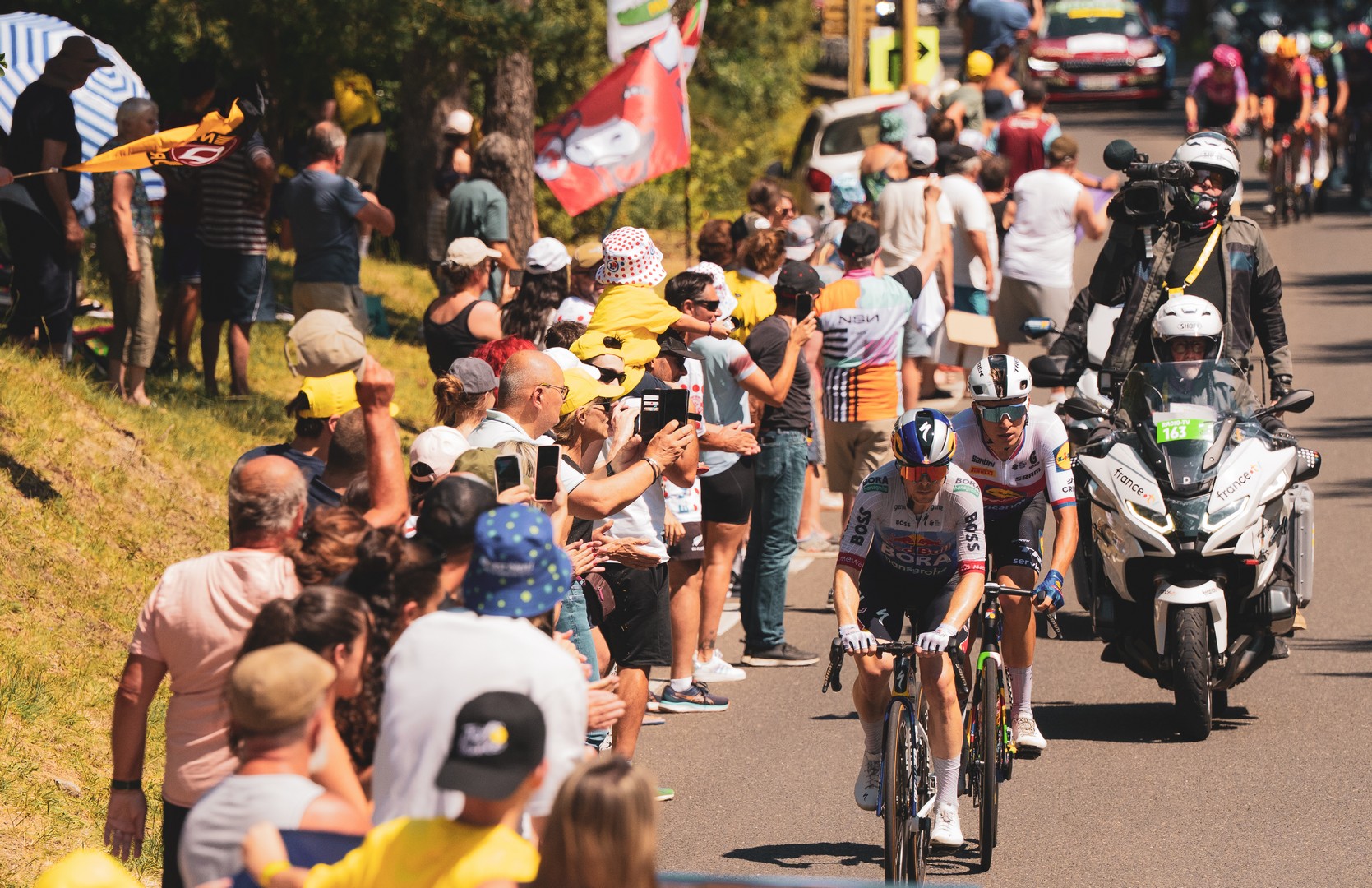
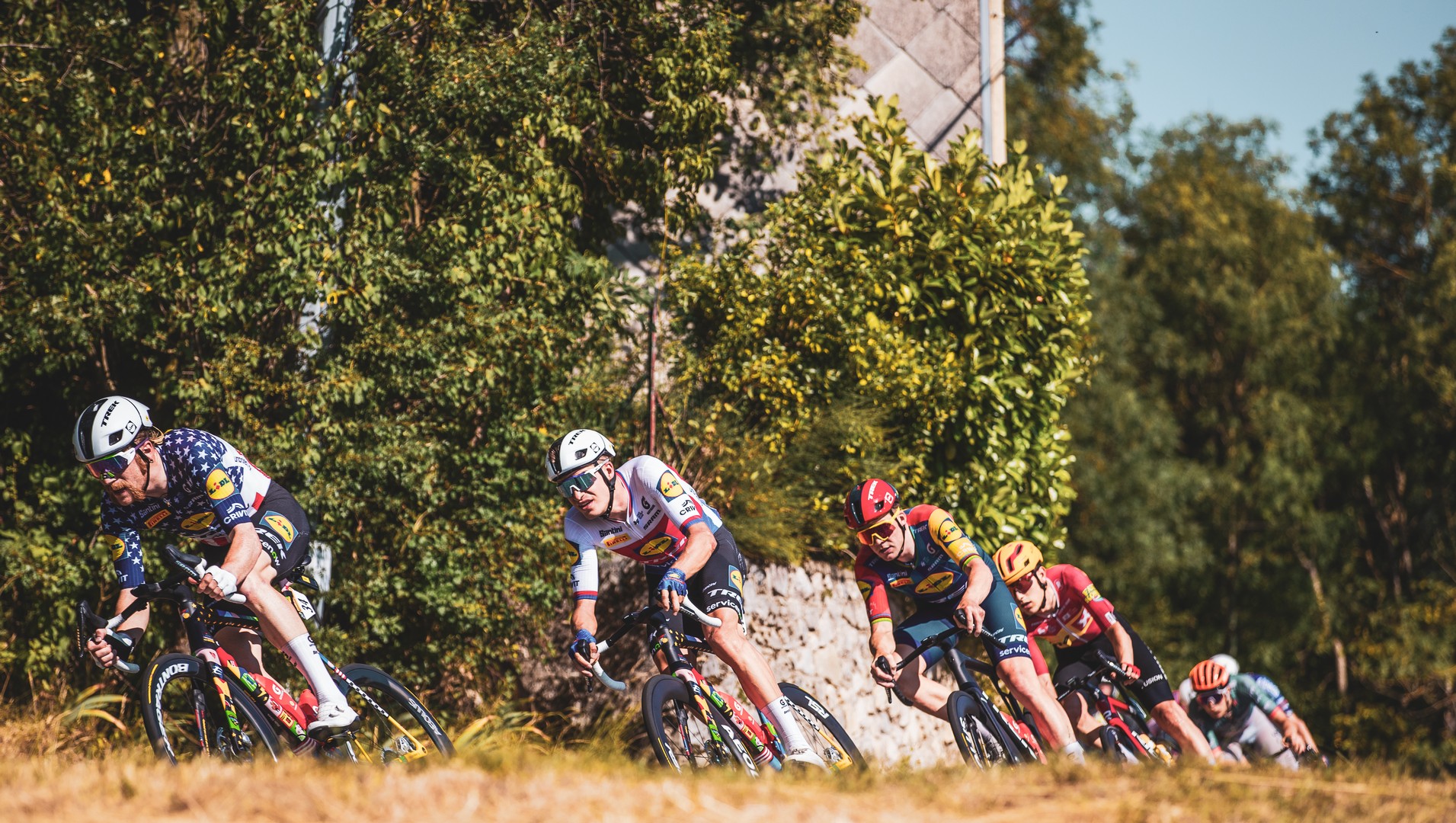
VAUQUELIN 6 The Netcompany INEOS rider is out of contention on the general classification and is going on more through willpower and pride than genuine condition. From the team car they are putting him under no little pressure: all of France is watching you and cheering for you, they tell him. But yesterday, as for all the other riders in the break, there was little to be done. He was dropped on the climb, but fought his way back, and even had a go with a Del Toro-style move in the final corner. He will try again, perhaps on harder mountainous days, with better legs and, ideally, with a team-mate or two alongside him, which never hurts.
MOVISTAR 6 As at the Giro, they keep trying; as at the Giro, they are not getting much in return. But García Pierna and Castrillo confirm what we have seen over these past weeks: they are in excellent shape and, above all, the latter could really have his say in the high mountains, perhaps even shifting his focus towards the polka-dot jersey.
DEBRUYNE 6 I will keep backing Vertsynge, but at the moment the one really flying is him — the Pharaoh — one of the most active riders in the break, and after coming very close to a stage win at the Dauphiné, he has gone close again here.
ZIMMERMANN AND HERMANS 5 Of all the riders who broke clear on the final climb, the only ones really missing were them. Given their quality, current form and characteristics, it was perfectly reasonable to expect to see them up front.
GRÉGOIRE 4 The disappointment of the day. Speaking of France watching you, Grégoire was targeting a stage win in the French national champion’s jersey; and speaking of riders we all expected to see up front in the closing kilometres – or perhaps capable of getting back on in the descent after the final climb – he was one of the first names everyone had in mind as the Dane’s main rival, all the more so after seeing him in the break giving only the bare minimum of turns, clearly trying to save himself. Of course, beating Pedersen would have been difficult for anyone, but at the very least he might have lasted a little longer.
VAN DER POEL 2 And finally him, one of the riders most eagerly awaited yesterday. Since the opening time trial, he has been seen hardly at all. He stayed on the sidelines, watching the others and waiting for better days. As he has already accustomed us to doing, he will probably ride himself into form as the Tour goes on, but the stage to Foix was a missed opportunity.
The Tour at the guillotine: Stage 3 report cards
POGAČAR 10 With every race, every win, every passing year, his rivals hope to see him fade, and not only does he not give up an inch – if anything, he seems to grow stronger all the time. In spring he is Flemish; in summer he is a chamois that looks as though it has stepped out of a Tank Girl story. With rockets in his legs. Of course, a finish like yesterday’s was drawn for him: a punchy uphill kick for explosive riders after a hard day and after a full-blooded lead-out from his faithful Del Toro. What more could he have asked for? His twenty-second Tour stage win comes on a blisteringly hot day – once the kind of heat he used to suffer in – and it comes by winning the sprint with a gap, against the very best around. Everyone else – rivals, fans, commentators – knows it, recognises it, and is frightened all the same, because the Tour already risks being over with him in yellow on day three.
DEL TORO 9 One mark less than the day before because he does not win, but he sacrifices himself by launching his leader’s sprint, blowing apart what was left of the group on the final ramp, claiming victims along the way, and finishing on the wheel of all the podium contenders. A place among them to which he now lays claim without hesitation.
FANS 9 They were not supposed to be on the final KOM – at the invitation, not the order, of the organisers and the prefect – and yet not only were they there, but a large group of them, a mix of French, Basque, Catalan, Norwegian and Danish supporters, brought the Viking Row back to the roads of the Tour: the Norwegian fans’ celebration, just hours after they had sent Brazil packing at the Women’s World Cup. Yes, that one – the tournament of the Trump–Infantino farce and the rescinded suspension of the US striker. Then, in the night, things went as they were always supposed to.
SEIXAS 8 Here he is, the young French golden boy, sticking his nose into the fray — and near the very front, too. He finishes fourth, behind Pogi, Vingo and Carapaz, after two difficult days, on a finish that suited him — but plenty of others it suited as well ended up behind him. Talents like his can bloom even on a day when the heat scorches harder than ever.
BREAKAWAY RIDERS 7 Without naming them all, we will single out Van Mechelen, Prodhomme, Vercher, García Pierna and Baudin – the men from the break within the break who lasted the longest. Baudin in particular, the last to give in, goes on to pull on the polka-dot jersey, one of EF Education–EasyPost’s minimum objectives at this Tour. Baudin, afflicted by the cyclist’s version of wanting to have his cake and eat it: the riders who go up the road despite still being close on general classification and perhaps dreaming of yellow, of a stage win, of everything at once – only to end up ensuring that the break goes nowhere, precisely because they are still too close on GC and, well, you never know.
CARAPAZ 7 The regret remains for all the time lost in the team time trial, where his team, incidentally, had come in with solid credentials, but over the past two days he has thrown himself into the sprint finishes and delivered, even taking third yesterday. He climbs seven places in the overall standings, and now we wait for the real mountains, which will tell us just how far this rider can go – a rider who seems to be reborn every time he looks on the verge of cracking.
AYUSO AND LIPOWITZ 6 The Spaniard from Lidl–Trek keeps flirting with the front positions (12th and 10th), and says that without Skjelmose’s mechanical issue in the team time trial he would have been fighting for the win, but to me it seems he has lost some of the explosiveness he once had – or perhaps, let me correct myself, it is simply that the others are going unbelievably fast. Lipowitz, meanwhile, improves just as the script suggested after the previous two days and, for the first time, finishes ahead of Evenepoel in a duel that will command attention all the way to Paris and could well end up being worth a place on the podium.
VISMA 5 More bad news for the team that had left us open-mouthed in the opening time trial and has instead been shedding pieces ever since the following day. Yesterday there was also a crash involving Armirail and Affini, while Jorgenson is a pale copy of the rider we admire through the season, Kuss and Piganzoli are suffering, and Vingegaard can do nothing against Pogačar’s finishing kick. Half a mark more for relinquishing the yellow jersey and leaving the routine obligations to everyone else.
EVENEPOEL 4 Is it the heat? I do not know – I always find myself looking for an explanation when I talk about him. The day before yesterday he looked ready to win; yesterday, instead, he was dropped by Del Toro’s forcing even before Pogačar launched the final sprint. With him, you never quite know which way to look, and if he is struggling here, today, I hardly dare imagine what will happen when the real climbs begin tomorrow.
UIJTDEBROEKS 3 Much the same applies here as with Tiberi – in fact, the parallels are growing ever stronger. Both were seen as chosen ones after doing remarkable things in the youth categories. Both were likened to illustrious riders – the Belgian to Evenepoel, the Italian to Nibali. Both were brought along patiently, with the 2024 Giro as a turning point. Uijtdebroeks arrived there off the back of eighth place at the previous year’s Vuelta, only to abandon the Giro while fully in the fight for a top-five finish and the white jersey. Tiberi, by contrast, finished fifth. For both of them, the 2023 Vuelta for the Belgian and the 2024 Giro for the Italian remain the high-water marks of careers now moving forward in a haze of few highs and several heavy misfires, beginning with this Tour, which should have relaunched them and has instead found them ill, flat and in trouble.
PIDCOCK 2 Some of the same applies as with Evenepoel, with the added aggravating factor that, even more than the Belgian, he is suited to finishes of this kind. If he cannot get himself into the mix on a finale like this – I am not saying beat Pogačar, but at least challenge for a stage podium – then I wonder: how far will he be able to go when the longer climbs begin? Then again, in a world turned upside down, perhaps that is where we will find him stronger.
CALVARY 0 Calvary is not only one of the climbs tackled in yesterday’s stage – it is also what poor De Lie is going through. Ill since the eve of the race, he was dropped early again yesterday, held on for as long as he could with Veistroffer’s help (10/10), but he is clearly far too unwell and struggling to breathe. It is better that he stopped. But enough now: he needs help, they need to understand what is wrong with him, and he must not be thrown back into the fray in some race a few days from now.
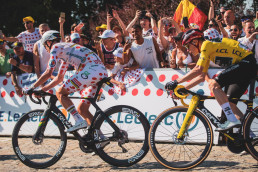
The Tour at the guillotine: Stage 2 report cards
DEL TORO 10 Those who look at the finger will think of his leader’s concession – who, instead of coming past him, pushes him all the way to the line shouting “go! go!” – but what is projected onto the moon is the image of that final corner in which Del Toro gets past Skjelmose, opens a small gap on the others, and goes on to win. If, many kilometres further north, there comes a victory by one of the chosen ones that leaves us beside ourselves, further south in Spain we savour the success of a rider who is only at the beginning of his journey. That makes two stage wins between the Giro and the Tour, both earned by putting distance into his rivals through a downhill bend.
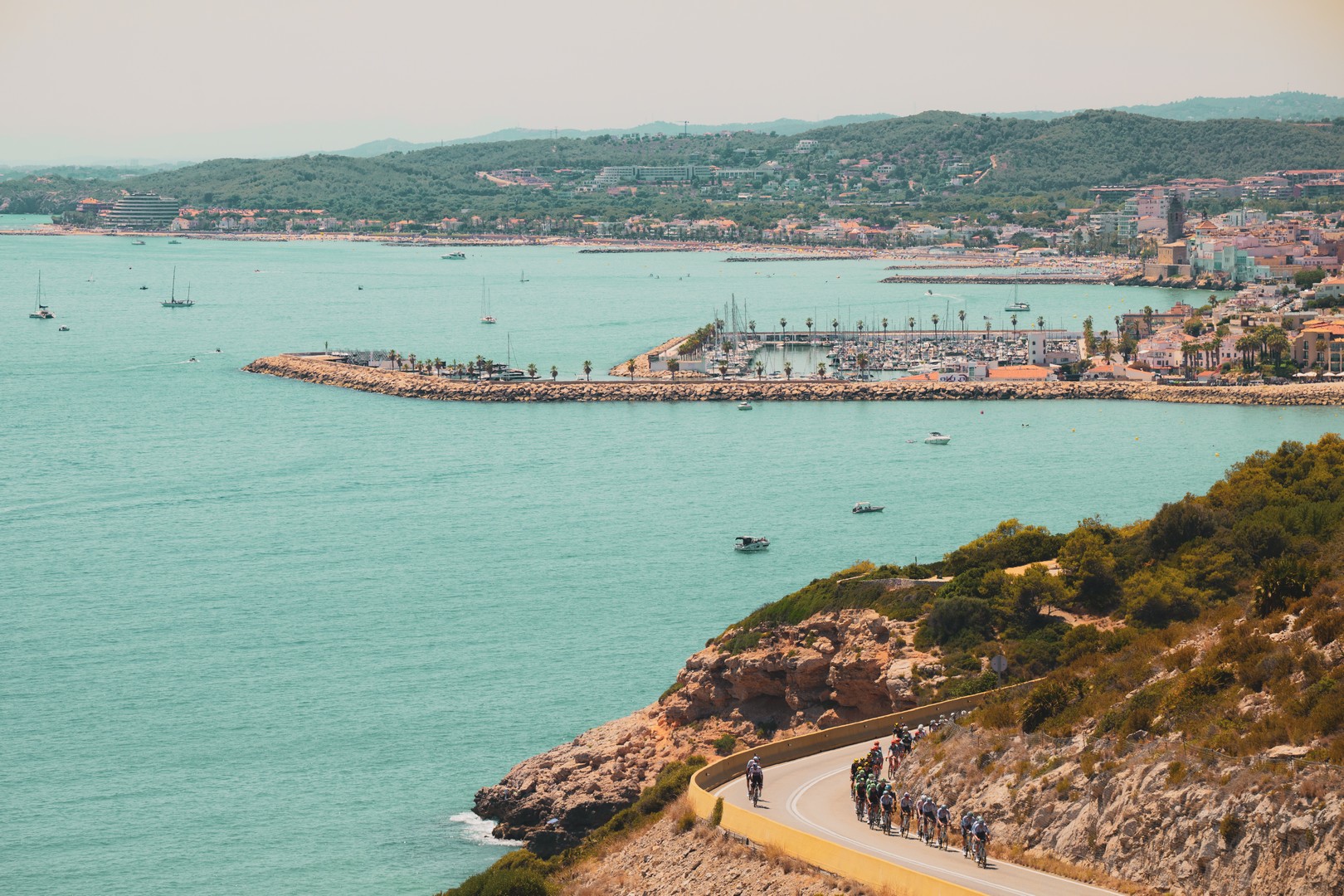
TARRAGONA 9 I have seen, especially at the Tour, some decidedly ugly places from which stages have set off. Tarragona does not belong in that category – quite the opposite, in fact: it moves straight into the bracket of the finest stage starts I have ever seen.
UAE TEAM EMIRATES 8 They are a problem – a big one – for everyone else. Not that there was much doubt about it, but the way they control the race and thin out the group through McNulty and Yates, the one-two on the line, and the easy understanding between Pogačar and Del Toro all confirm their superiority.
BREAKAWAY MEN 7 They deserve a mention, being the first escapees of the 2026 Tour: Frank van den Broek, the first to crack with cramp after finishing the Giro third from last with a wrecked shoulder; Felix Engelhardt, recent winner of the German national championship, who has been flying again, like in his under-23 days, ever since growing the moustache; Alex Molenaar, a Dutchman from Barcelona, racing on home roads and taking Caja Rural, at its first Tour in history, onto the podium by pulling on the polka-dot jersey. A mention too for Baptiste Vistroffer, the most anticipated of the day’s escape artists. First to jump, he is brought back. Then, when the three go clear, he tries again, but cannot make it across and sits up. We will see him again, perhaps as soon as today.
JOHANNESSEN 7 In a stage where the big names keep watch on one another, making the day sleepier than expected, with everyone dulled by the suffocating heat and the pace set by UAE, the stronger of the two Uno-X Mobility twins is the only one to try anything, picks up a few points on the climb, and finishes sixth on the line.
VINGEGAARD 6 He does not have the cunning of the UAE duo, nor the explosiveness that has coursed through Evenepoel’s muscles for the past few seasons, nor even, at times, a particularly handsome face, but for all that, on a day that was far from happy for his team — euphemism: a 3 for Visma, with Jorgenson and Kuss blowing up completely and Piganzoli losing a minute — he still finishes fourth, defends the yellow jersey, gives away only the bonus seconds, and stays right there, waiting for the high-mountain days that suit him better.
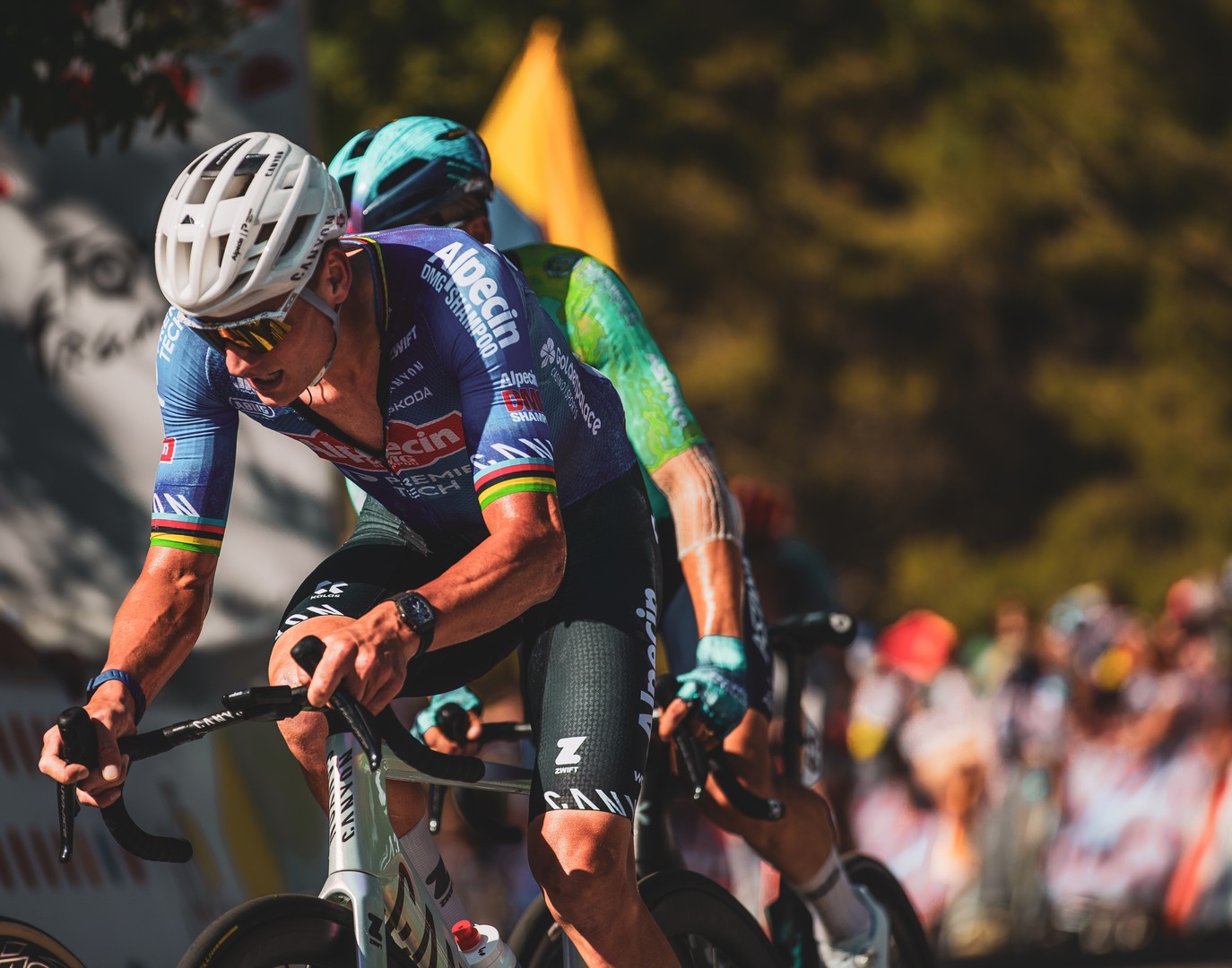
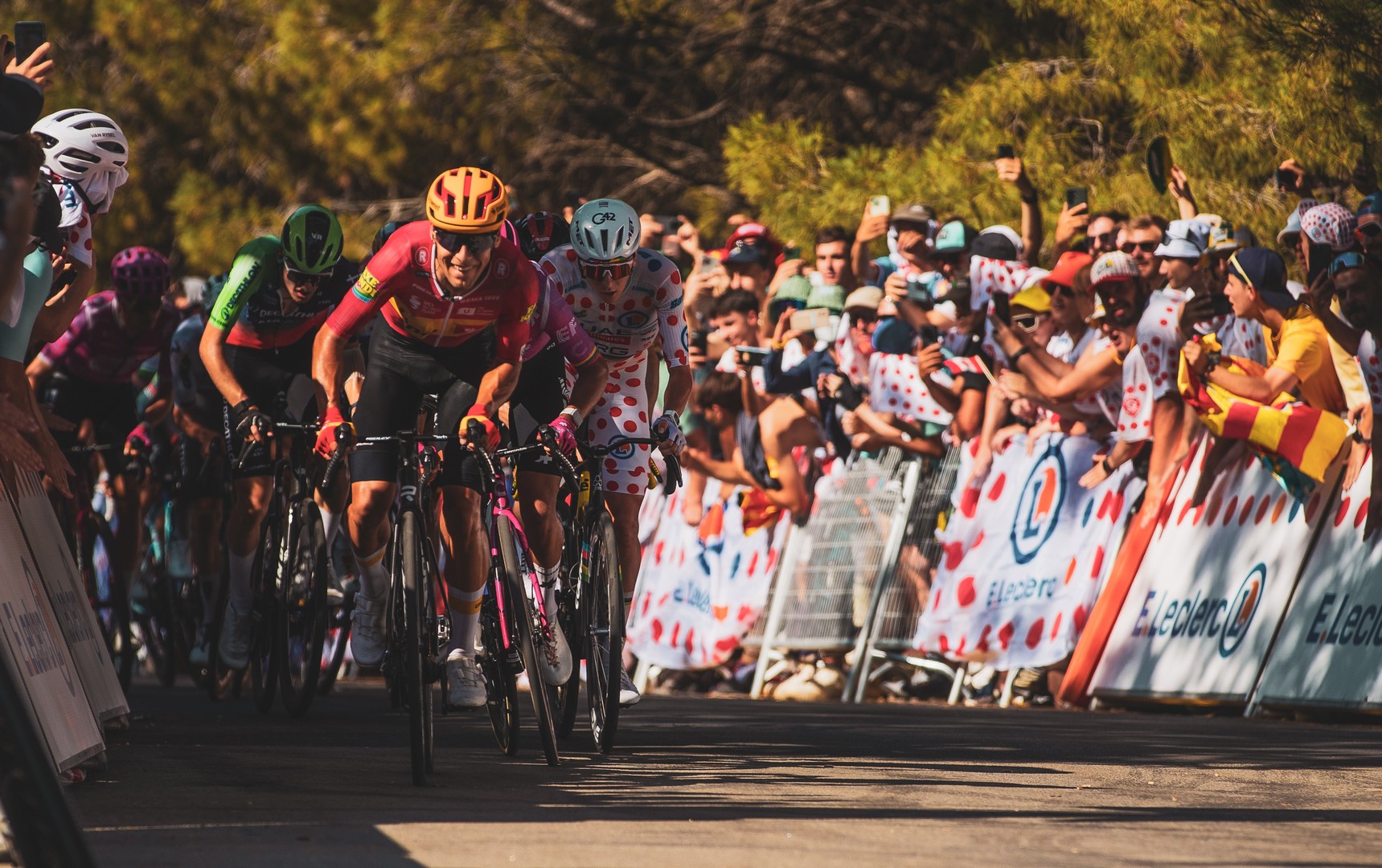
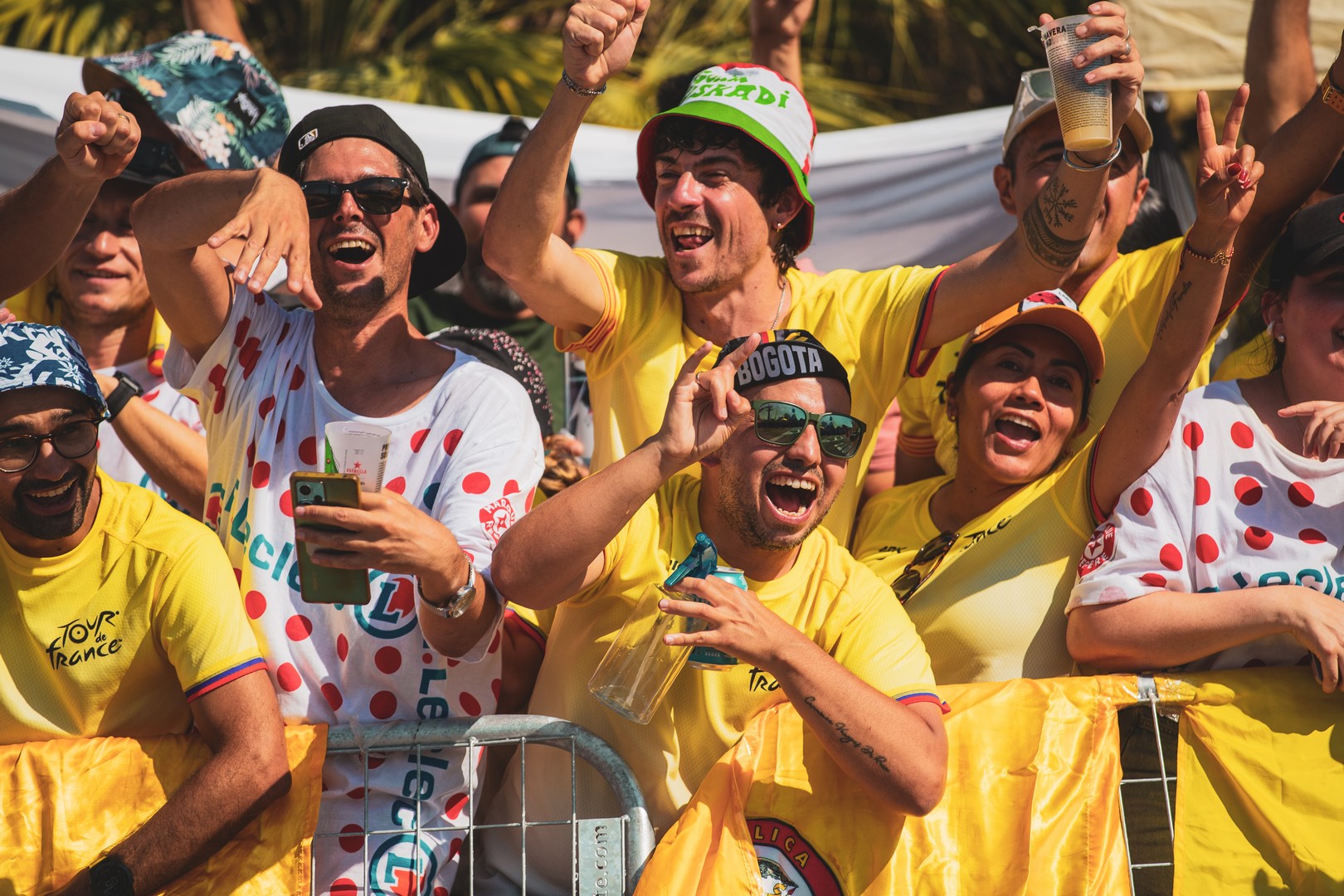
EVENEPOEL SEIXAS 5 Remco finishes third on the stage – perhaps I’m being unfair, but yesterday was a stage for him, and yet he stayed put, let a gap open, then stitched it back up. Maybe he could have tried a little earlier and perhaps got more out of it. Maybe even won. Paul, meanwhile, continues to quarrel with the Tour. Mechanical problems, chasing, lack of communication: he gets stuck behind while his team-mate Benoot goes to the front to set the pace in the finale. His Tour is being shaped by these small uncertainties too.
TIBERI 4 One of the great enigmas of the new millennium. What has become of that rider who once looked bound for Grand Tour podiums, who at the start of the season won an uphill stage in the UAE against rivals who now, at the Tour, seem to belong to another category? And why go to France instead of trying a race that is simpler in several respects, such as the Giro d’Italia?
LIPOWITZ 3 True, these are not the finishes that suit him best. True, he is a diesel who needs the mountains, long efforts, sustained exertion, but in the meantime, over two days, he has already lost 45 seconds to the yellow jersey and 30 to his team-mate Evenepoel.
PUNCHEURS 2 The pace is high, but steady, and at the front there are almost only the general classification men left, yet it was fair to expect a little more from riders such as van der Poel or Grégoire.
JÉGAT VAUQUELIN 1 Top ten last year, but this season their form is a long way off, for various reasons. They are already well down in the general classification, but their Tour can still be rebuilt – and rebuilt brilliantly – through the breakaways.
DIRECTION 0 Because the way they keep showing that liberal capitalism has triumphed over everything feels like sheer overkill. Did we really need, while so many people at home were suffering through the heat and a soporific stage, to be shown the marvellous Catalan beaches over and over again?
The Tour at the guillotine: Stage 1 report cards
BAD LUCK 10 Top marks for Lady Luck’s evil sister, because she really does see perfectly well and, in the end, always hits exactly who she means to. In De Lie’s case, ill again on the eve of the Tour, it is almost persecution. Help: somebody help him!
VISMA 9 Affini, Hagenes, Armirail and Campenaerts are the perfect panzers for the first part of the race, setting things up before the frantic finale, when Vingegaard, Piganzoli and Jorgenson take centre stage. Above all the American, who opens the gas and creates the gap needed to keep the rival’s comeback toward his leader under control. Piganzoli has come out of the Giro in great shape, and it is a pleasure to see him there glued to Vingegaard in the finale. For now, the first clash between the two favourites goes to the Dane, but let’s take it easy: this is not even round one yet.
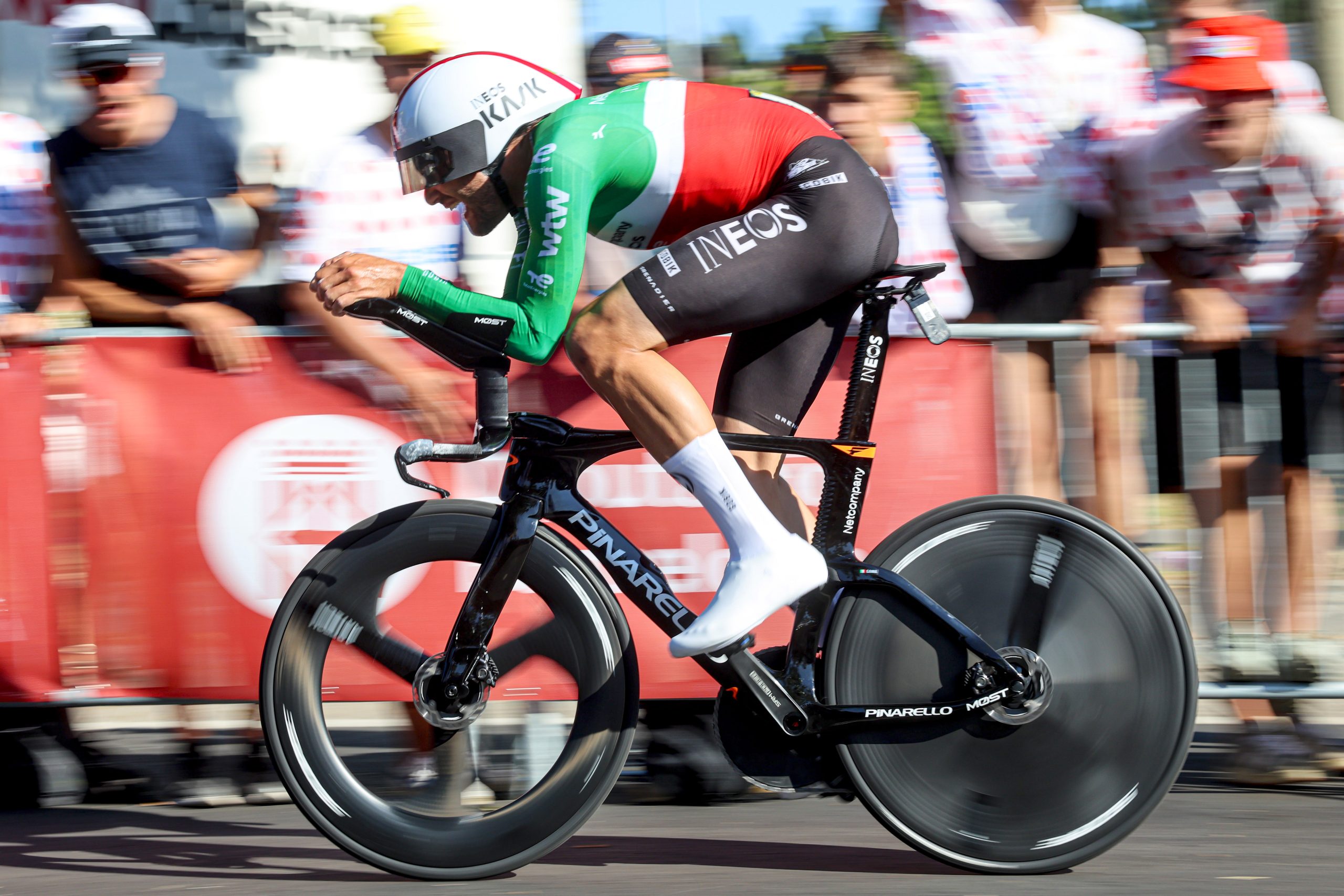
NETCOMPANY INEOS 8 To be clear, almost all of this mark goes to Filippo Ganna, who confirms the further progress against the clock already seen recently at the Giro and, if his form holds up over the coming weeks, puts himself forward as a contender for the race’s only individual time trial still to come.
POGAČAR 7 Because he is the team’s heart and legs during the time trial, because he is the fastest on the final climb (and in fact he will open the dancing in stage two, right on the front row, in the polka-dot jersey). He lost the first round in Barcelona, but in Barcelona itself, today, we expect him to go looking for payback.
TEAM TIME TRIALS 6 I still have not figured out whether I like this new format. Because it is a team time trial, but the times count individually, and there may well be something ingenious in that. It may even be more meritocratic when it comes to the overall standings, but it penalises riders far too heavily if they run into any kind of problem (see, for instance, Vauquelin and Skjelmose). Be that as it may, given what was at stake and the riders involved, it was hugely entertaining.
ALPECIN, LIDL, GROUPAMA AND TIBERI 6 Fair play to all four. The first sends van der Poel into the lead, for a few minutes, before the arrival of Netcompany INEOS makes them the race leaders, but when Ganna crosses the line ahead of Philipsen, jaws and helmets hit the floor. Groupama are a different outfit altogether from the rubbish seen at the Giro, and are carried by a sparkling Grégoire who flattens the final ramp. Keep an eye on him today: with these legs, if he manages to hang on… Lidl do well too, gaining an in-form Ayuso and a driving Vacek, but losing Skjelmose, hobbled by a puncture — though he still gets away with it, conceding less than it might have been. Tiberi does well too (as does the whole Bahrain team) and, despite my criticism, finishes with a fairly limited deficit and, after one day, is still in the overall picture. Will it last?
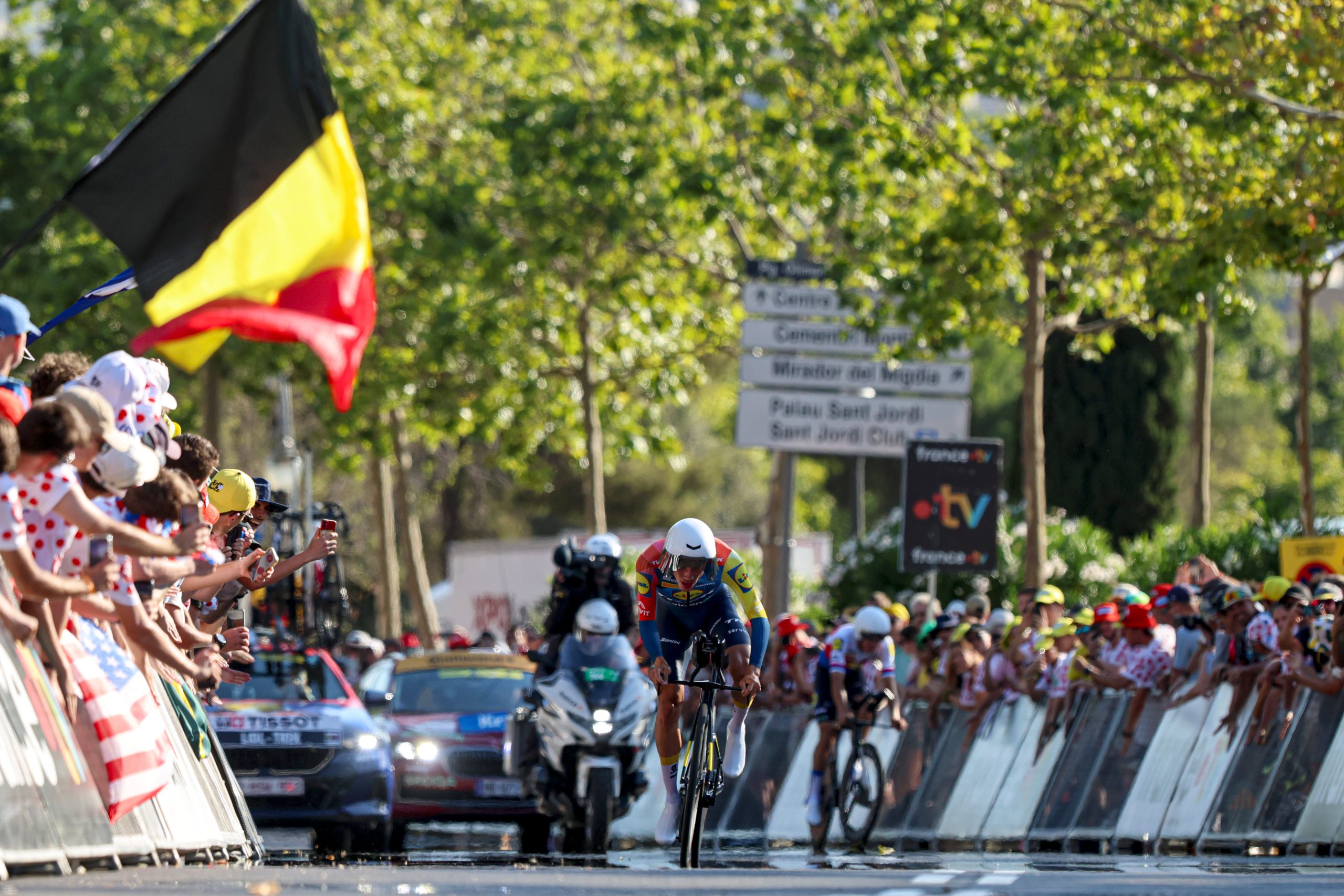
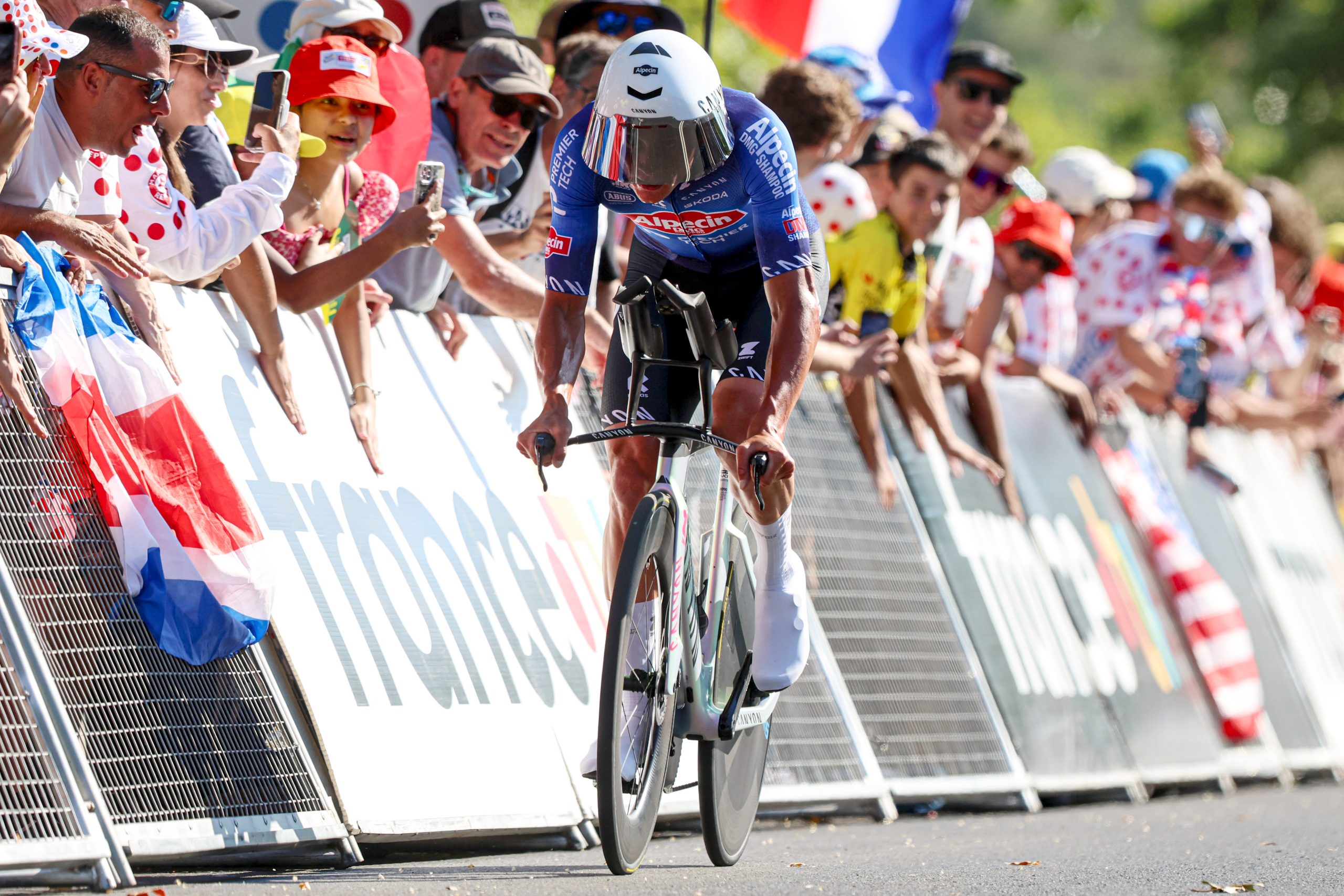
RED BULL 5 They were my favourites, because how could they not be when you have Evenepoel and there is a time trial. The team’s combined strength produced a result inferior to that of other squads and, above all, already forces the Belgian to chew on, and then swallow, one bitter mouthful too many — softened only by the fact that he dropped Lipowitz at the first opportunity. Hierarchies, for a few hours at least, put back in order.
DECATHLON 5 Seixas was good, but not quite that good; the team did what it could, but it is below the usual names if only for lack of experience when it comes to competing at that level. Let him grow at his own pace, then. There is time, in this Tour too.
MOVISTAR 3 The sight of the three Movistar riders fanning out to wait for their designated leader, Uijtdebroeks, as he drops back with cramp – only to claw his way back on – is already the first proper Movistar moment of this Tour de France. More will come, I am sure of it.
TEAM PICNIC POSTNL 1 They set off at full tilt in an attempt to take the green jersey – which will instead go to Bernal – by posting the fastest time at the first intermediate check, a hollow little satisfaction, but they do not even manage that. They come apart almost immediately, finish a long way down, and end up second from last. The worst team in the WorldTour; yesterday they only finished ahead of Astana, who lost half the squad almost straight away in a crash. A Tour that will be uphill all the way for them – even when the road turns flat or downhill.
FORTUNE 0 It began with a high mark for rotten luck and it ends with a rock-bottom one for fortune, which looked the other way when it came to two much-anticipated protagonists, Skjelmose and above all Vauquelin, both victims of punctures and left behind. The Frenchman had his sights set on the first yellow jersey, and who knows whether leaving the company of his team-mates so early did not also play a part in Ganna’s final deficit to Vingegaard – eight seconds, in the end.
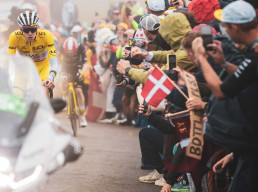
The monument of the 2026 Tour de France
Per certi versi la storia che stiamo per raccontare o meglio, quella di cui stiamo per essere testimoni, rischia di essere la più incredibile degli ultimi anni. The Tour de France 2026, starting in Barcelona on 4 July, will indeed see the very best of the very best on the start line, without any doubt. A level so high it touches the sky and breaks through it. Non manca nessuno per la classifica generale (sì, ok qualcuno sì… ma chi, tra gli assenti, sarebbe stato realmente capace di scombussolare i piani dei migliori? Gall? Pellizzari? Eulalio? Siamo seri…), qualche cacciatore di tappe (van Aert, lo sappiamo, avrebbe dovuto esserci, ma è fuori causa per un infortunio), Milan e Magnier, tra i velocisti, che hanno dato battaglia al Giro. For the rest, three weeks to remember are taking shape perhaps also because of the heat, which risks doing more damage… than hail in a vineyard. Con il punto di domanda su qualche tappa (occhio non solo al caldo, si cercheranno soluzioni e se non sarà possibile andare avanti avremo tappe tagliate o chissà, persino cancellate, ma anche alla tappa con il Col de Sarenne, uno smottamento potrebbe modificare il finale di una delle giornate più attese, la penultima).
THE FAVOURITE
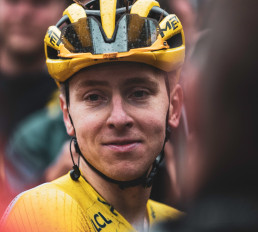
Obviously him, the only one, the incredible, the astonishing Tadej Pogačar, who, if he were a superhero, would be one still to be created or invented; there is no kryptonite to beat him, not even himself. It is hard to think he can lose unless because of a crash or illness, despite, as we have said, the strength of the competition. The Martian who comes from Slovenia, fallen to Earth who knows how long ago, is aiming for a fifth Tour victory, to equal Anquetil, Merckx, Hinault and Indurain and to move definitively beyond Froome (who will remain on four). He has everything to win, the form, the trajectory, the numbers achieved recently, even the team which, despite the absence of Almeida, arrives strong and compact as never before. And indeed, to carry through a programme of this kind, Pogačar does not need a big team but a great team which arrives with every piece in its proper place: the one that was meant to be, unlike what has happened to all his possible rivals, is. There is Isaac Del Toro, who could even finish on the podium and will certainly be the last to stay alongside the Slovenian in the mountains, while Brandon McNulty, Adam Yates and Felix Grossschartner will take turns launching the Slovenian with their rhythm, on the climbs. Tim Wellens will stay by his side as much as he can, but he will also have an important all-round role including trying to win a stage from the break as happened last year. Florian Vermeersch and Nils Politt will instead have the arduous task of carrying the team on their shoulders on the flat, of bringing bottles, of always being ready if there is a gap, if there is an extra glance to give even in phases that seem calm on the surface. The strongest possible team for Pogi is served.
THE CONTENDER
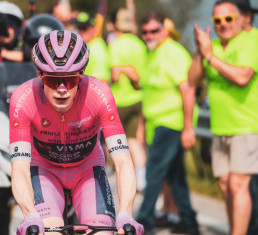
Jonas Vingegaard is his first and perhaps only rival. Vingegaard, of whom the numbers experts speak very highly, seems to be producing figures above any of his own previous best. Coming off his victory at the Giro, which allowed him to enter the club of riders who have won all three Grand Tours (see next issue of alvento), he arrives at the Grande Boucle almost light-heartedly, knowing he is the only one who can get close to the Slovenian (beat him? Hmm, that is another matter entirely, it is difficult even just to stay glued to his wheel), but with a slightly battered team that in recent weeks first lost Laporte, then van Aert, and nearly also lost Edoardo Affini. The Italian, who crashed in the time trial at the national championships a few days ago, will be there and will make his contribution on the flat, in the early stages, carrying bottles, while Victor Campenaerts will be the Dane’s shadow as happened at the Giro and last year at the Tour, and may also have licence to try to win a stage from the break. Also crucial on the flat will be the young Norwegian Per Strand Hagenes, making his Grand Tour debut, richly deserved, representing the new wave coming through in the Dutch team, and what a talent! One of the best riders of the season in one-day races, here at the Tour he will have the task of keeping his team-mates out of trouble in the hectic phases, of pulling on the flat, of staying near the front on difficult but not brutal days, a task that instead falls to Bruno Armirail, who will also have an important role in the opening team time trial, and to Sepp Kuss and Davide Piganzoli, especially in the mountains, both coming off a Giro in which the first won a mountain stage with a pipe in his mouth, while the second achieved the first top ten of his career in a three-week race and will be the youngest rider to contest two Grand Tours in a row in the 2000s after having secured a top ten (https://x.com/m_mundbjerg/status/2069466642682126748).
Finally Matteo Jorgenson will be Vingegaard’s last man, but a great deal about him still has to be understood. Last year he disappointed enormously in the general classification and, from being a possible decisive factor in the contest, he quickly found himself out of the top positions and personally pursued by Pogačar (or by his close collaborators), guilty of having ended up on the now legendary blacklist of the world champion’s sworn enemies (legendary in the figurative and contemporary sense of the term: a mix of reality and fiction, no one knows whether it really exists, but it is said that there is a sheet hanging in the UAE bus with the names belonging to this list). If he finds the right three weeks he could also ride into the upper reaches of the general classification and try to finish in the top ten, but at Visma they are more interested in the American devoting body and soul to the Danish leader.
THE YOUNG THIRD FORCE
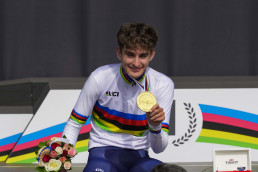
The road of the young Paul Seixas towards the Tour de France has been threatened on every side by the unfairness of French journalism and has so far been strewn with setbacks of every kind, including a heavy crash at the Dauphiné and various illnesses that have affected some key pieces – see Riccitello. There has even been talk of internal problems within the team and difficulties in choosing the men to place alongside him at the Tour. In short, for the rider born in 2006 (we repeat, for anyone who has only just tuned in: Seixas is a 2006-born rider, he was born in September, he will turn twenty during the Vuelta) it has been a more complicated build-up than expected, but one that will give him a great deal of experience for the future. Overcoming these difficulties is part of the process. Decathlon CMA CGM is a quality team, but we think it can become even stronger in the coming years: Nicolas Prodhomme will be his shadow in the mountains, with Aurélien Paret-Peintre who could sacrifice his personal ambitions (winning a stage) to help his team-mate as much as possible. And for the general classification there is a high-level backup option: Matthew Riccitello, fifth at the 2025 Vuelta, a rider who has everything needed to try to finish in the top ten. Everything except, perhaps, great condition.
After presenting his team, a few more words (too many, perhaps) on the young Frenchman: I have included him as the “third force” more out of alignment with the spirit of belonging to the category of Tour de France 2026 analysts (read: everyone is putting him there, who am I to think differently?), but in reality Seixas, although from the middle of 2025 onwards he has shown that very few are truly stronger than him, has only something to lose from this Tour de France, do you realise the enormous risk he is facing? Let me explain: the risk, despite the fact he is a very light rider and with his mind elsewhere, in the positive sense of the term; despite being someone who lets pressure slide off him, is that at the Tour he may live through the most difficult days of his cycling life. In France he is already being pointed to as the saviour of the nation. Cycling is already trying to swallow him up, watching him with eyes so wide they seem to exclaim: the strongest rider in the world since … Pogačar. Come on, really, not yet twenty years old, everything still to prove in a Grand Tour. Then of course, careful, the qualities are there, and they are probably truly those of a third force. But a Tour is also fought on other fronts. Knowing how to endure, knowing how to stay locked in. You also have to take into account how a challenge of this sort can drain you physically and mentally, and there is still a season after the Tour, still a whole career ahead. A deeply fascinating challenge, but one I would gladly have preferred to see at the 2026 Vuelta and then, possibly, from the following Tour onwards. Of course, one thing must also be said in favour of the decision to take him: if he is well – and he was well until the crash at the Dauphiné – and by well we mean being just below the two favourites in the mountains, having a devilish rhythm in the time trials, and a strong team almost entirely for him, in short, if he is well then perhaps it is better to seize the moment because there is no guarantee next year’s form will be the same, there are too many variables in a sport like cycling. Far too important for this team to want everything, and immediately.
THOSE STARTING BEATEN BUT NOT DEFEATED (Positions 3rd to 6th)
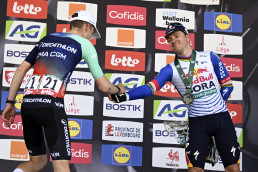
And Seixas acts as a link with those riders who will probably fight with him for the podium, or in any case for a high placing in the general classification, starting with the Red Bull-BORA-hansgrohe duo Florian Lipowitz and Remco Evenepoel. Evenepoel, who, at least on paper, does not begin quite as beaten as the Frenchman from Decathlon. On the contrary, if only because of the experience he has already built up in Grand Tours, then what must happen will happen. Evenepoel’s arrival at Red Bull has raised the bar not only in terms of quality, but also of responsibility and internal competition, so the German team will try once again to seize a podium place, aware that even a third place with one of the two riders – who, not by chance, are the last two riders to have stood alongside Pogagaard on the Tour podium, Evenepoel in ’24 and Lipowitz in ’25 – would be an excellent result, probably the maximum possible. Evenepoel has declared that he has never gone so strongly, then there is the road, or rather the climbs, and the rhythm set by his rivals. As an Evenepoel believer from the very beginning, something I have never hidden, I hope that for once declarations of this sort do not turn into a boomerang. Red Bull is a high-level team, with Jai Hindley coming off a Giro podium and Mattia Cattaneo, who will be needed in the mountains, but with the Italian also important in the team time trial; with Jan Tratnik extremely useful from day one, above all on the flat, as are the reliable Nico Denz and Tim van Dijke. If the first also has the Giro in his legs, the second completed all his preparation with the Tour working group, with the aim of giving almost exclusively a hand to the team leaders.
Among the riders who can make the podium, Isaac Del Toro cannot be left out. Only a few weeks ago he set a record: he became the first rider in history to win Tirreno-Adriatico and the Dauphiné in the same season. Serious stuff, just as it seems he has improved even further on the long climbs. Watch out for the Mexican, because by staying as close as possible to Pogačar he could create several headaches for anyone aiming at a place on the podium, as well as, should there ever be any need, providing an important diversion to send back any attempts to make the Slovenian despot’s throne wobble.
THE OTHERS (Positions 6th to 10th)
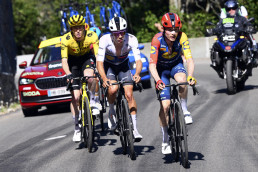
A long list, a cornucopia of talents of every kind, from young riders seeking affirmation or redemption to old foxes who have already won Grand Tours. Riders aiming for a placing between fifth and tenth and who, depending on how things unfold, could go beyond every expectation or also disappoint. The step is a short one. Juan Ayuso is perhaps the one with the most potential among them. He left the old road (UAE) for the new one (Lidl–Trek) in the hope that with more room at his disposal the results would improve too. So far his season has been bittersweet, with the high point being his victory at the Algarve ahead of Seixas and Almeida, which suggested great things, then two withdrawals at Paris–Nice and the Basque Country slowed his progression. At almost 24 years old, and after long being considered a wonderkid of world cycling, it is time to show that his legs are moving in step with his ambition. He will be one of the general classification leaders of a Lidl–Trek team that places alongside him Mattias Skjelmose Jensen (for an 8th–15th place range) and Derek Gee (like the Dane). Understanding how they will manage three roosters who have already shown they do not particularly enjoy riding for others – quite the opposite – will be one of the most interesting themes of the race. A team that, however, could achieve a great result in the Barcelona time trial. Lending support in the mountains there is Carlos Verona, who may also try to win a stage from the break.
And what if the surprise of this Tour de France were Tom Pidcock? Relative surprise, perhaps, when reading the name, but a major one given the level of the race. The Englishman, leader of Pinarello Q36.5, certainly needs no introduction. In the mountains he appears to have improved even further, and on a one-day effort he is a rider with very few rivals. Over the long distance he may tremble or fade, although it should be remembered that last year he finished on the podium at the Vuelta. Personally, I would rather see him abandon the general classification and put on a show in breakaways, but as things stand today, his ambitions are to try to break into the top five or six of the final standings. More or less the whole team is there for him, even if with licence to attack. Xabier Azparren is useful on the flat, as is Brent Van Moer; Xandro Meurisse, Chris Harper and Damien Howson in the mountains, Quinten Hermans will have his say in punchy finishes, while Fred Wright will throw himself into reduced bunch sprints or into a breakaway on stages that are not too hard.
Tobias Halland Johannessen, of Uno-X Mobility, is thinking big indeed: he is aiming strongly for the top five, which he came close to last year, missing out by one position and a little over three minutes. The Norwegian team, as usual, will be aggressive, complete and competitive, with Torstein Træen, a rider who could aim for a placing around tenth position, though he will most likely spend himself for his leader; with Anders Halland Johannessen, who will be his twin’s shadow for as long as he can; while Magnus Cort and Anders Skaarseth will bring experience to the Tour, as well as their recent national champions’ jerseys (Denmark and Norway, respectively), helping out everywhere, with the moustachioed Dane, at his final Tour before retiring at the end of the season, perhaps also trying to win a stage from the break by making use of his fast finish.
Harold Tejada will be the general classification leader for XDS Astana, who at the last moment have been hit by the withdrawal of Fortunato, who had skipped the Giro in order to make his Tour debut but will be absent through illness. The Colombian, who in the mountains will be able to count on the support of Nicolas Vinokourov and Sergio Higuita, could be one of the surprises of the race for a strong overall placing.
Cian Uijtdebroeks, after difficult seasons, has the chance to show all of his great value with a team that is almost entirely devoted to his cause, though beware that in general Movistar know how to divide the tasks well – whether they then manage to carry them out is another matter altogether. So, after lighting up the Giro while taking home very little, the Spanish team will try again in France, not only for the general classification but also for stage wins. They have not taken a victory at the Tour since 2019, when Quintana triumphed in Valloire. The Belgian has every card in hand – quality in the mountains and in the time trial – to be the one who ultimately comes out on top among the various names listed in order to secure a result around fifth place, which would be the best result of his career. Up to now, hailed with banner-headline fanfare (PREDESTINATOOOO!) for the wins achieved in every youth category, his best result in concrete terms remains eighth place at the 2023 Vuelta, followed by two DNFs (one at the Vuelta, one at the Giro). On his Tour debut, he is one of the names that arouse the most curiosity.
As for Thymen Arensman, we know everything or almost everything. The Dutch rider of Netcompany INEOS, after fourth place at the Giro, will try to ride for the general classification, but if he does not manage it then he will reinvent himself as he did in 2025, when he won two stages from the break. Without Onley and Rodriguez, the British team will rely in the mountains – and consequently also in the overall standings – on Egan Bernal, but above all on Kevin Vauquelin. The Frenchman comes out of the Dauphiné a little battered, but he has recovered, it seems, otherwise the team would have left him out as well, and he is aiming to replicate a major result like last year, when he finished seventh overall. The golden rule of these races applies to him too: if he does not have the level for a top-ten placing, we will find him dropped, but happy – happy in the sense of being ready to seize a breakaway in pursuit of a stage win that, all in all, would delight both the home crowd and me, a great admirer of his.
THE OTHERS, BUT LESS FANCIED (Positions 8th–15th)
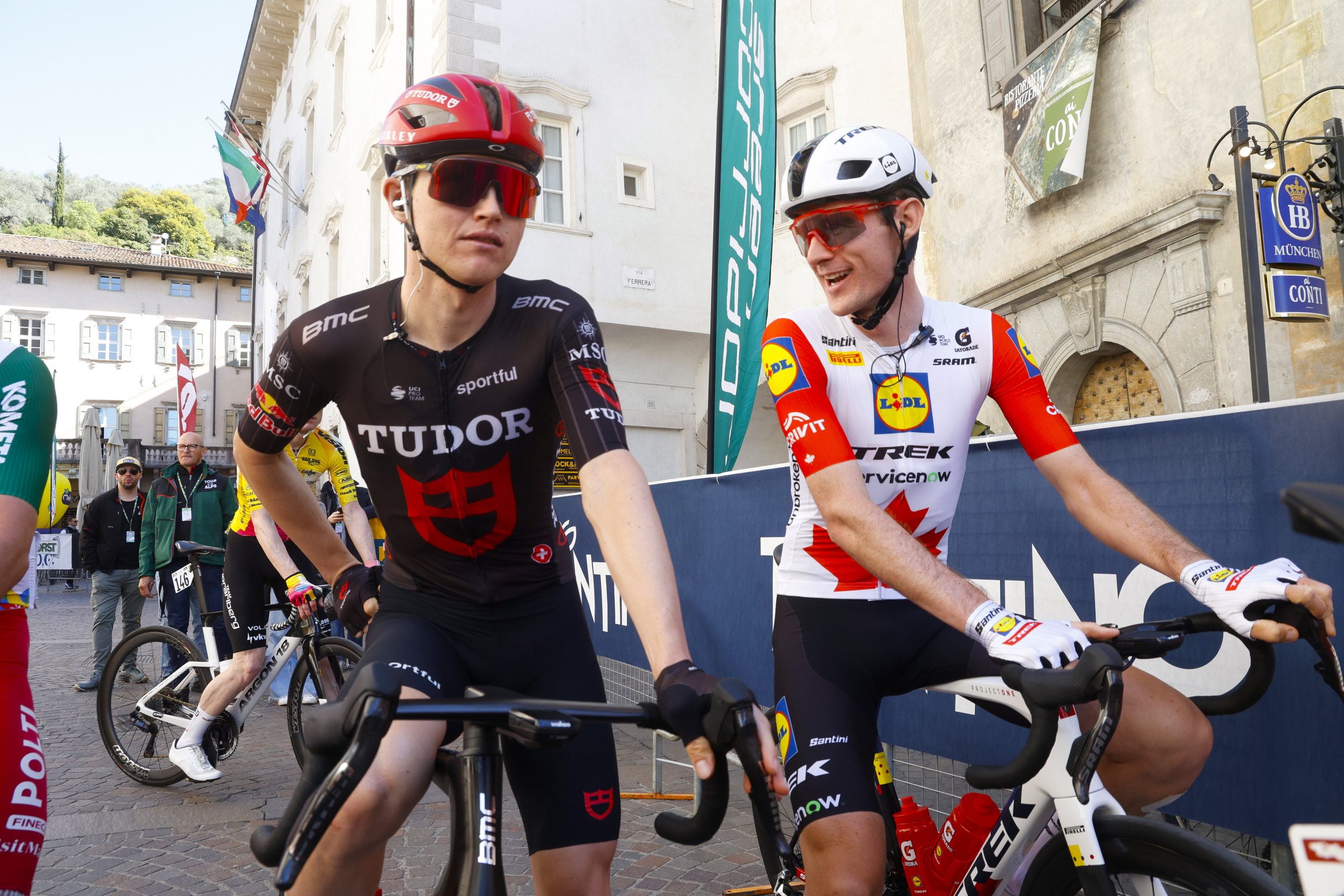
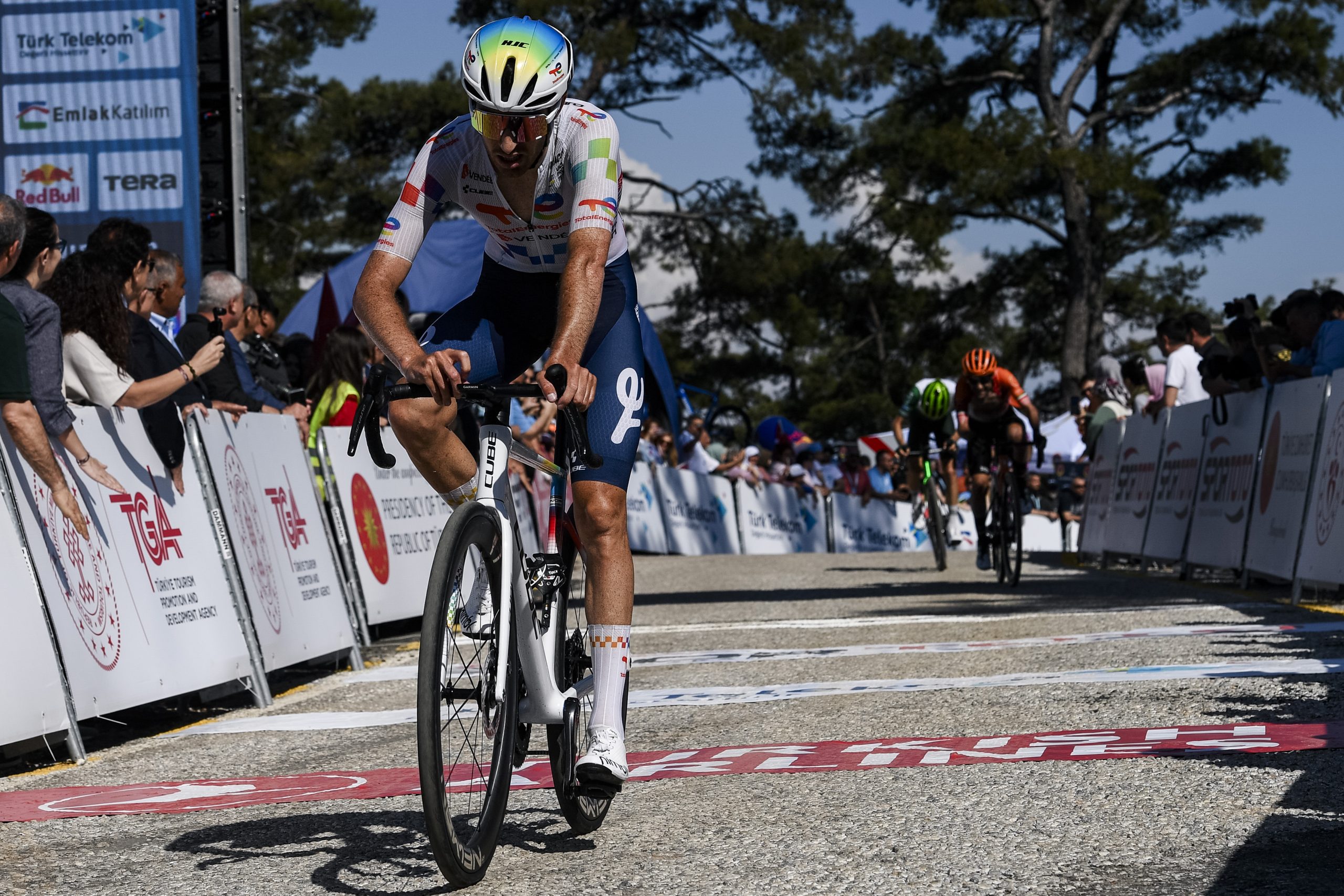
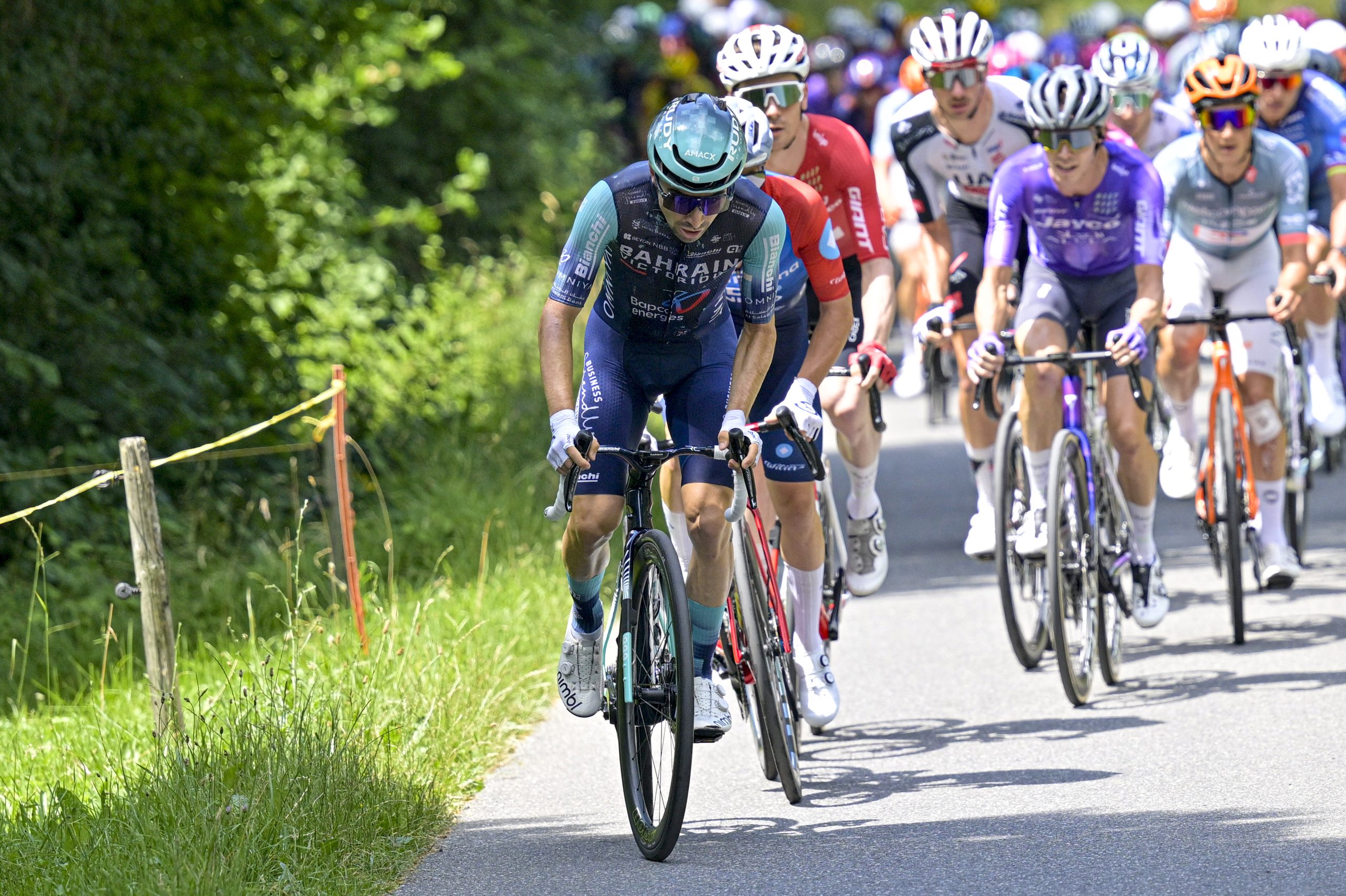
Ben O’Connor is looking for redemption after a Giro d’Italia that calling underwhelming would be like celebrating the heroic deeds of one of the greatest riders ever. My view is well known: rather than seeing him struggle, as he did just a few weeks ago on Italian roads, it would be far more interesting and rewarding to find him in a high-mountain breakaway, as happened last year when he won a fine stage on the Col de la Loze, even flirting with the top ten, finishing eleventh overall. That, really, is what one asks of a certain type of rider like him: rather than merely muddling through for a placing that adds little to a career, to see him up the road chasing stage wins from the break. Of course, prize money, team orders and UCI points matter too. Rather than O’Connor, Jayco might perhaps give some thought to Luke Plapp, although the Australian has always bounced off the general classification in Grand Tours and seems better suited to targeting stages, while also making a key contribution to ensure the Australian team can get through the opening team time trial in respectable fashion.
If we have already touched on Jorgenson, Yates, McNulty, Hindley, Træen and Skjelmose, they are riders who could aim for an overall placing, whether higher or lower between fifth and fifteenth depending on circumstances, but who will mostly serve in support of team-mates targeting the podium or thereabouts. Here, then, is another small group of riders with general classification ambitions. Perhaps not the very highest, but they will try to have their say.
Jordan Jegat is trying to repeat the fine things he did in 2025, when, through a string of placings, breakaways and determined resistance, he unexpectedly finished in the top ten and revealed himself to the wider world. He will be the leader of a TotalEnergies team that has shown little this season and is aiming above all for the Tour’s breakaways. Jegat, who, to give a sense of how well the French are placed, might end up only the fourth-best Frenchman in the final standings behind Seixas, Vauquelin and perhaps Martinez, whom I will mention shortly, is a steady rider who holds his own in the mountains, in the time trial and even has a turn of speed. He is the classic sort of rider who, if he drops out of contention in the general classification, could very often be found in breakaways chasing a stage win. Because of contractual issues linked to next season – he is expected to leave his current team, which moreover may not even still exist in 2027 – he also risked being left at home.
Michael Storer will try again: will he ride for the general classification as he did at the recent Giro, or, as in 2025 after the Corsa Rosa, will he become a protagonist of the breakaways in the Grande Boucle? Ilan Van Wilder, in the absence of Mikel Landa, who has not recovered in time to be competitive at the Tour, will be Soudal Quick-Step’s man for the general classification, but given the names just mentioned he will struggle to break into the top ten and will mostly target stage wins. Guillaume Martin has set his sights on yet another placing – in his career he has finished 12 of 14 Grand Tours, always ending somewhere between 8th place at the 2021 Tour and 23rd at the 2017 Tour on his Grand Tour debut – and he will do so either by getting into breakaways or by hanging on for as long as possible. He is the sort of rider on whom one might wager for a place between fifteenth and twentieth. Alongside him in the mountains are two Cléments, Berthet and Braz Afonso, whom we will also often see on the attack. Worth noting too is the omission of a David Gaudu ever deeper in crisis and short on confidence – will he seek a change of scene or stop altogether? – caught in a spiral from which he can no longer seem to escape.
Richard Carapaz, Ben Healy and Georg Steinhauser lead EF Education-EasyPost. There is no point beating around the bush: the Ecuadorian’s best days are behind him, with seven Grand Tour finishes in the top four, while the Irishman and the German, the latter because of physical problems, do not come into the race off their best season, so it is unlikely to imagine them truly fighting for a place at the very top. Still, it is worth being more precise. One of them knows how to produce something special when you least expect it, and perhaps he can hide in plain sight, avoid being dropped, and suddenly you find yourself dealing with him for a place around fifth overall; another is a diesel who thrives in difficult conditions, and the 2026 Tour, because of the heat, the route and the nature of the competition, promises to suit hard men like Healy; and the third is always on the verge of doing something big in the mountains, perhaps through breakaways, even if for now he has not managed a notable overall placing in the two Grand Tours he has ridden, though he certainly has the potential to do so. In any case, there is no problem for any of the three: they already have a Plan B ready, made up of stage hunting from breakaways or the pursuit of secondary jerseys, perhaps even the polka-dot jersey in Paris. In short, things are rarely dull around them.
Finally, let us close with Lenny Martinez, who will be one of Bahrain Victorious’s key men and will be supported in the mountains by Damiano Caruso, called back into action after the Giro, Antonio Tiberi, and Robert Stannard, also fresh from the Giro, who will serve as an all-round helper and perhaps at times act as a relay point in breakaways. Martinez has already said that his main objective will be to try to win a stage and perhaps the polka-dot jersey, and that we are unlikely to see him truly involved in the general classification. I have been saying it for years: for the Frenchman, given his characteristics, riding for the overall in a race as demanding in so many ways as the Tour de France is complicated – the Giro or the Vuelta would suit him much better. On that note, let us hope to see him make his Giro debut next year on Italian roads, because with the level he can produce from time to time he could clean up in the mountain stages. He knows it, the team staff know it too, and so we will probably see him rolling in at the back on the flat stages, or at least on those that do not suit him. Even so, he remains a name to follow closely, because very few have his explosiveness uphill. He lacks consistency, true, but if a few things were to fall into place I would not be so surprised to see him end up around the top ten, with a stage win and the polka-dot jersey: that would be the maximum possible haul, almost sensational.
THE MADMEN OF THE SPRINTS
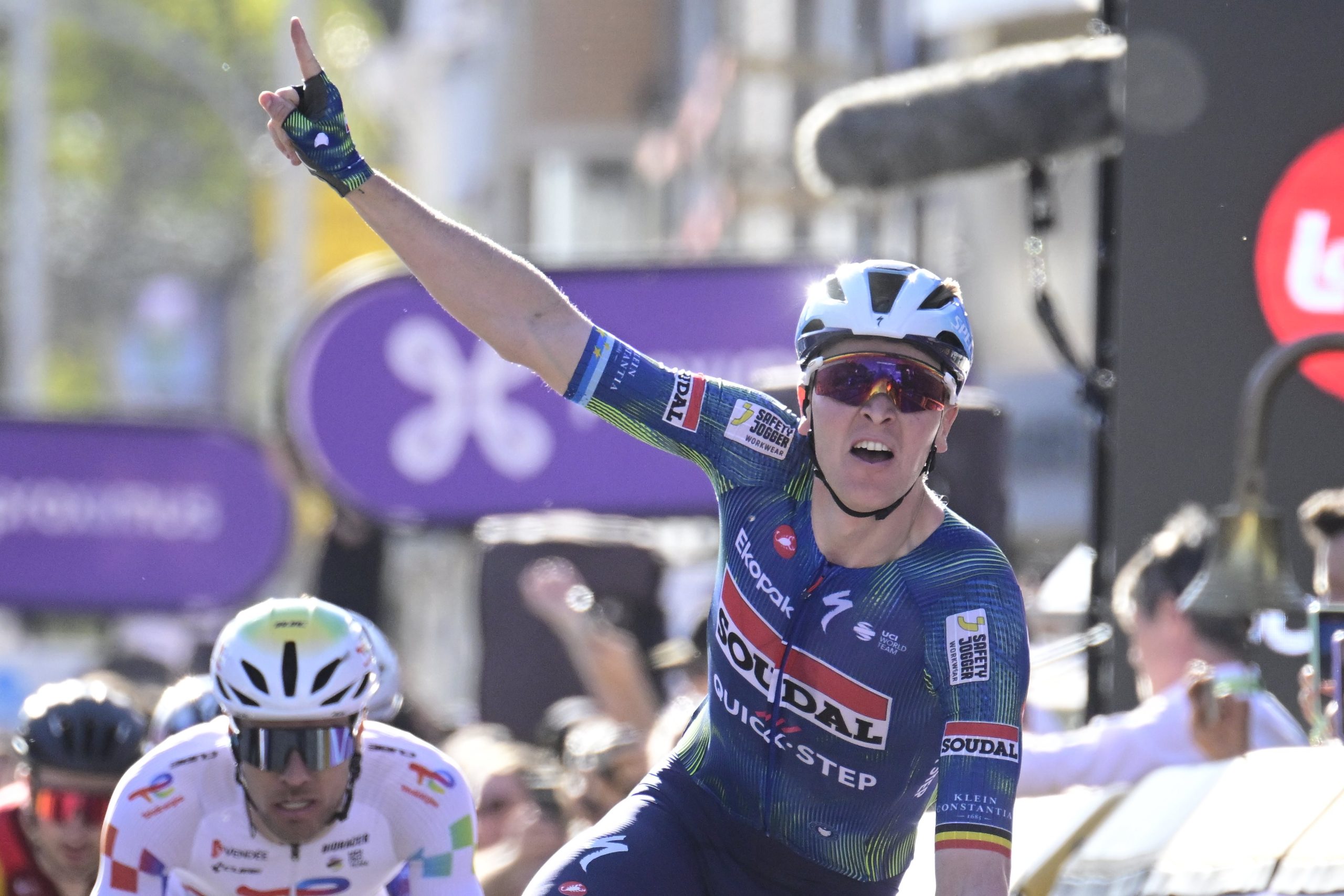
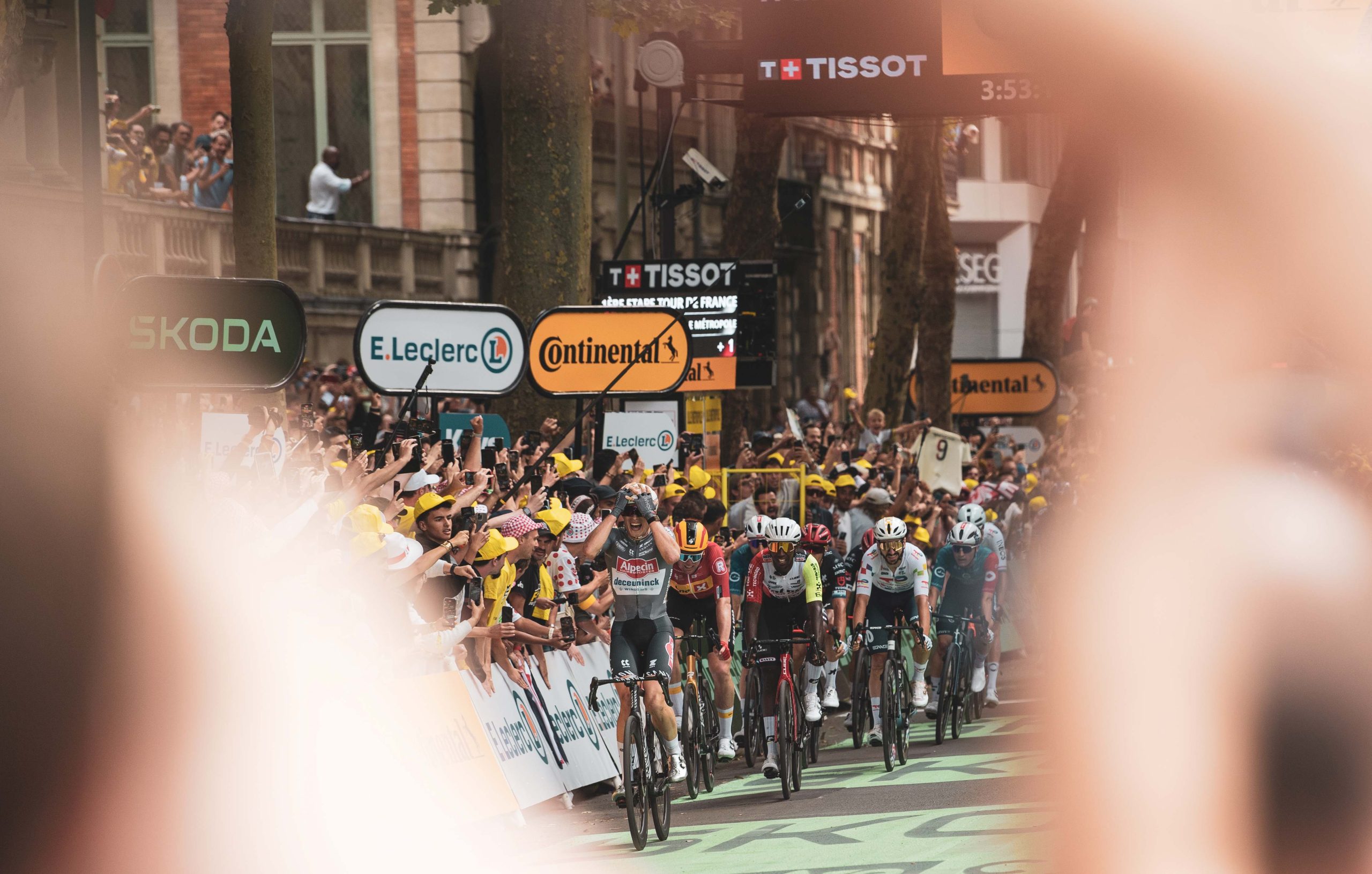
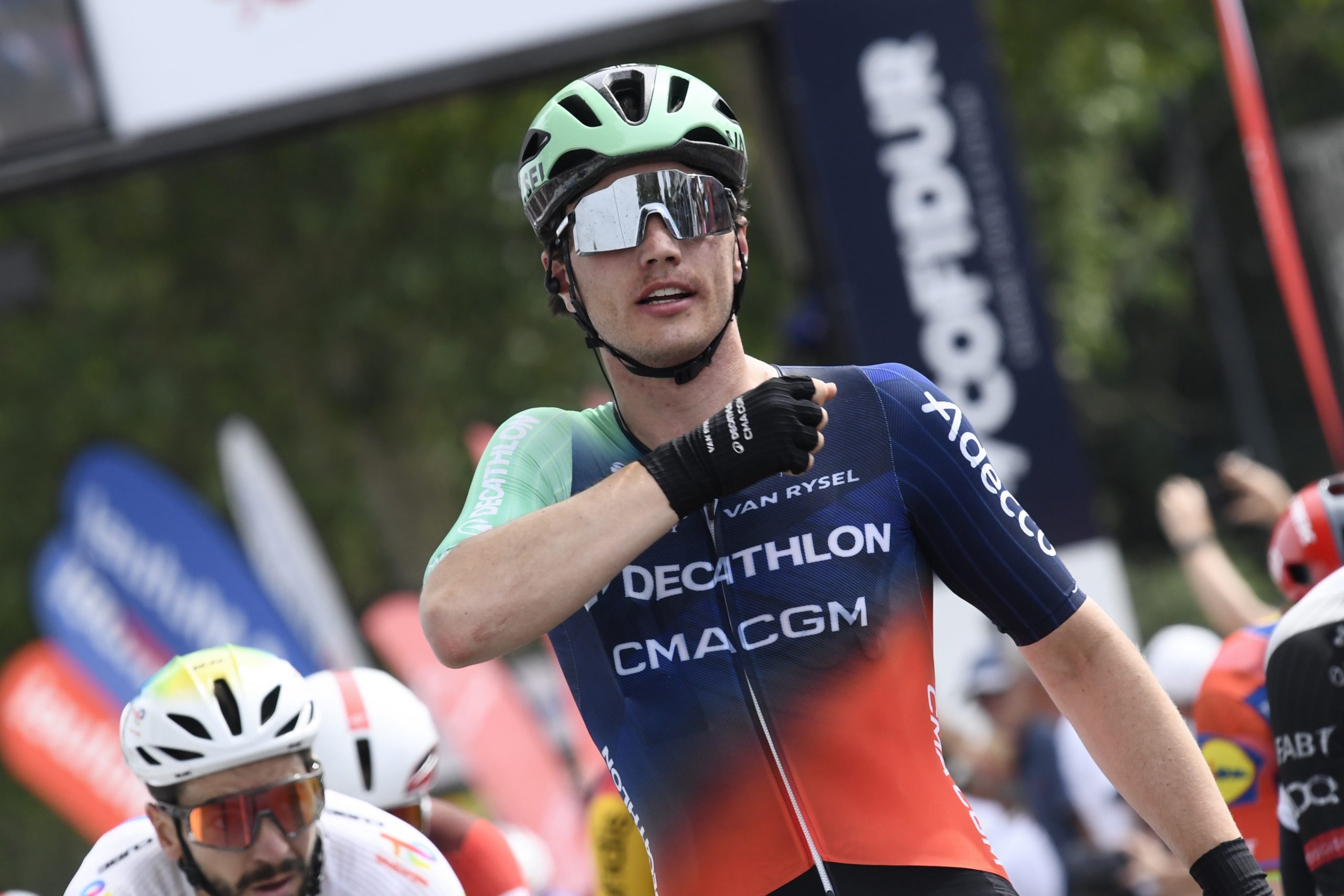
A festival of bunch sprints, featuring the best in the world, except, alas, Jonathan Milan, who last year, with two stage wins and the final green jersey, salvaged the balance sheet of the Italian expedition and who this year too might have been capable of something similar, even if the competition has grown stronger and he seems to have lost a little in terms of confidence and lead-out support.
And so, through a succession of sprints — there should be six, perhaps seven, not too few and not too many, just about the right number in a 21-stage race with two time trials — and with their lead-out trains, they will go head to head:
Jasper Philipsen (Alpecin–Premier Tech), who will be able to count not only on van der Poel, but also on Silvan Dillier and Tim Merlier in the early, controlling phases of the stage, and on Jonas Rickaert and Edward Planckaert in the finales. Not bad at all. The Belgian sprinter exploded out of the blocks last year: a stage win on day one, the yellow jersey, then a crash two days later and abandonment. This year he would like to push his ambitions further down the road, even if in Paris the spotlight will once again fall more naturally on riders like his illustrious team-mate van der Poel.
Tim Merlier: perhaps, pound for pound, the strongest sprinter in the world. Certainly the least young among this group, but also the most elegant and ruthless. At the Tour he has won only three stages so far, unlike Philipsen’s ten, and the idea will be to string at least a couple together. The presence of Jasper Stuyven, added to the reliability and chemistry that this sprint wizard has with Bart Van Lerberghe, as well as the pulling power of Dylan van Baarle, arguably makes the Soudal train the strongest at the start of the Tour.
But do not say that to Olav Kooij of Decathlon–CMA CGM, who recently claimed his first wins with the French team after a long injury lay-off: three in the space of a month, which brought him to a neat fifty career victories. Now, on his Tour debut, and after taking three stages at the Giro d’Italia across 2024 and 2025, he wants to leave his mark, challenging the very best there is, or almost, as we said, with the help of two formidable little carriages: Dan Hoole, who will drive the pace hard in the finale to bring him into position, and Cees Bol, who will launch him for good and perhaps leave him with clear road ahead to unleash all of his power. Then there is the extra value of Tiesj Benoot, who will help both Kooij keep the speed high and Seixas in the mountains for as long as he can, though much will depend on his condition. If they have brought him, he must be going well, considering he missed almost the entire season and only recently returned with five days of racing at the Tour de Suisse.
Do not say it to Biniam Girmay either that there are stronger sprint trains than that of his NSN Cycling Team. On paper, the Eritrean starts as the fourth force, but only up to a point. As recently as two years ago at the Tour, he had the luxury of beating Philipsen, Pedersen, De Lie and Van Aert time and again, winning three stages and also taking home the final green jersey. He is in excellent shape and neither he nor a train made up of Krists Neilands, whom we will often see in breakaways, Matis Louvel, Lewis Askey, Jake Stewart and Tom Van Asbroeck should be underestimated. If they find the right lines, they could hand every other sprinter some bitter disappointments.
Then there is a step down in level: Mads Pedersen, Lidl-Trek, has neither the outright top-end speed to win pure bunch sprints, nor particularly strong support: alongside him there are really only Mathias Vacek and Toms Skujins, and while the former seems to be rediscovering himself and could often feature in breakaways, perhaps even winning ones, the latter is coming off what may be the worst season of his career. Pedersen could aim for the green jersey and contesting the many intermediate sprints across the stages may end up costing him sharpness in the finales. One thing is certain, though: a rider like him always knows how to put on a show, and we should expect to see him in breakaways as well. Max Kanter, XDS-Astana, will be able to rely on a rather decent little train with Davide Ballerini and Mike Teunissen, both of whom will also measure their own personal ambitions from time to time. Ballerini dreams of a double after winning a Giro stage just a few weeks ago, while Teunissen would love to return to victory at the Tour after that hugely surprising win in 2019, which also earned him the yellow jersey for a couple of days. Kanter himself will mostly be aiming for finishes between fifth and tenth place, much like his fellow German Phil Bauhaus, Bahrain-Victorious, a rider who in the past has taken important wins such as at Tirreno-Adriatico, twice, but in Grand Tours has so far managed only placings, with two second places at the Tour. Here, helped by Kamil Gradek and Vlad Van Mechelen, and to some extent also by Matej Mohorič, he should not go much beyond a few top tens, which with a bit of luck might become the occasional top five. Arnaud De Lie, after a forgettable Giro debut, is trying again at the Tour. In the past he has taken some good placings in this race, but frankly I find it hard to imagine a scenario in which he beats all the riders mentioned above in one go, unless something unusual happens. More interesting, perhaps, would be to see him in stages selective enough for him to fight for victory under different circumstances, but we shall see. His support is more or less non-existent, even if his team-mates will help within their limits, but, as we will see in the next chapter of this long guide, Lotto-Intermarché will be focused above all on getting into breakaways and trying to surprise everyone that way.
Pascal Ackermann, Team Jayco AlUla, now belongs to the past if we are thinking about the very top tier of today’s sprinters – more a lower-tier name now – and after a disappointing Giro, though one very much in keeping with his current standards, it is hard to imagine him at the front of the sprints in a 2026 Tour de France. Pavel Bittner, on the other hand, Team Picnic PostNL, could be one of the surprises of the sprint stages at this Tour. Back in 2024, still very young, he won in Seville, at the Vuelta, the most important sprint of his career so far. Last year at the Tour he took a fourth and a fifth place, this year he will want to improve on that, and to do so he has solid support, even if not the very best around. John Degenkolb, Frits Biesterbos – keep an eye on him because we will see him in breakaways all the time and he could end up battling Veistroffer for the combativity prize – Niklas Märkl and Julius van der Berg will be the little carriages of his train. And while Søren Wærenskjold, Uno–X Mobility, is by now a familiar name, a rider capable at times of pulling out monstrous, winning performances even against the very biggest names in the peloton, he will not have many men at his disposal here, with the Norwegian team more focused on helping Johannessen in the mountains. Arvid De Kleijn, by contrast, will need to prove himself at this sort of level. The Dutchman is Tudor’s lead sprinter and he really does have a fine little train available. Marco Haller, Matteo Trentin, Rick Pluimers are a trio capable of combining power, instinct, experience, speed and explosiveness, it will be up to the Dutch sprinter to make it count. De Kleijn also has the raw speed needed to trouble the strongest in a bunch sprint were it not for the fact that he arrives after a long spell of injuries and various setbacks. The three team-mates mentioned above, however, will also have chances to launch personal moves, in breakaways, in reduced sprints, perhaps even in sprints from a fragmented bunch. If Anthony Turgis is the man expected to throw himself into the sprint for TotalEnergies, despite not being a pure sprinter, even if he does occasionally pop up in bunch finishes, then Fernando Gaviria will be the designated fast man for Caja Rural, the team that received a surprising wild card and will make its Tour debut after 27 seasons of existence. Finally, Milan Fretin, helped by Piet Allegaert, Hugo Page and Jenthe Biermans, will be Cofidis’s lead sprinter. Keep an eye on the Belgian, who for several seasons now has been expected to produce a breakthrough in major races against the best in the world. Who knows, perhaps the long wait will finally culminate in a winning sprint at the Tour.
STAGERS
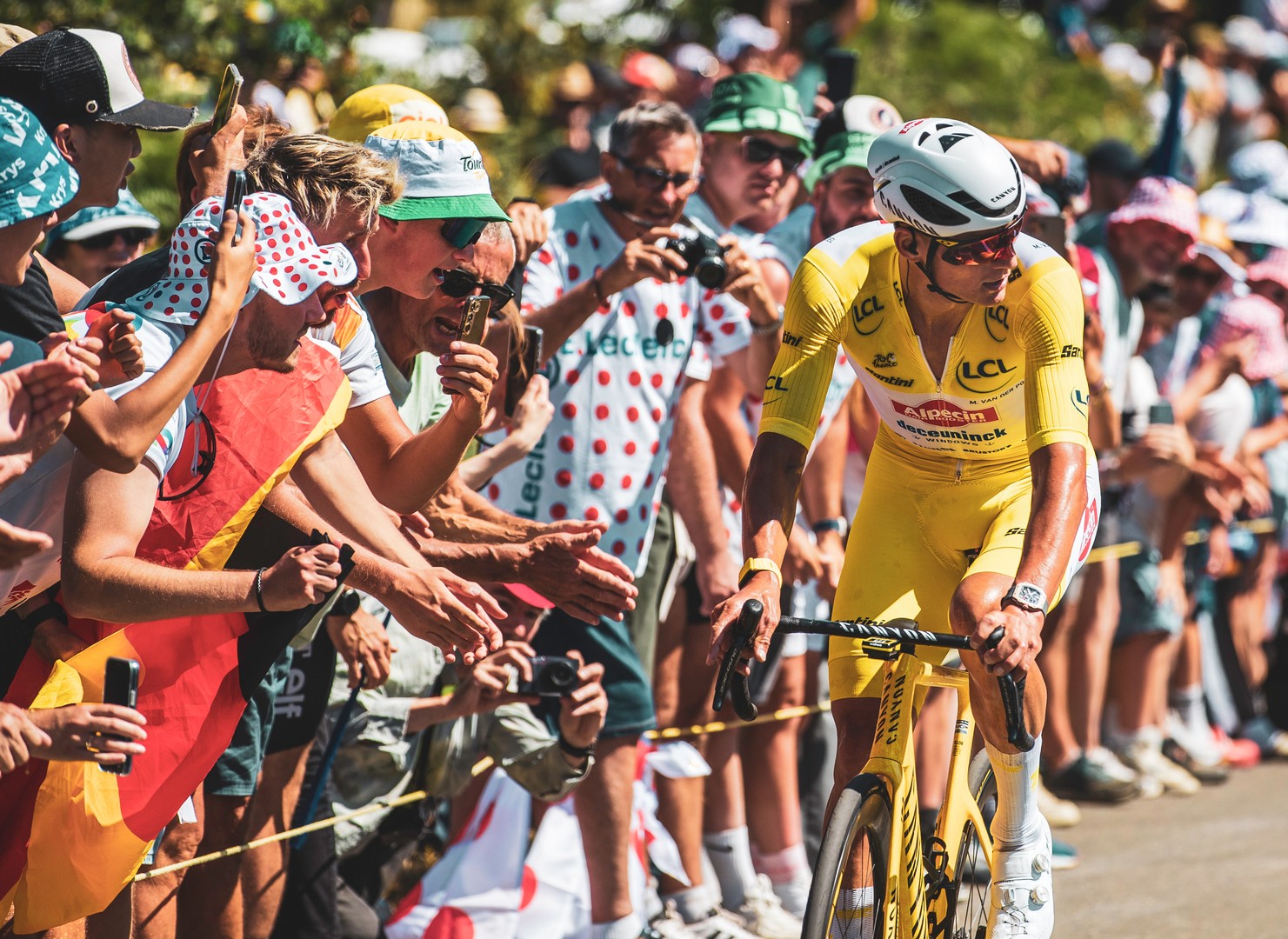
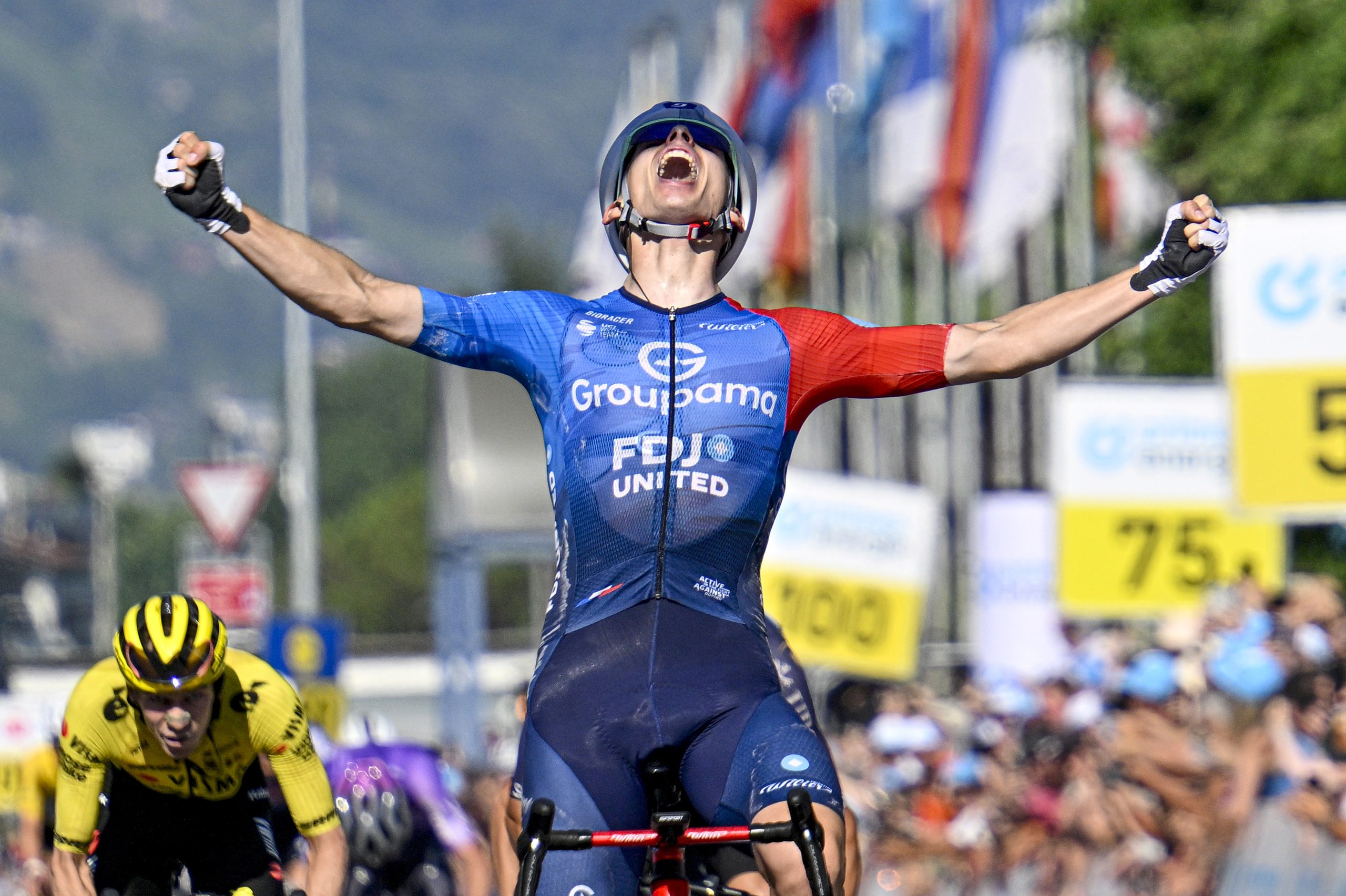
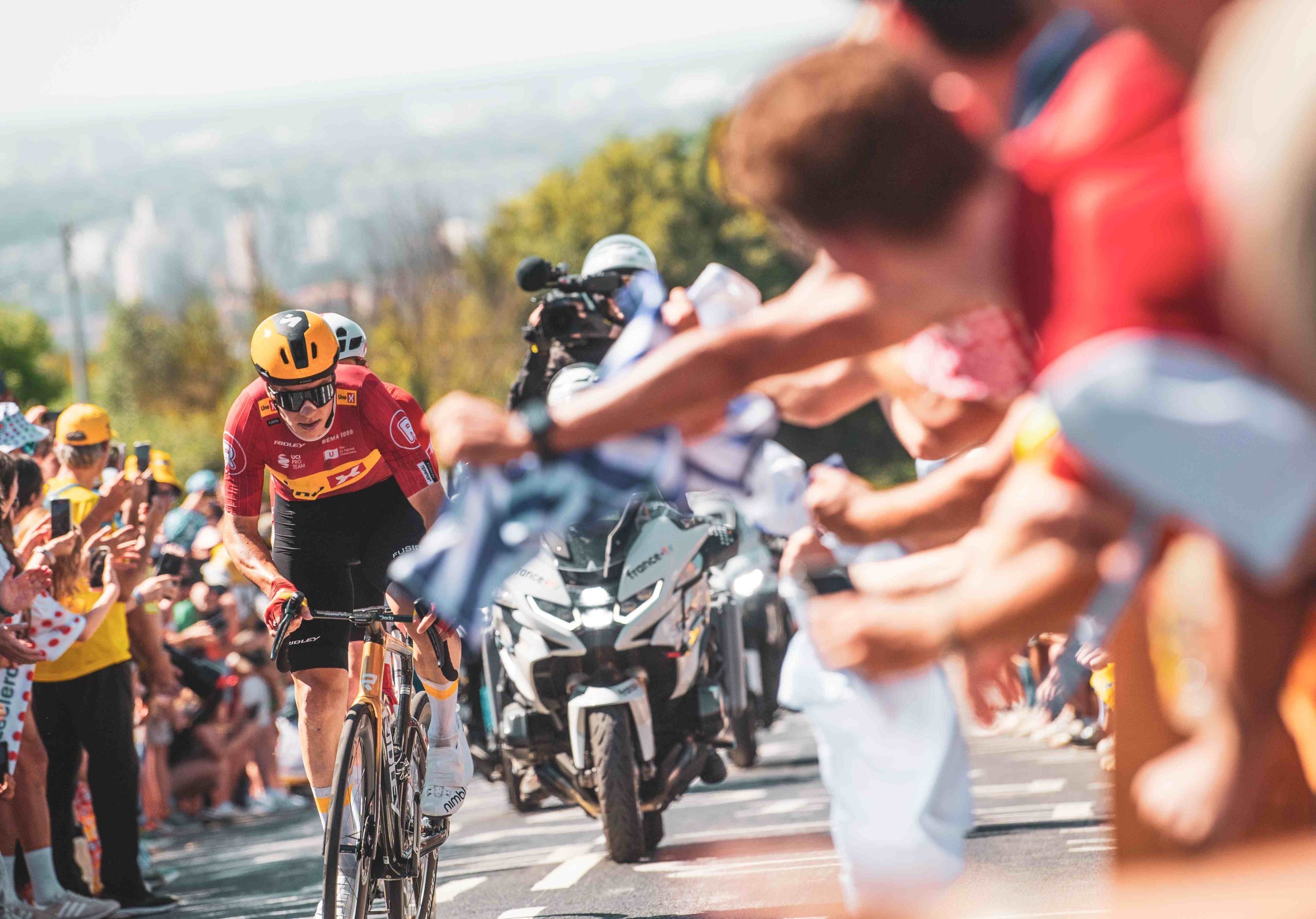
At the Tour, unlike what we saw in the recent Giro d’Italia, the names are many and varied. From the very best in the world, practically only van Aert is missing, because of injury. The most eagerly awaited rider is, of course, Mathieu van der Poel, who in some extra-luxury version of himself could already have his say on the second day of racing, though he must hope that the general classification men do not overdo things, especially Pogačar and Vingegaard. In any case, there should be plenty of opportunities for him. And there will be chances too for his team-mates, the young Emiel Verstrynge and Ramses Debruyne, who will try to make their mark in breakaways, preferably in the mountains, and perhaps one of the two may even hang on for a good overall placing. Matej Mohorič, who has won three times at the Tour, comes from a couple of underwhelming seasons apart from a few isolated results, and has not won a race since the 2024 national championship: will he manage to break through again?
EF will put on a show and, beyond the already-mentioned Healy, Carapaz and Steinhauser, they bring more riders with fire in their blood: the Danes Kasper Asgreen and Michael Valgren are among the highest-quality stage hunters in the race. Both have recently closed a circle full of negative thoughts by winning Grand Tour stages from breakaways. Asgreen did so at the Tour in 2023 and then again at the Giro in 2025, while Valgren managed it at the Giro just a few weeks ago. They will try again, just as Alex Baudin will. He is a recent stage winner at the Dauphiné and one of the most anticipated and in-form attackers for difficult finales. Since on the hard, though not hardest, stages he would have to deal with riders such as Pogačar, Vingegaard, Seixas or Evenepoel, it may be wiser for him to target breakaways and go from there if he wants to win – he is one of the French riders most expected to deliver a stage victory. Finally, Sean Quinn will do a great deal of work for everyone, while Max Walker will be seen in breakaways very often, even on the more transitional days. Bonus: keep an eye on this team for a strong placing in the opening time trial in Barcelona.
An almost entirely attack-minded team, Groupama–FDJ are chasing results even beyond Romain Grégoire, who remains the guiding star of a squad that this season has collected very little apart from the brilliant rider born in 2003, who is targeting a Tour stage win in the national champion’s jersey. If his condition holds across the three weeks, we will see him at the front again and again, taking the fight to the race. After a dreadful Giro, the French team now race on home roads and they will try, at the very least, to animate the stages before looking to finish things off with Grégoire. Quentin Pacher, Ewen Costiou, Clément Russo and Lorenzo Germani are born attackers and we will see them in breakaways often.
Netcompany INEOS, in addition to looking after the general classification, are also targeting the opening team time trial in a big way, hence the selections of Filippo Ganna and Joshua Tarling, who will also try, if they still have some energy left by then, to win the individual time trial as well, and Tobias Foss, who will be able to use his qualities both in breakaways and by staying close to the leaders in the mountains. Michał Kwiatkowski needs no introduction; his selection, yet another for the Tour, gives the team solidity and experience, while Dorian Godon is one of the French riders carrying the highest expectations to try to win a stage, perhaps in a reduced sprint, whether from a breakaway or from the group of the best.
Quinn Simmons is another of the riders most eagerly awaited in breakaways, the kind of rider who never holds back when there is a fuse to light – explosive, anarchic, at times wildly spectacular. Last year, for a couple of weeks, he looked irresistible, a force of nature, only to end up with relatively little to show for it in the end – a second place and a ninth place on stages. Lotto–Intermarché are a team whose ambitions are built more on attacking than defending. Lennert Van Eetvelt is unlikely to challenge for the general classification – before abandoning, he did not manage that even at the Giro – but he is also unlikely to be able to match the very biggest names in the race on equal terms in the kinds of finishes that suit him best: rolling stages, short climbs, perhaps steep ones, in short the sort of terrain for Ardennes riders more than pure climbers. So he will have to invent the right breakaway, just as Georg Zimmermann, Liam Slock, Huub Artz and Jenno Berckmoes will, all riders in excellent form who could find a stage win by attacking from distance. The one who needs no encouragement in that sense is Baptiste Veistroffer, the archetypal breakaway artist of the last two seasons, capable of grinding out thousands of kilometres in the wind. He makes his Tour debut here with the aim of making himself known – and loved – by an even wider public.
Beyond Uijtdebroeks’s general classification ambitions, Movistar are aiming to win at least one stage and, with Raúl García Pierna, Pablo Castrillo, Einer Rubio, Javier Romo and Jefferson Alveiro Cepeda, they have all the potential to do so from a breakaway in high or medium mountains. Nelson Oliveira and Michel Hessmann, by contrast, will mostly be in support roles. At NSN Cycling Team, Marco Frigo will chase breakaways again and again, while George Bennett will try to hold a place in the general classification for as long as he can; after that, he too will turn to long-range moves, especially on the hardest stages. At Red Bull–BORA–Hansgrohe, meanwhile, Maxim Van Gils is highly anticipated. He will be the free role rider in a team that, as we have seen, has ambitions for the very highest places overall, but will not overlook the chance to take something with the hugely talented Belgian born in 1999. In the mountains, Valentin Paret-Peintre will be among the most eagerly awaited, winner at the Giro in 2024 at Bocca della Selva, but above all at the Tour on Mont Ventoux in 2025. Likewise, Louis Vervaeke, freer than usual from domestique duties at Soudal, may also have his chance in breakaways on the stages with major elevation gain. Team Jayco AlUla will hunt stage wins with a variety of high-level riders, though perhaps more on less demanding stages. Mauro Schmid has a great deal of quality to bring when he attacks and is aiming hard at a win, but he also has enough to help his team-mates, among them Michael Matthews, who comes off extremely difficult seasons because of various injuries. He is no longer a youngster, but he still has the class to win on almost any terrain. Felix Engelhardt, recently crowned German champion, may be a sort of synthesis of both: he climbs well on shorter ascents and has a decent finishing kick. After never really being seen at the Giro, having abandoned in the opening stages, he comes to the Tour looking for redemption. Rounding out Jayco’s selection are two highly experienced Australians, Luke Durbridge and Kelland O’Brien, mostly rouleurs who will help the team, perhaps also by getting into breakaways. Team Picnic PostNL will do what they can, being one of the less competitive teams in the WorldTour – and they would struggle to be so even among the ProTeams. We have already spoken about their sprinter and his train, so that leaves Warren Barguil, a rider who has been on a clearly downward curve for several seasons and who nevertheless, after a Giro in which determination outweighed his legs, has managed to earn a place at the Tour. He will certainly try, but there are simply too many riders going better than he is. Perhaps, then, the Dutch-rooted team will hope Robbe Dhondt and Frank van den Broek can do more. Both climb well, the first may really introduce himself at this Tour, while the second we already know well. In France he came close to a stage win in 2024, arriving on the finishing straight only to leave the victory to his leader Bardet, and in 2025 he was beaten from the break only by Kaden Groves, in a state of grace that day. There is no point doubting him: he will try and try again this year as well, after finishing a Giro d’Italia with few flashes, third from last overall, a dislocated shoulder in the opening days and a couple of breakaways in the third week.
Jonas Abrahamsen, Uno-X Mobility, dalla forza inesorabile quando va all’attacco, un po’ su tutti i terreni (tranne le salite lunghe) è tra i più attesi cacciatori di tappe. Al Tour ha sempre dato spettacolo e lo scorso anno ha pure vinto una tappa, a Tolosa, andando in fuga praticamente dal km 0, battendo corridori come Schmid, van der Poel, van Aert, Ballerini. La squadra norvegese punta alle tappe anche con Anton Charmig, corridore esplosivo e resistente sulle salite di media lunghezza, che di recente ha conquistato la vittoria più importante in carriera imponendosi, dopo una lunghissima fuga, in una tappa del Delfinato.
If Aaron Gate, XDS–Astana, at almost 36 years of age, is set to make his Tour debut – just think, among the 48 debutants in the yellow race he is the oldest, while the youngest is Seixas, and there are almost 16 years between them – and will look, perhaps with a clever move, to win a stage or place well and bring points to his team, then Alex Aranburu, Ben Thomas and Ion Izagirre are chasing stage victories for Cofidis with great ambition on different kinds of terrain. Aranburu can do a bit of everything, including breakaways on harder days; if he is in a state of grace he is difficult to drop, he is fast as well, and he is one of the best descenders in the peloton. Izagirre will target the mountains – and he too descends extremely well – while Thomas is more suited to the moderately easier days. Every so often Cofidis remembers that it is a good team, one of the most traditional in the race, and when that happens it can still land a telling blow. Will that be the case again this year?
Julian Alaphilippe, for Tudor Pro Cycling Team, certainly needs no introduction. At the Tour he has won six stages, he has worn every jersey, and his narrative arc has been all but complete. We still do not know how many years he has left as a professional rider, but before the inevitable decline – which I predict every year, only for him to prove me wrong in the end – I am expecting a fitting final flourish. He may still have one big strike left in him, and there are stages on which to place those hopes. I am waiting for it. Staying in France, TotalEnergies are placing a great deal of faith in Joris Delbove, who is said to be in excellent form after finishing third at the recent national championship behind Grégoire and Lapeira. He handles demanding, classics-style terrain well and is no slouch either in a reduced sprint, qualities he shares with Matteo Vercher and Alexandre Delettre, two riders for whom the breakaway is a calling and whom we may well see on the attack often at this Tour, just as we may also with Mathis Le Berre and Thibault Guernalec.
Tour debut for Caja Rural, who, as you have seen, are relying on Gaviria for the sprints, while for the rest we will find them attacking in the mountains. With Abel Balderstone, Sebastian Berwick and Felix Parra, they have riders in great form who could even win from the right breakaway, and who knows, perhaps one of them may even try to hold on in the general classification as well. On the less demanding days they may turn to Jakub Otruba, while on hilly stages they can look for placings with Alex Molenaar, Joel Nicolau and Stefano Oldani – riders who also have a good turn of speed, are explosive, and, on the right day, can hold their own on short, sharp climbs.
ITALIAN CONTINGENT A BIT THIN ON THE GROUND, BUT THAT IS WHAT THE HOUSE HAS TO OFFER
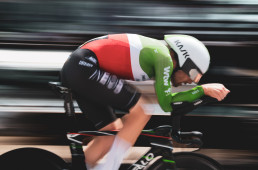
12 Italian riders at the start is not actually such a low number compared with recent seasons, the quality, on the other hand, is what it is, but it reflects the level of our cycling, which struggles badly to make its mark when the standard becomes the highest possible: if it were a video game, the Tour de France would be cycling’s hard mode. These 12 I have already named, but here I want to go a little more into detail. Filippo Ganna is the biggest name, but what should we expect from him? Netcompany INEOS are bringing him mainly for the contribution he can make to the team cause, team time trials and work for his leaders in race finales, we will see what sort of condition he arrives in for the only time trial on the route, where, however, he will still be one of the two or three main favourites. There is Davide Ballerini, XDS Astana, who won at the Giro just a few weeks ago, then crashed, but recovered, and last year finished second on the final stage in Paris. Very few riders around with his kind of durable sprinter profile are able to improve as a Grand Tour goes on, he always gives it a go anyway, and who knows whether he might pull another rabbit out of the hat, as happened in Naples at the Giro. Lorenzo Germani is an important domestique for Groupama, but he is also someone who knows how to carve out his own space: we would not be surprised to see him trying to win a stage from a long-range breakaway. The same goes for Marco Frigo, perhaps after Ganna, and even more than Ballerini, the most eagerly awaited among the Italian riders. He really is carving out a career for himself as a breakaway specialist, one that has already brought him a top ten at the Amstel this season. You could put a few pennies on him for a stage win and would probably get something back before the end of the Tour: the days for him, a rider who climbs well, does not mind the heat, and loves spending kilometre after kilometre out in the wind, are, on paper, many. If Davide Piganzoli, in the mountains, and Edoardo Affini, recovered after the nasty crash in the national championship time trial, on the flat and in team time trials, will be working for Vingegaard, Stefano Oldani and Matteo Trentin will have their chances. Either by throwing themselves into a reduced sprint or into a breakaway, making the most of their instinct and turn of speed. Mattia Cattaneo, Red Bull-BORA-hansgrohe, shares, with Piganzoli and Affini, the role of domestique for riders with podium ambitions. He will race in support of Evenepoel and Lipowitz, and seems almost like a blend of the two Italians at Visma, being strong in time trials and solid in the mountains, while, finally, Damiano Caruso and Antonio Tiberi will give their contribution to Bahrain Victorious, perhaps helping Lenny Martinez in the mountains or trying their own long-range breakaways in the mountain stages. For Caruso, winning at the Tour would be a career reward and a way of completing the circle, after taking a stage at the Giro in 2021 and one at the Vuelta. For Tiberi, it would be an almost unexpected turning point in a career that seems to have levelled off in mediocrity.
2026 TOUR ROUTE
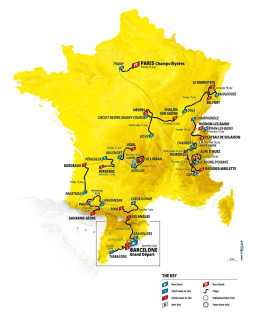
They set off from Barcelona, and it will be a grand celebration straight away. The choice, though, has been to do it in a rather particular way: a team time trial, something the Tour has not seen for a few years and which, it is worth remembering, has undergone a significant change, with each rider’s individual time counting towards his general classification, and held in the evening. It could already be a battle for the yellow jersey between Vingegaard, Pogačar, Seixas, and the Red Bull duo of Evenepoel and Lipowitz, but keep an eye on Ineos, who are bringing Ganna for this effort too, or perhaps above all for this effort. The following day, still in Barcelona, things get serious: a stage for explosive riders, a contest between classics hunters and general classification men. The third stage, Granollers to Les Angles, is listed as a mountain stage on the official website. True, there are two climbs above 1,500 metres, but the feeling is that the general classification riders may keep their powder dry, which could open the door for the breakaway. From Carcassonne to Foix, the route once again seems to favour breakaway riders or puncheurs, though it always depends on what the general classification men want to do, while stage 5, the bill to be paid in Pau, this time as a finish town, is the first real chance for a proper bunch sprint. Stage 6 finishes in Gavarnie-Gèdre, but it also takes in the Aspin and the Tourmalet, there is no need to add anything else to describe a Tour that is brutal from the very first stages. The next day in Bordeaux and the day after towards Bergerac, we will probably get the second and third opportunities for the fast men to fight it out in a full bunch sprint. On Sunday 12 July, before the rest day, stage 9 from Malemort to Ussel has one word written all over it: breakaway!
Stage 10, on 14 July, will be a major celebration in France in the Massif Central with Aurillac to Le Lioran. A hard stage, with seven classified climbs, including Puy Mary-Pas de Peyrol and Col de Pertus. The finish is in Le Lioran, where Vingegaard beat Pogačar in 2024. Stages 11 and 12 should again be for the sprinters, while stage 13, finishing in Belfort with only the Ballon d’Alsace to climb near the end, could tempt a few general classification riders into action, or perhaps split the peloton and lead to a sprint from a very reduced group. The following day it is back to the Vosges, back to the Ballon d’Alsace, but this time alongside other climbs, with the finish at Le Markstein-Fellering after the demanding Col du Haag. A breakaway of strong riders and a fight for the general classification looks likely, just as it does the day after, with one of the toughest finishes of the 2026 Tour, at Brison on the Plateau de Solaison, 11.3km at an average of 9 per cent, already tackled a few weeks ago at the Tour de Suisse. Then comes the rest day before the final week, which opens with the 26.1km time trial from Évian-les-Bains to Thonon-les-Bains, too short to be the real thing, but that is how it is. A sprint in Voiron, or a breakaway if there are not enough legs left to keep the race under control, and then a classic breakaway stage in the final week with the rolling Voiron to Orcières-Merlette, before the most eagerly awaited, and strangest, two days of the Tour: two finishes in the same place, namely Alpe d’Huez. The first day is a chance to smash every climbing record, the second, the penultimate stage of the Tour, with Bourg-d’Oisans to Alpe d’Huez, also gives us the hardest day of the race in pure elevation terms. Croix de Fer, Télégraphe, Galibier, and finally Sarenne before the climb to Alpe d’Huez. Finally, the finish in Paris, which last year gave us a memorable day with Van Aert’s victory. Montmartre is again confirmed as the selection point, and if he is still in the race, it could perhaps be the day for the other Van, namely Van der Poel.
To follow the stages in detail, with their profiles and the start and finish times, here is the official Tour website: https://www.letour.fr/en/overall-route
ALVENTO STARS
YELLOW JERSEY
⭐⭐⭐⭐⭐ Pogačar
⭐⭐⭐⭐ Vingegaard
⭐⭐⭐ –
⭐⭐ Del Toro, Seixas, Lipowitz, Evenepoel
⭐ Ayuso, Riccitello, Pidcock, TH Johannessen, Tejada, Uijtdebroeks, Arensman, Vauquelin, Hindley, Jorgenson, Yates, McNulty, Skjelmose, Carapaz, Healy, Martinez
GREEN JERSEY
⭐⭐⭐⭐⭐ Philipsen
⭐⭐⭐⭐ Pedersen
⭐⭐⭐ Merlier, Kooij, Girmay
⭐⭐ De Lie, van der Poel, Waerenskjold
⭐ Turgis, Fretin, Pogačar, Gregoire, Godon, Bittner, Vingegaard
POLKA-DOT JERSEY
⭐⭐⭐⭐⭐ Martinez
⭐⭐⭐⭐ Pogačar, Carapaz
⭐⭐⭐ Vingegaard, Seixas
⭐⭐ Pidcock, Jegat, Tejada, Storer, Vauquelin
⭐ Lipowitz, Arensman, Evenepoel, Healy, Steinhauser, O’Connor, Verstrynge
WHITE JERSEY
⭐⭐⭐⭐⭐ Seixas, Del Toro
⭐⭐⭐⭐-
⭐⭐⭐ Ayuso
⭐⭐ Vauquelin, Uijtdebroeks
⭐ Martinez, Riccitello
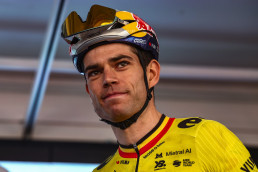
Wout van Aert's Spring always arrives late
Wout van Aert started the season like someone leaving the house convinced they turned off the gas, only to be struck by doubt halfway down the road. At Le Samyn, ten kilometers from the finish, the race tightens like a revolving door, and he gets a flat. Not an elegant flat, the kind where you stop with dignity. No, it’s the kind that makes you get off the bike like someone stepping off the wrong tram.
Mattio arrives, a young Italian full of promise, and hands him his bike. Wout gets on, takes two pedal strokes, and immediately realizes it’s not for him: it’s like putting on someone else’s coat, maybe even someone ten kilos lighter. That’s how it is. So, he stops, waits for the team car, watches the race slip away, and wears that look of a businessman who just missed the tram in the rain after leaving his broken-down car in the garage.
And the most beautiful – or saddest, depending on how you see it – thing is that at the end of the race, he says there was glass on the road. He says it the way someone might say, “They raised the price of the subway ticket”: no surprise, no anger, just that kind of civil resignation that’s almost a talent. Glass. As if it’s normal to always find it when he’s around. As if it’s normal that bad luck, when it has to pick a rider, always chooses the one with the silver helmet and the logo of a well-known energy drink brand that sets him apart from the rest of the peloton.
Meanwhile, his season has already started off on the wrong foot: first, the illness that kept him out of Omloop, and now this. And before that, the January crash, which has practically become a tradition – like panettone at Christmas or the glass collectors showing up at 4 a.m. just as you’ve finally fallen asleep after a sleepless night caused by a mix of a newborn and too much caffeine.
Van Aert is the kind of guy who speaks softly, like those people in bars who, between a Campari and a game of billiards, tell you that life is just like that, that there’s no point in making a fuss, that nothing really changes anyway. He says everything’s fine, that it’s no big deal, that the season is long, that life is bigger than a single race.
And yet, inside, another film is playing: the one about missed opportunities, lost endings, races that seemed his but weren’t. He’s someone who lives two lives: the one he shows and the one he keeps to himself. The one that smiles and the one that tastes bitter. The one that says “it happens” and the one that thinks “damn it, not again.”
You can see it in his eyes sometimes, a brief flash, a split-second of truth: he’s had enough. Then Wout returns, the public Wout, the one who speaks softly. But that flash lingers, like a warning light on the dashboard of a Lancia Musa.
Van Aert has a personal museum. There are quite a few trophies, but also plenty of almost-trophies. Sanremo wins and near-misses, Strade Bianche victories and close calls, Flanders that seemed just millimetres away, Roubaix races that slipped through his fingers like a wallet dropped while queuing somewhere. World Championships where he was the strongest man until suddenly he wasn’t. And now, even Le Samyn, which isn’t a Monument, not even a Grand Classic, but it was supposed to be his restart. One of many.
A race of cobblestones, wind and grit – perfect for someone like him. Perfect to say: I’m back. Instead, it said: I’m back, but so is bad luck, always one step ahead. And he, as always, pretended it was nothing. Which is his way of saying everything.
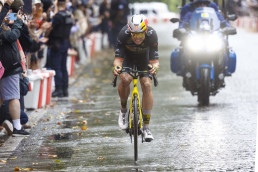
The thing that stands out is how he loses. He loses well. And that’s the hardest thing to do. He loses without making noise, without looking for excuses, without pointing fingers. He loses like someone who understands that life isn’t a movie: there’s no black and white, the good guy doesn’t always win, the strongest doesn’t always win, the one who deserves it doesn’t always win.
He loses with a dignity that hurts more than the defeat itself. Because when someone loses badly, you feel like telling them it happens. But when someone loses well, you find yourself asking why it happens to them.
And meanwhile, he keeps pedalling, like those who go to work even when it rains, even when the trams are on strike, even when they know nothing will change.
The truth is that Van Aert lives in an eternal preamble. Every year, he has to start over, every year, he has to prove something he’s already proven, every year, he has to chase a victory that always seems within arm’s reach but is actually on the other side of the road. And he goes there, to the other side of the road. He always goes, no matter what, even when he finds glass on the ground – the antithesis of himself, who doesn’t shatter and doesn’t complain. The most suspicious thing of all.
Sooner or later, it will happen (winning something big and heavy, in the North). Not when we expect it, not when he deserves it, not when he’s the strongest. It will happen on an ordinary day, maybe even a bad one, maybe even a messy one, maybe even with a headwind. Maybe even with those two guys there, the ones who are faster not just than him, but than the entire peloton. It will happen when no one is thinking about it. It will happen when he’s stopped asking himself about it.
And then he’ll win the Tour of Flanders or Paris-Roubaix. Or both, to make up for lost time. On that day, there will be no need to speak softly – in fact, there will be no need to speak at all. Just looking at him will be enough to understand that some springs arrive late, but when they do, they make noise.